← All plants
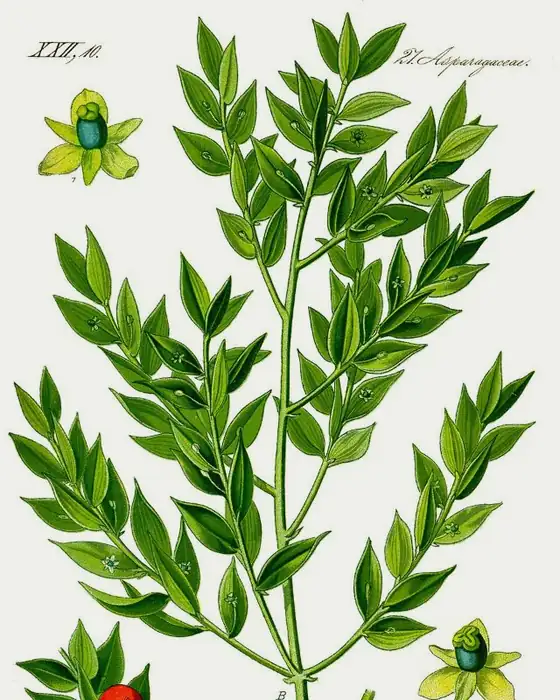
Archival plate of Ruscus aculeatus, from Thomé, Flora von Deutschland, Österreich und der Schweiz, 1885
The Moss Herbal Database
Ruscus aculeatus
Fam. Asparagaceae
Parts: Rhizome
Plate: Thomé, Flora von Deutschland, Österreich und der Schweiz, 1885 ↗

Butcher's broom

Ruscus aculeatus
Also: Knee holly, Box holly, Pungitopo
CoolingDryingTonifying

Tightens slack veins and eases heavy, swollen legs.

A low, stiff evergreen shrub whose spine-tipped leaves are really flattened stems, with tiny flowers and bright red berries sitting in the middle of each one. Its rhizome tightens and tones veins, easing the heaviness, swelling, and aching of varicose veins and hemorrhoids.

Energetics
Cooling, drying, toning
Taste
Bitter, slightly acrid
Family
Asparagaceae (asparagus family)
Parts used
Rhizome

Medicinal uses 2

The tags sort the evidence behind each use by kind. Members are able to tap a condition to compare every herb for it.

Traditional useLab and mechanism studiesClinical studies
  • Tightens vein walls; in trials, extracts combined with hesperidin and vitamin C eased the pain, heaviness, and swelling of weak leg veins.

  • Reduces ankle and leg swelling that comes from sluggish veins.

Preparations

Standardized rhizome extract, decoction, and creams.

Members are able to see the amounts, ratios, and methods for each preparation, search by condition, and match herbs to your constitution.

Cautions

  • Nausea and stomach upset are occasional side effects.
  • Its vein-tightening action could raise blood pressure in theory; check with your prescriber if yours runs high.
  • A suddenly swollen, hot, painful leg needs medical care the same day.

Medication interactions

Practitioner Practitioners are able to see the one type of medicine flagged for butcher's broom, each with the mechanism and what to do. The plain-language cautions above stay open to everyone.

Pregnancy & breastfeeding

PregnancyAsk your practitioner

Butcher's broom has not been studied in pregnancy. Witch hazel pads are the usual first choice for pregnancy hemorrhoids and veins; ask your practitioner.

BreastfeedingAsk your practitioner

It has not been studied in nursing; check with your practitioner first.

Folklore

Butchers tied the stiff, prickly branches into brooms to scrub their chopping blocks. What look like leaves are flattened stems called cladodes, so each flower and berry seems to grow from the middle of a leaf. Italians still call it pungitopo, mouse-pricker, from the old habit of laying its spiny sprigs around cured meats to keep mice away.

How to grow

A slow, tough evergreen for dry shade, even under trees, hardy to about 0°F. Plants are male or female, and only females bear the red berries. Dig rhizomes in autumn.

In the wild

Woods, hedges, and rocky scrub of the Mediterranean and western Europe, north to southern England and east to Iran.

Every herb here fits some people better than others. Find out which ones fit you.