← All plants
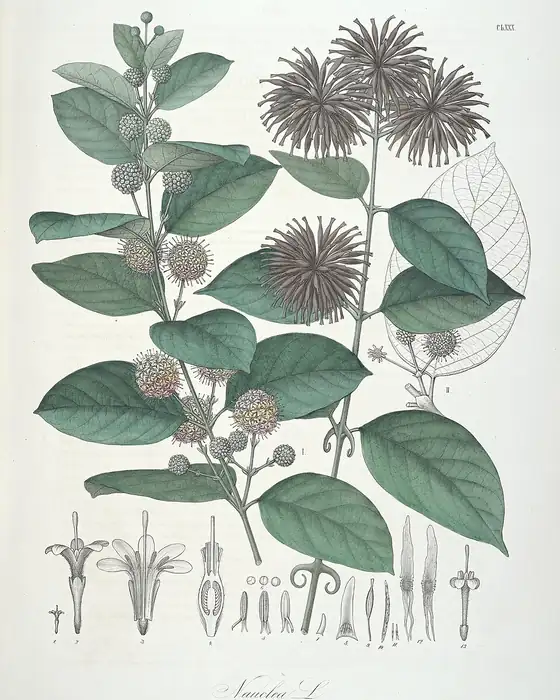
Archival plate of Uncaria tomentosa, from Karsten, Florae Columbiae, 1866, plate CLXXX
The Moss Herbal Database
Uncaria tomentosa
Fam. Rubiaceae
Parts: Inner bark and root
Plate: Karsten, Florae Columbiae, 1866, plate CLXXX ↗

Cat's claw

Uncaria tomentosa
Also: Uña de gato, Uncaria
CoolingDryingTonifying

An Amazonian vine bark that cools inflamed joints and steadies immunity.

A woody Amazonian vine that climbs into the canopy on paired, curved thorns shaped like a cat's claws. Its inner bark calms inflammation, eases arthritic joints, and steadies immune activity.

Energetics
Cooling, drying, toning
Taste
Bitter, astringent
Family
Rubiaceae (madder family)
Parts used
Inner bark and root

Medicinal uses 3

The tags sort the evidence behind each use by kind. Members are able to tap a condition to compare every herb for it.

Traditional useLab and mechanism studiesClinical studies

Preparations

Bark decoction and standardized extract capsules.

Members are able to see the amounts, ratios, and methods for each preparation, search by condition, and match herbs to your constitution.

Cautions

  • It can slow clotting and lower blood pressure and affects immunity; check with your prescriber if you take blood thinners, blood pressure medicines, or immune-suppressing drugs, and stop two weeks before surgery.
  • Several unrelated thorny plants are sold as cat's claw; buy Uncaria tomentosa from a sustainable source.

Medication interactions

Practitioner Practitioners are able to see the 4 types of medicine flagged for cat's claw, each with the mechanism and what to do. The plain-language cautions above stay open to everyone.

Pregnancy & breastfeeding

PregnancyAvoid

In Peru it was traditionally taken to prevent pregnancy, and its alkaloids stimulate the uterus, so it is avoided throughout pregnancy and while trying to conceive.

BreastfeedingAvoid

Its active alkaloids have not been studied in nursing, so it is avoided.

Practitioner Practitioners are able to see the full entry from the Moss Herbalism Pregnancy Safety Database: trimester ratings, uterine and placental action, breastfeeding and nursing-baby effects, chemistry, traditional use, studies, and sources.

Folklore

The Asháninka of the Peruvian Amazon have long used the bark for inflammation and ulcers, and in the 1970s an Austrian researcher working with them brought it to European laboratories. Uña de gato is a common Spanish name for several thorny plants, so the botanical name matters when buying. The vine can climb a hundred feet into the rainforest canopy, hooking itself up on its curved thorns.

How to grow

A vine of hot, humid lowland forest, not grown outside the tropics. Harvesters cut it about a yard above the ground so it resprouts, then strip the inner bark.

In the wild

Lowland rainforests of the Amazon basin and Central America, especially in Peru, Brazil, Bolivia, and Ecuador.

Every herb here fits some people better than others. Find out which ones fit you.