← All plantsGoldenseal
Hydrastis canadensis
Also: Orangeroot, Yellow puccoon
CoolingDryingTonifyingAt-risk
Clears infection from swollen, weepy mucous membranes.
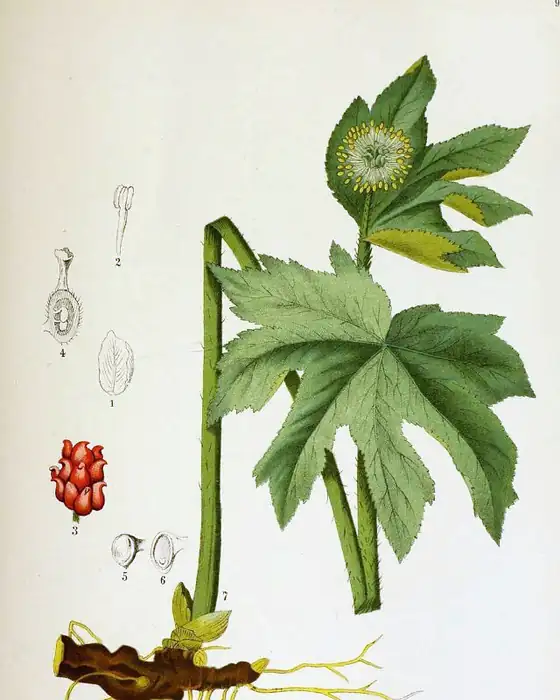
A small woodland perennial with a single jagged leaf, a raspberry-like red fruit, and a knotted, brilliant yellow rhizome. Goldenseal is an intense bitter and antimicrobial that tones inflamed, discharging mucous membranes in the sinuses, throat, mouth, and gut; overharvesting has made it scarce in the wild.
- Energetics
- Cooling, drying, toning
- Taste
- Intensely bitter
- Family
- Ranunculaceae (buttercup family)
- Parts used
- Rhizome and leaf
Medicinal uses 5
The tags sort the evidence behind each use by kind. Members are able to tap a condition to compare every herb for it.
TTraditional useLLab and mechanism studiesCClinical studies
Tightens and clears swollen, infected sinuses with thick discharge.
A gargle for infected throats.
A rinse for infected gums and mouth sores.
Its berberine fights the bacteria behind infectious diarrhea.
Leaf extracts outperformed berberine alone against MRSA in lab studies and blocked the bacteria's toxins.
Preparations
Short courses of tincture, gargles, rinses, and washes, or a berberine-rich substitute.
Members are able to see the amounts, ratios, and methods for each preparation, search by condition, and match herbs to your constitution.
Cautions
- Berberine changes how the body handles many medicines; check with your prescriber.
- Keep to short courses; long use can upset the stomach and dry the membranes.
- It suits infections with thick, yellow discharge more than the first days of a cold.
Sourcing
United Plant Savers lists goldenseal as at-risk; wild stands have been dug for two centuries. Buy only cultivated, woods-grown root, or turn to Oregon grape or barberry, which carry the same berberine.
Medication interactions
Practitioner Practitioners are able to see the 4 types of medicine flagged for goldenseal, each with the mechanism and what to do. The plain-language cautions above stay open to everyone.
Pregnancy & breastfeeding
PregnancyAvoid
Berberine stimulates the uterus and can cause dangerous jaundice in newborns, so goldenseal is avoided throughout pregnancy.
BreastfeedingAvoid
Berberine can reach a nursing baby and worsen newborn jaundice; avoid it, especially in the first weeks.
Practitioner Practitioners are able to see the full entry from the Moss Herbalism Pregnancy Safety Database: trimester ratings, uterine and placental action, breastfeeding and nursing-baby effects, chemistry, traditional use, studies, and sources.
Folklore
Cherokee and other Native healers used the root for sore eyes and wounds, and its yellow juice as a dye and face paint. By the late 1800s it was among the most heavily exported medicinal roots in North America, and wild populations crashed. In 1997 goldenseal was listed under CITES, the international treaty on trade in endangered species, so exports now need permits.
How to grow
A slow perennial for deep shade and rich, moist, well-drained woodland soil, like ginseng's; roots take three to five years to reach harvest size. Woods-grown goldenseal under a forest canopy is the sustainable source.
In the wild
Rich hardwood forests of eastern North America, from Vermont and southern Ontario south to Georgia and west to Arkansas, now patchy and rare in much of that range.
Every herb here fits some people better than others. Find out which ones fit you.