← All plants
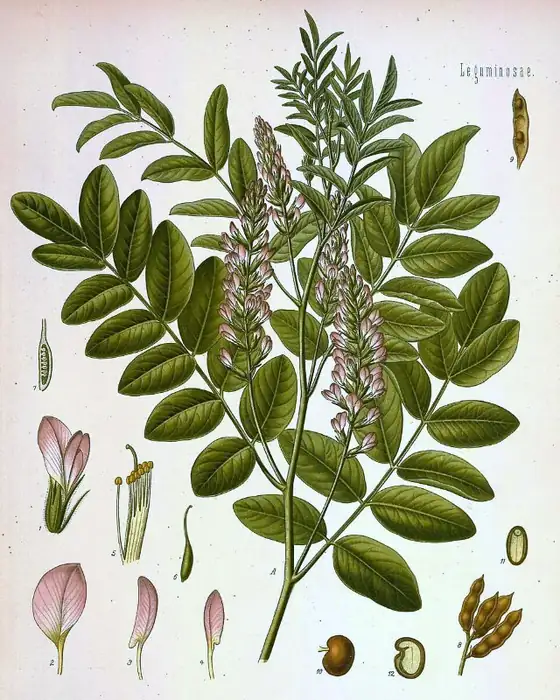
Archival plate of Glycyrrhiza glabra, from Köhler's Medizinal-Pflanzen, 1887 to 1898
The Moss Herbal Database
Glycyrrhiza glabra
Fam. Fabaceae
Parts: Root
Plate: Köhler's Medizinal-Pflanzen, 1887 to 1898 ↗

Licorice

Glycyrrhiza glabra
Also: Liquorice, Sweet root, DGL
WarmingMoisteningRelaxing

Moistens dry tissue and sweetens every formula it joins.

A tall, ferny legume with pale violet flower spikes and a yellow, fibrous root about fifty times sweeter than sugar. Licorice coats and moistens dry, irritated tissue from throat to gut, soothes a dry cough, and steadies a body run down by long stress.

Energetics
Warming, moistening, relaxing
Taste
Intensely sweet
Family
Fabaceae (pea family)
Parts used
Root

Medicinal uses 6

The tags sort the evidence behind each use by kind. Members are able to tap a condition to compare every herb for it.

Traditional useLab and mechanism studiesClinical studies
  • Coats and soothes a raw throat; a licorice gargle reduces sore throat after surgery in clinical trials.

  • Wets dry, tickly airways and quiets a hacking cough that brings nothing up.

  • Deglycyrrhizinated licorice (DGL) chewed before meals coats and soothes an irritated stomach.

  • Soothes and helps mend a raw, ulcerated stomach and bowel.

  • Supports a body worn down by long stress, especially one that runs dry.

  • A licorice wash or cream takes the itch out of eczema, insect bites, and rashes.

Preparations

Simmered root, a small part of many formulas, and DGL tablets for the stomach.

Members are able to see the amounts, ratios, and methods for each preparation, search by condition, and match herbs to your constitution.

Cautions

  • Whole licorice raises blood pressure and lowers potassium with daily use over weeks. Leave it out with high blood pressure, heart or kidney disease, and alongside diuretics, digoxin, or corticosteroids.
  • DGL has the glycyrrhizin removed and avoids that effect.
  • Much licorice candy is flavored with anise rather than licorice root; real licorice confectionery counts toward your intake.

Medication interactions

Practitioner Practitioners are able to see the 6 types of medicine flagged for licorice, each with the mechanism and what to do. The plain-language cautions above stay open to everyone.

Pregnancy & breastfeeding

PregnancyAvoid

Glycyrrhizin blocks the placental enzyme that shields a baby from the mother's stress hormones, and a large Finnish study linked heavy licorice intake in pregnancy to earlier births and to attention and learning differences in the children years later. Licorice tea and real licorice candy both count, so it waits until after birth.

BreastfeedingAvoid medicinal doses

Medicinal doses wait until after weaning. An occasional piece of real licorice candy is a small amount.

Practitioner Practitioners are able to see the full entry from the Moss Herbalism Pregnancy Safety Database: trimester ratings, uterine and placental action, breastfeeding and nursing-baby effects, chemistry, traditional use, studies, and sources.

Folklore

Glycyrrhiza comes from Greek words for sweet root. Theophrastus wrote that the Scythians could go eleven or twelve days without drinking, living on the root and mare's-milk cheese. Licorice root is said to have been laid in Tutankhamun's tomb. Pontefract in Yorkshire grew licorice in its deep soils for centuries, and Pontefract cakes, the town's small black licorice rounds, are still stamped with a castle.

How to grow

A perennial for long, hot summers and deep, loose, sandy soil in full sun. It spreads by runners. Dig roots in autumn after the third or fourth year, then wash, split, and dry them.

In the wild

River valleys and open scrub from the Mediterranean through the Middle East to Central Asia.

Every herb here fits some people better than others. Find out which ones fit you.