← All plantsLobelia
Lobelia inflata
Also: Indian tobacco, Pukeweed, Asthma weed
WarmingDryingRelaxingLow-dose herbTo-watch list
A powerful relaxant for spasm, given in drops.
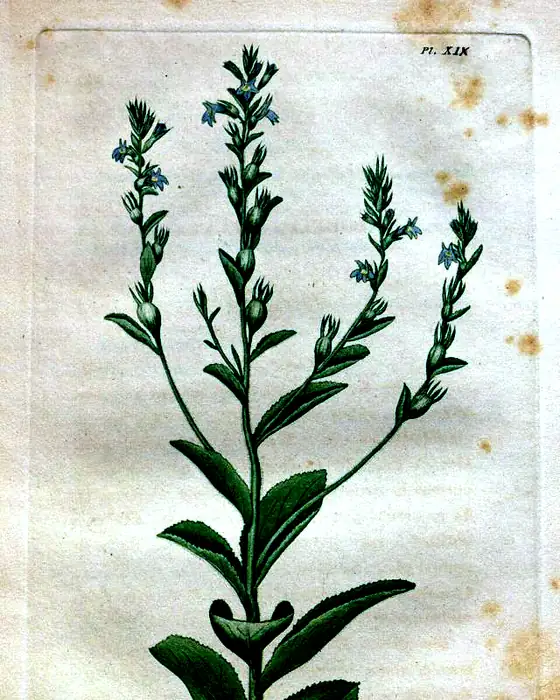
A small annual with pale blue flowers and inflated seedpods like tiny balloons. Lobelia is one of the strongest relaxants in the herbal, releasing spasm in the airways and muscles within minutes, and it helps other herbs in a formula act; in larger doses it causes vomiting.
- Energetics
- Warming, drying, relaxing
- Taste
- Acrid, tingling
- Family
- Campanulaceae (bellflower family)
- Parts used
- Flowering tops and seedpods
Medicinal uses 3
The tags sort the evidence behind each use by kind. Members are able to tap a condition to compare every herb for it.
TTraditional useLLab and mechanism studiesCClinical studies
Releases spasm in the airways in tight, spasmodic coughs and wheezing.
Drops inside and a liniment outside ease cramping, spasming muscles.
Relaxes the throbbing, gripping pain of tension.
Preparations
Drop doses of tincture, liniments, and a few drops in formulas.
Practitioner Practitioners are able to see the amounts and methods for lobelia. It is a low-dose herb, with a narrow margin between a helpful dose and a harmful one.
Cautions
- Moderate doses cause nausea and vomiting, which is why it was called pukeweed. Keep to drop doses.
- Anaphylaxis and severe asthma attacks need emergency care, an epinephrine injector or rescue inhaler and a call for help, before any herb.
- Leave it out with heart disease, high blood pressure, or seizure disorders.
Sourcing
Lobelia is on United Plant Savers' to-watch list. It grows readily from its dust-fine seed, so buy cultivated herb or grow your own.
Medication interactions
Practitioner Practitioners are able to see the 2 types of medicine flagged for lobelia, each with the mechanism and what to do. The plain-language cautions above stay open to everyone.
Pregnancy & breastfeeding
PregnancyAvoid
Lobeline acts on the body much like nicotine, and the gap between a helpful and a toxic dose is narrow, so lobelia is avoided in pregnancy. In labor, a midwife may give a few drops to release tension that is slowing dilation.
BreastfeedingAvoid
Its nicotine-like alkaloids and narrow safety margin keep it out of nursing.
Practitioner Practitioners are able to see the full entry from the Moss Herbalism Pregnancy Safety Database: trimester ratings, uterine and placental action, breastfeeding and nursing-baby effects, chemistry, traditional use, studies, and sources.
Folklore
Samuel Thomson, the self-taught New Hampshire healer behind the Thomsonian movement, built his system around lobelia in the early 1800s, and in 1809 he was tried for murder after a patient died, and acquitted. Native peoples of the Northeast smoked the leaves, which gave the plant the name Indian tobacco. Lobeline was sold in anti-smoking lozenges until 1993, when the FDA removed it from smoking-cessation products for lack of evidence.
How to grow
An annual for sun or part shade and average soil. Sow the dust-fine seed on the surface in spring and keep it moist. Cut the plants when the seedpods are inflated but still green.
In the wild
Fields, roadsides, and open woods of eastern North America, from Nova Scotia to Georgia and west to Kansas.
Every herb here fits some people better than others. Find out which ones fit you.