← All plants
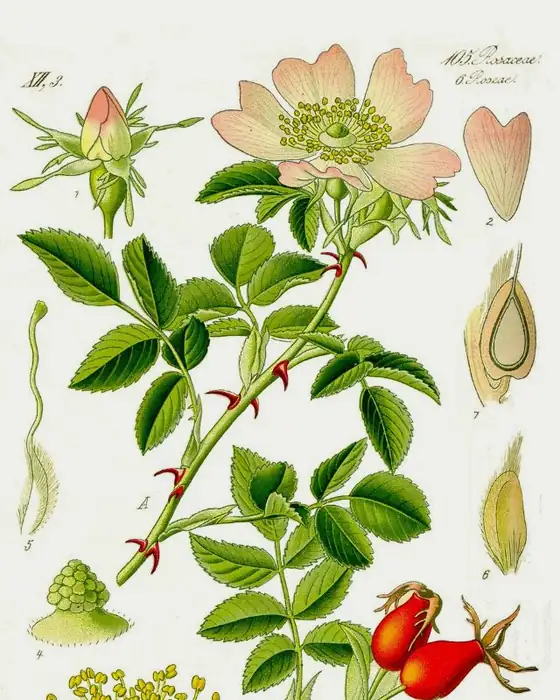
Archival plate of Rosa canina, from Thomé, Flora von Deutschland, Österreich und der Schweiz, 1885
The Moss Herbal Database
Rosa canina
Fam. Rosaceae
Parts: Petals and hips
Plate: Thomé, Flora von Deutschland, Österreich und der Schweiz, 1885 ↗

Rose

Rosa canina
Also: Dog rose, Rose hips, Rosa rugosa, Rosa damascena, Wild rose
CoolingDryingTonifying

Cooling, tightening, and comforting, from petal to hip.

Wild and old garden roses carry the medicine: fragrant petals in summer and bright hips in autumn. Rose cools and tightens hot, inflamed, weeping tissue inside and out, and offers shelter when life feels like too much.

Energetics
Cooling, drying, tonifying
Taste
Sweet, sour, aromatic, astringent
Family
Rosaceae (rose family)
Parts used
Petals and hips

Medicinal uses 12

The tags sort the evidence behind each use by kind. Members are able to tap a condition to compare every herb for it.

Traditional useLab and mechanism studiesClinical studies

Preparations

Petal tea, rose water, strained hip tea and syrup, and petal honey.

Members are able to see the amounts, ratios, and methods for each preparation, search by condition, and match herbs to your constitution.

Cautions

  • Use unsprayed roses; florist roses carry heavy pesticide residues.
  • Strain hips through cloth, since the fine hairs inside irritate the throat and gut.

Pregnancy & breastfeeding

PregnancyFood and tea amounts

Petals and hips in tea and food amounts are widely used. Formal research is thin.

BreastfeedingFood and tea amounts

Petals and hips in tea and food amounts are widely used. Formal research is thin.

Folklore

A rose hung over a meeting table meant that everything said beneath it stayed secret, the origin of the phrase sub rosa. Romans strewed petals at feasts, and Persian distillers turned rose water into a trade good carried across the medieval Islamic world. During the Second World War, when oranges stopped reaching Britain, schoolchildren gathered wild rose hips by the ton for a national vitamin C syrup.

How to grow

Choose fragrant, open-pollinated roses: rugosa for big hips and disease resistance, gallica or damask for petals. Give them full sun, good air flow, and rich soil. Pick petals in the morning once the dew dries, leaving one or two on each flower for the pollinators, and gather hips after the first frost.

In the wild

Dog rose fills European hedgerows, and native wild roses grow across the Northern Hemisphere in thickets, clearings, forest edges, and coastal scrub.

Every herb here fits some people better than others. Find out which ones fit you.