← All plantsValerian
Valeriana officinalis
Also: All-heal
WarmingDryingRelaxing
A strong-smelling root that releases tension into sleep.
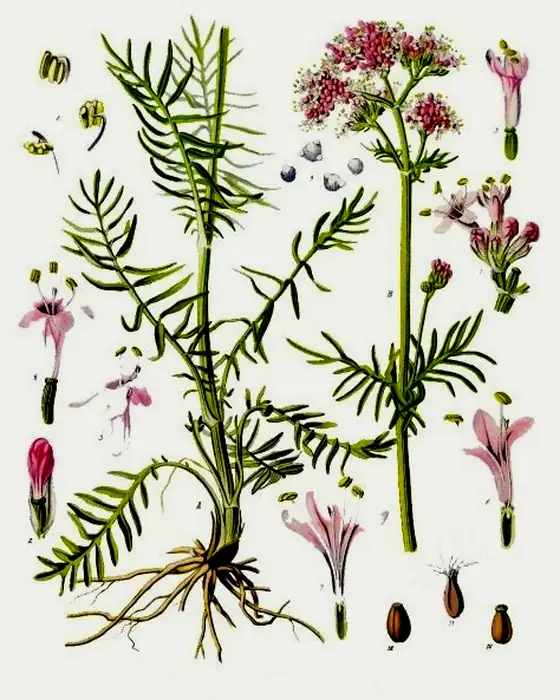
A tall perennial with sweet-scented, pale pink flowers and a root that smells of old socks once dried. Valerian loosens muscle and nervous tension and brings on sleep, and it suits people who run cold best.
- Energetics
- Warming, drying, relaxing
- Taste
- Pungent, bitter, earthy
- Family
- Caprifoliaceae (honeysuckle family)
- Parts used
- Root
Medicinal uses 4
The tags sort the evidence behind each use by kind. Members are able to tap a condition to compare every herb for it.
TTraditional useLLab and mechanism studiesCClinical studies
Shortens the time it takes to fall asleep, with effects that build over two to four weeks of nightly use.
Releases physical tension and nervous agitation.
Eases muscle cramps and menstrual cramping.
Loosens muscles that knot and cramp, from a stiff neck to a back in spasm.
Preparations
Root tincture, an overnight cold infusion, and capsules, taken nightly.
Members are able to see the amounts, ratios, and methods for each preparation, search by condition, and match herbs to your constitution.
Cautions
- Up to one person in ten feels wired rather than sleepy on valerian, most often people who run hot.
- It adds to sedatives, sleeping pills, and alcohol; avoid driving if drowsy.
- Stop two weeks before surgery.
Medication interactions
Practitioner Practitioners are able to see the one type of medicine flagged for valerian, each with the mechanism and what to do. The plain-language cautions above stay open to everyone.
Pregnancy & breastfeeding
PregnancyAvoid
Safety data are limited, and newborn withdrawal symptoms have been reported. Avoid during pregnancy.
BreastfeedingAvoid
It can sedate a nursing baby. Avoid while breastfeeding.
Practitioner Practitioners are able to see the full entry from the Moss Herbalism Pregnancy Safety Database: trimester ratings, uterine and placental action, breastfeeding and nursing-baby effects, chemistry, traditional use, studies, and sources.
Folklore
Medieval English herbalists called valerian all-heal. Cats roll in the bruised root as they do in catnip, and rat-catchers once baited traps with it; later retellings put valerian in the Pied Piper's pocket. Maud Grieve recorded in 1931 that British civilians were given valerian to steady their nerves during the air raids of the First World War. The name may come from the Latin valere, to be strong or well.
How to grow
A hardy perennial for moist, rich soil in sun or part shade; it reaches 5 feet in flower and self-sows freely. Dig the roots in autumn of the second year, wash them well, and dry or tincture them fresh.
In the wild
Damp meadows, streambanks, and woodland edges across Europe and western Asia. It has naturalized in parts of North America, where it can spread aggressively.
Every herb here fits some people better than others. Find out which ones fit you.