← All plantsWhite willow
Salix alba
Also: Willow bark, Salix
CoolingDryingTonifying
The bark behind aspirin, for aches, fevers, and hot, sore joints.
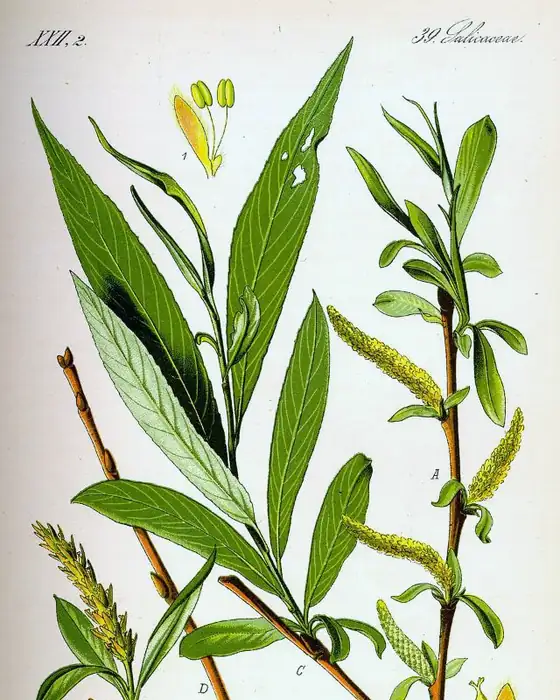
A fast-growing tree of riverbanks with long, narrow leaves silvered underneath. Willow bark cools inflammation and eases pain, building its effect over days of steady use, and its salicin is gentler on the stomach than aspirin because the body converts it to salicylic acid only after absorbing it.
- Energetics
- Cooling, drying, toning
- Taste
- Bitter, astringent
- Family
- Salicaceae (willow family)
- Parts used
- Bark of young branches
Medicinal uses 5
The tags sort the evidence behind each use by kind. Members are able to tap a condition to compare every herb for it.
TTraditional useLLab and mechanism studiesCClinical studies
Eases back pain and everyday aches; in a trial, an extract supplying 240 mg of salicin a day relieved flare-ups of low back pain.
Cools hot, inflamed, arthritic joints when taken steadily over weeks.
Takes the edge off headaches that come with heat and strain.
Brings down a fever and eases the aching muscles of flu.
Chilled willow tea on a cloth, held to the cheek, soothes an aching tooth.
Preparations
Bark decoction, tincture, standardized salicin extracts, and pain blends.
Members are able to see the amounts, ratios, and methods for each preparation, search by condition, and match herbs to your constitution.
Cautions
- People allergic to aspirin or other salicylates should leave it out.
- Not for children or teenagers with a fever or viral illness, because salicylates are tied to Reye's syndrome.
- Salicylates add to blood thinners; check with your prescriber, and stop two weeks before surgery.
- Gentler on the stomach than aspirin, but take care with stomach ulcers.
Medication interactions
Practitioner Practitioners are able to see the 2 types of medicine flagged for white willow, each with the mechanism and what to do. The plain-language cautions above stay open to everyone.
Pregnancy & breastfeeding
PregnancyAvoid
Willow's salicylates carry aspirin's pregnancy risks: late in pregnancy they can close a vital fetal blood vessel, the ductus arteriosus, too early, and they add to bleeding at delivery. Choose other pain relief.
BreastfeedingAvoid
Salicylates pass into breast milk, and babies are kept away from them because of Reye's syndrome.
Practitioner Practitioners are able to see the full entry from the Moss Herbalism Pregnancy Safety Database: trimester ratings, uterine and placental action, breastfeeding and nursing-baby effects, chemistry, traditional use, studies, and sources.
Folklore
Willow appears as a remedy for pain and fever in the Ebers Papyrus of ancient Egypt. In 1763 the English clergyman Edward Stone reported to the Royal Society that powdered willow bark cured agues, having noticed that it tasted as bitter as Peruvian cinchona bark. In 1828 Johann Buchner isolated salicin from the bark, and in 1897 chemists at Bayer made acetylsalicylic acid and sold it as aspirin, a name built from Spiraea, the old genus of meadowsweet, another salicylate plant.
How to grow
A fast-growing tree for wet ground and full sun; a cut branch pushed into moist soil will root. Strip bark in spring from two- or three-year-old branches, cut from coppiced or pollarded trees rather than from the trunk.
In the wild
Riverbanks, floodplains, and wet meadows across Europe, western and central Asia, and North Africa. It is widely planted in North America, where dozens of native willows line the streams.
Every herb here fits some people better than others. Find out which ones fit you.