← All plants
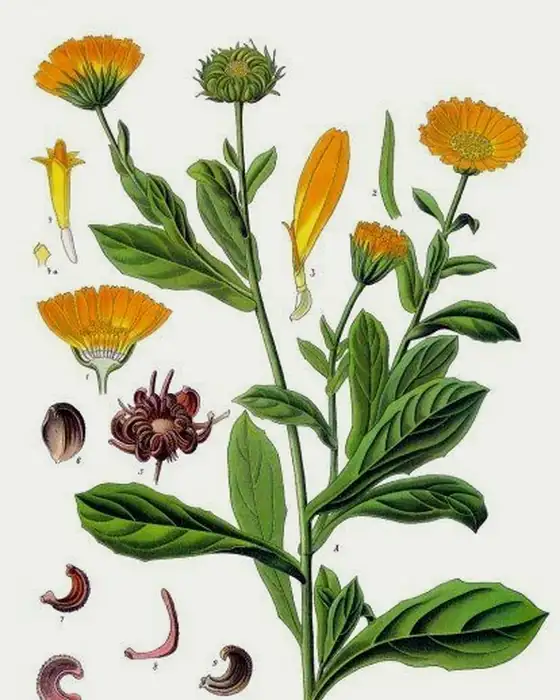
Archival plate of Calendula officinalis, from Köhler's Medizinal-Pflanzen, 1887 to 1898
The Moss Herbal Database
Calendula officinalis
Fam. Asteraceae
Parts: Flower heads
Plate: Köhler's Medizinal-Pflanzen, 1887 to 1898 ↗

Calendula

Calendula officinalis
Also: Pot marigold, Marigold
WarmingDryingTonifying

Sunny, resinous flowers that heal skin inside and out.

Bright orange and yellow flower heads, sticky with resin. Calendula heals wounds wherever they are, on the skin or along the gut lining, and keeps lymph moving through swollen, boggy tissue.

Energetics
Mildly warming, drying, tonifying
Taste
Bitter, resinous, salty
Family
Asteraceae (daisy family)
Parts used
Flower heads

Medicinal uses 7

The tags sort the evidence behind each use by kind. Members are able to tap a condition to compare every herb for it.

Traditional useLab and mechanism studiesClinical studies

Preparations

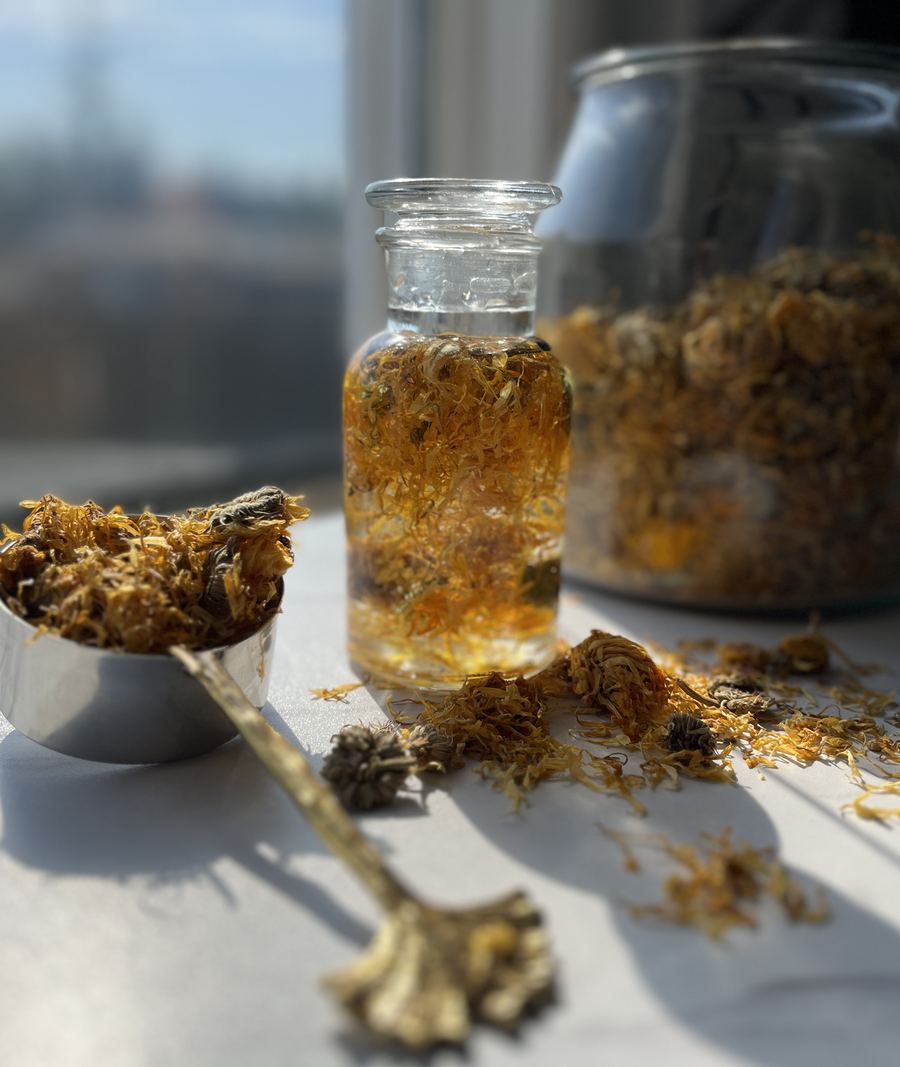
A jar of calendula infused oil beside dried calendula flowers on a brass scoop
Calendula infused oil, from the Moss Herbalism apothecary.

Infused oil and salve, tea for the gut, skin washes, and a high-alcohol tincture.

Members are able to see the amounts, ratios, and methods for each preparation, search by condition, and match herbs to your constitution.

Cautions

  • Rarely, a daisy-family allergy shows up as a skin reaction.

Pregnancy & breastfeeding

PregnancyTopical; oral with care

Calendula salves and washes are a staple of pregnancy skin care. Medicinal doses by mouth carry an old reputation for bringing on menstruation, so keep internal use light, especially early on.

BreastfeedingTopical

Topical use is low risk. Take medicinal doses by mouth with care.

Practitioner Practitioners are able to see the full entry from the Moss Herbalism Pregnancy Safety Database: trimester ratings, uterine and placental action, breastfeeding and nursing-baby effects, chemistry, traditional use, studies, and sources.

Folklore

The name comes from the Latin calendae, the first day of the month, for a plant that seemed to bloom in every one of them, and medieval Christians called it Mary's gold. The flowers open with the sun and close at dusk, and in The Winter's Tale Shakespeare has the marigold go to bed with the sun and rise with him weeping. In 1597 John Gerard described grocers in Germany who kept barrels of the dried petals and sold them by the penny to color and flavor broth.

How to grow

One of the easiest annuals. Sow directly in spring or late summer in full sun; it flowers best in cool weather. Pick the heads every two or three days, when fully open and sticky, and the plant keeps blooming until frost. It self-sows.

In the wild

Known only from gardens. Its likely ancestor, the field marigold (Calendula arvensis), grows wild in Mediterranean fields and vineyards.

Every herb here fits some people better than others. Find out which ones fit you.