Moss Herbalism

The Herbal Library

A clinical herbalist's materia medica, searchable by plant and by condition.

Access
Log in

Photo: Janna, Mellow Nectar Co.

← All plants
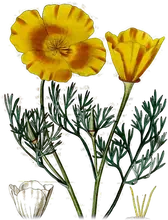
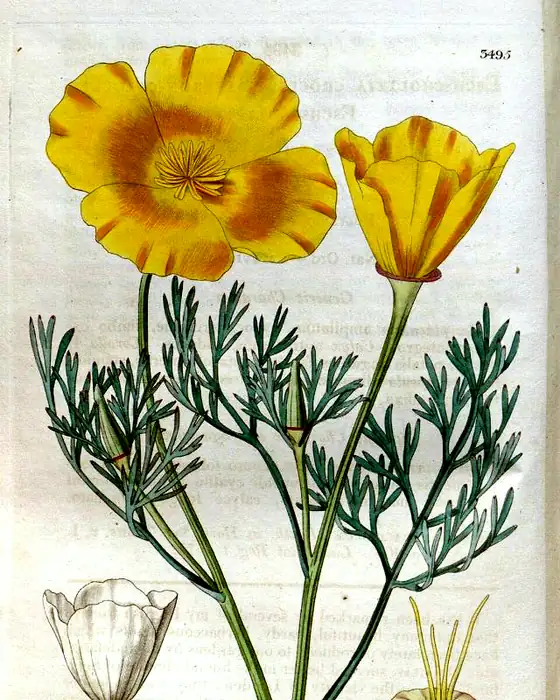
Archival plate of Eschscholzia californica, from Curtis's Botanical Magazine, plate 3495, 1836
The Herbal Library
Eschscholzia californica
Fam. Papaveraceae
Parts: Whole flowering plant, root included
Plate: Curtis's Botanical Magazine, plate 3495, 1836 ↗

California poppy

Eschscholzia californica
Also: Golden poppy, Copa de oro, Cup of gold
CoolingDryingRelaxing

For the pain and spasm that keep you up at night.

Blue-green, finely cut leaves and silky orange cups that close at night and on cloudy days. California poppy relaxes spasm and dulls pain enough to let sleep come, without the narcotic alkaloids of the opium poppy.

Energetics
Cooling, drying, relaxing
Taste
Bitter
Family
Papaveraceae (poppy family)
Parts used
Whole flowering plant, root included

Medicinal uses 5

The tags sort the evidence behind each use by kind. Members are able to tap a condition to compare every herb for it.

Traditional useLab and mechanism studiesClinical studies
  • For nights when an aching back or cramping legs won't let you drift off.

  • Dulls the throb of a pulled muscle or a tight, aching head.

  • Relaxes cramping legs and tight backs.

  • Settles nervous tension, usually in formulas with other calming herbs.

  • Stirred into a bedtime cough syrup, it settles the cough enough for sleep.

Preparations

Bedtime tincture, tea, and sleep blends.

Members

The doses and blends for California poppy

Members see the amounts, ratios and methods for every preparation of every plant, and match herbs to their constitution.

Membership is coming soon.

Cautions

  • Can deepen the effect of sedatives, sleep medicines, and alcohol; don't drive after a full dose.
  • A few people taking hormone therapy feel stimulated rather than calmed by it.
  • Pain from an injury is a signal to rest the injury. Use it to sleep, not to push through.

Medication interactions

Practitioner

2 types of medicine flagged for California poppy

Each one with what can happen, why, what to do, and the sources.

Practitioner membership is coming soon.

Pregnancy & breastfeeding

PregnancyAvoid

Its isoquinoline alkaloids act on the nervous system and cross the placenta.

BreastfeedingAvoid

Its alkaloids are weak bases that concentrate in milk, and they act on a newborn's nervous system.

Practitioner

The full Pregnancy Safety Database entry

Trimester ratings, uterine and placental action, nursing-baby effects, chemistry, studies and sources.

Practitioner membership is coming soon.

Folklore

Spanish sailors are said to have seen whole hillsides of orange from the sea, and Californians still call the flower copa de oro, cup of gold, with a legend that the petals drop gold into the soil. The German poet and naturalist Adelbert von Chamisso named the genus for his friend Johann Friedrich von Eschscholtz, the ship's doctor on their 1816 Russian expedition. California made it the state flower in 1903 and keeps California Poppy Day each April 6.

How to grow

An easy annual or short-lived perennial for full sun and lean, sandy soil. Sow where it will grow in fall or early spring, since the taproot resents transplanting. It self-sows. Harvest the whole plant in flower and dry it, root and all.

In the wild

Grasslands, coastal bluffs, and roadsides of California and southern Oregon, naturalized in dry, open ground in many temperate regions.