← All plants
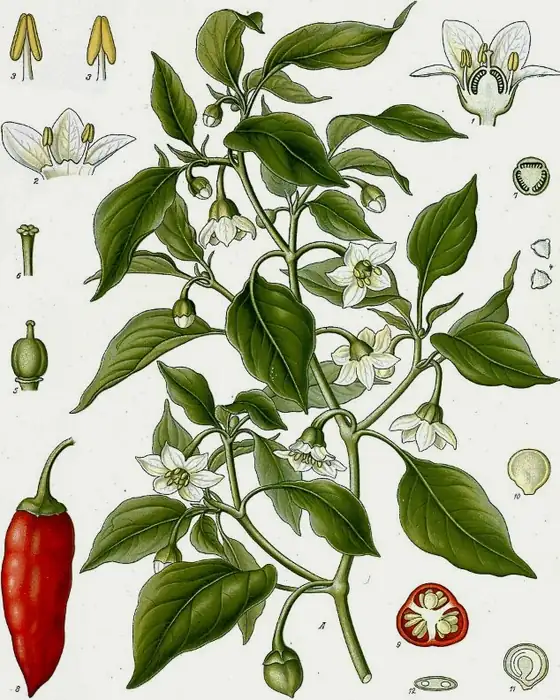
Archival plate of Capsicum annuum, from Köhler's Medizinal-Pflanzen, 1887 to 1898
The Moss Herbal Database
Capsicum annuum
Fam. Solanaceae
Parts: Fruit
Plate: Köhler's Medizinal-Pflanzen, 1887 to 1898 ↗

Cayenne

Capsicum annuum
Also: Chili pepper, Red pepper, Capsicum
WarmingDryingTonifying

Drives heat and blood from the center out to the edges.

A bushy pepper plant with slender, glossy red fruit that burn with capsaicin. Cayenne pushes circulation out to cold hands and feet, warms a cold digestion, and, rubbed into the skin, wears down the pain signal in sore joints and nerves.

Energetics
Hot, drying, toning
Taste
Hot, pungent
Family
Solanaceae (nightshade family)
Parts used
Fruit

Medicinal uses 6

The tags sort the evidence behind each use by kind. Members are able to tap a condition to compare every herb for it.

Traditional useLab and mechanism studiesClinical studies
  • Sends warmth and blood out to cold hands and feet; a pinch in food or a few drops in a formula carries the other herbs along with it.

  • Capsaicin cream, used three or four times a day, eases arthritic joints within a few weeks by using up substance P, the nerve's pain messenger.

  • Capsaicin creams and patches relieve nerve pain after shingles and in diabetic neuropathy.

  • A warming liniment draws blood into bruised, sprained, and strained tissue.

  • Wakes a poor appetite and warms a cold, slow digestion.

  • A pinch in hot ginger tea warms a chilled body and brings on a sweat at the start of a cold.

Preparations

Powder in food and drinks, drop doses of tincture, capsaicin creams, and warming liniments.

Members are able to see the amounts, ratios, and methods for each preparation, search by condition, and match herbs to your constitution.

Cautions

  • People sensitive to nightshades leave it out.
  • Wash hands well after handling peppers or creams, and keep them away from eyes, mucous membranes, and broken skin.
  • Large amounts can bring on heartburn and loose stools.

Medication interactions

Practitioner Practitioners are able to see the 3 types of medicine flagged for cayenne, each with the mechanism and what to do. The plain-language cautions above stay open to everyone.

Pregnancy & breastfeeding

PregnancyCulinary amounts

Cooking amounts are eaten through pregnancy around the world. Strong doses can worsen pregnancy heartburn, and capsaicin creams stay away from the perineum late in pregnancy and in labor.

BreastfeedingCulinary amounts

Cooking amounts are considered compatible; spicy meals can flavor the milk.

Practitioner Practitioners are able to see the full entry from the Moss Herbalism Pregnancy Safety Database: trimester ratings, uterine and placental action, breastfeeding and nursing-baby effects, chemistry, traditional use, studies, and sources.

Folklore

Chilies were domesticated in Mexico at least six thousand years ago. Columbus, sailing for the black pepper of the Indies, called them pimientos after a spice they are not related to, and within a century Portuguese traders had carried them around Africa and Asia. In 1912 the pharmacist Wilbur Scoville measured their heat by diluting extracts until a panel of tasters could no longer feel the burn. Birds cannot feel capsaicin at all; they eat the fruit and scatter the seeds, while mammals, whose teeth would crush them, are kept away.

How to grow

A tender perennial grown as an annual. Start seed indoors on a warm mat eight to ten weeks before the last frost, and plant out once nights stay warm, in full sun and rich, well-drained soil. Pick the pods when fully red and string them up to dry.

In the wild

Its wild ancestor, the tiny chiltepin, still grows in thorn scrub and canyon bottoms from southern Arizona and Texas through Mexico into South America.

Every herb here fits some people better than others. Find out which ones fit you.