← All plants
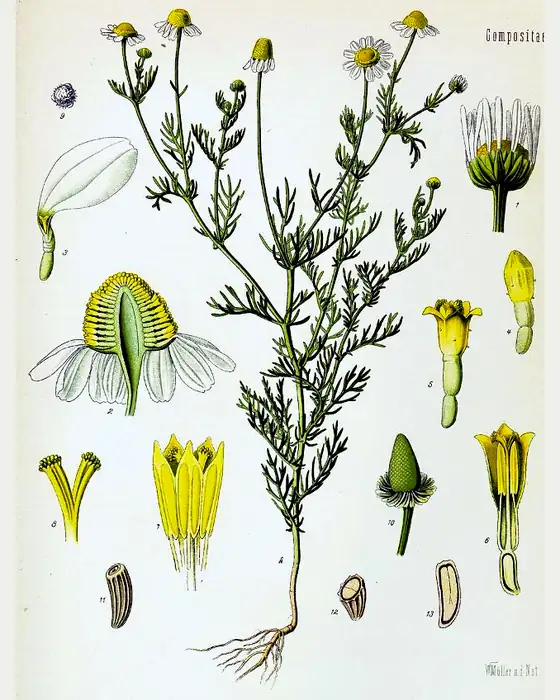
Archival plate of Matricaria chamomilla, from Köhler's Medizinal-Pflanzen, 1887 to 1898
The Moss Herbal Database
Matricaria chamomilla
Fam. Asteraceae
Parts: Flowers
Plate: Köhler's Medizinal-Pflanzen, 1887 to 1898 ↗

Chamomile

Matricaria chamomilla
Also: German chamomile, Matricaria recutita
WarmingNeutral moistureRelaxing

Settles the belly and the nerves in one cup.

Small white daisies around a hollow, domed yellow center, smelling of green apple. Chamomile calms the whole nervous system by way of the gut, which makes it the herb for upset that starts in the stomach and spreads.

Energetics
Warming, neutral, relaxing
Taste
Bitter, aromatic, sweet
Family
Asteraceae (daisy family)
Parts used
Flowers

Medicinal uses 8

The tags sort the evidence behind each use by kind. Members are able to tap a condition to compare every herb for it.

Traditional useLab and mechanism studiesClinical studies
  • Relaxes spasm in the gut wall, moves gas, and eases bloating, especially when nerves are part of the picture.

  • Calms agitation, particularly the kind that lands in the stomach and pulls downward.

  • Helps an already tired body wind down and fall asleep.

  • Loosens uterine cramping the same way it loosens the gut.

  • As a compress or wash, soothes inflamed, itchy skin and sore, puffy eyes.

  • Settles nervous, cramping, downward-rushing bowels.

  • A strong cup or a warm chamomile bath unclenches muscles held tight by stress.

  • Eases the irritability and low spirits before a period; a trial found it helped the emotional side of PMS.

Preparations

A covered tea of the flowers, tincture, infused oil, and compresses.

Members are able to see the amounts, ratios, and methods for each preparation, search by condition, and match herbs to your constitution.

Cautions

  • People allergic to ragweed and other daisy-family plants occasionally react to chamomile.
  • The essential oil is far more concentrated than the tea and is used differently.

Medication interactions

Practitioner Practitioners are able to see the 2 types of medicine flagged for chamomile, each with the mechanism and what to do. The plain-language cautions above stay open to everyone.

Pregnancy & breastfeeding

PregnancyOccasional tea

An occasional cup of tea is the traditional use. Chamomile carries an old reputation for bringing on menstruation, and one observational study linked heavy daily use with preterm birth, so medicinal doses and the essential oil wait until after pregnancy.

BreastfeedingOccasional tea

A cup or two is a long-standing use, and chamomile has a history with colicky babies. Large amounts can make a nursing baby drowsy.

Practitioner Practitioners are able to see the full entry from the Moss Herbalism Pregnancy Safety Database: trimester ratings, uterine and placental action, breastfeeding and nursing-baby effects, chemistry, traditional use, studies, and sources.

Folklore

Chamomile takes its name from the Greek khamaimelon, ground apple, for the scent that rises when the plant is crushed underfoot, and Spanish speakers kept the apple in manzanilla. Gardeners planted it beside sickly plants and called it the plant's physician. Elizabethan households laid whole lawns of the low Roman species, which grows thicker the more it is walked on. The Anglo-Saxon Nine Herbs Charm, copied out around the year 1000, names it among the nine plants sung over a wound.

How to grow

An easy annual. Scatter seed on the surface in spring or fall and press it in without covering, since it needs light to germinate. Give it full sun and light soil and it will self-sow. Pick the flower heads every few days, once the white petals lie flat or begin to fold back.

In the wild

Native to southern and eastern Europe and western Asia, now naturalized along field edges, roadsides, and waste ground across the temperate world. Its petal-less cousin, pineapple weed (Matricaria discoidea), grows in packed dirt and gravel and smells of the same green fruit.

Every herb here fits some people better than others. Find out which ones fit you.