← All plantsHawthorn
Crataegus monogyna
Also: May tree, Whitethorn, Crataegus laevigata, Crataegus oxyacantha
CoolingDryingTonifying
A heart tonic for the muscle and the emotions.
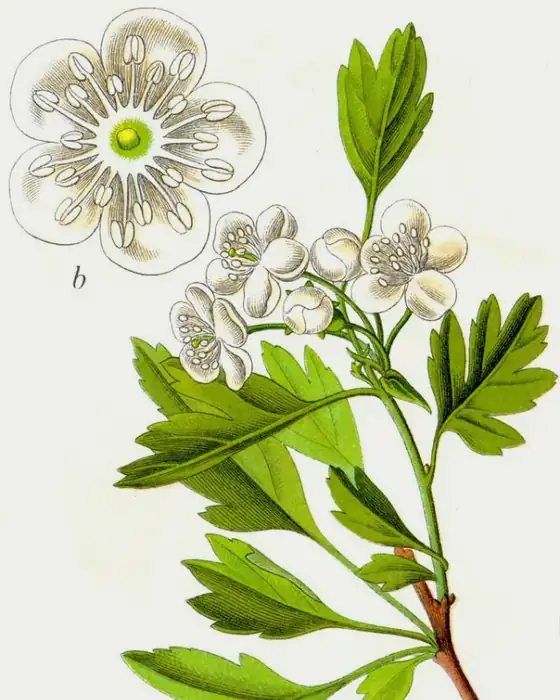
A thorny small tree of hedgerows with white May blossom in spring and dark red haws in autumn. Hawthorn strengthens and steadies the heart, making each beat more efficient while easing strain on the vessels, and it comforts the grieving heart as well.
- Energetics
- Cooling, drying, tonifying
- Taste
- Sweet, sour, astringent
- Family
- Rosaceae (rose family)
- Parts used
- Berries, leaves and flowers
Medicinal uses 4
The tags sort the evidence behind each use by kind. Members are able to tap a condition to compare every herb for it.
TTraditional useLLab and mechanism studiesCClinical studies
Strengthens the heart muscle and improves blood flow through the coronary arteries.
Gently lowers blood pressure over weeks of steady use.
Settles the anxious restlessness and palpitations that travel with a strained heart.
Heart-opening comfort in heartbreak, with thorns that guard a vulnerable spirit.
Preparations
Berry decoction, leaf and flower tea, syrups, jams, and elixirs, taken steadily over weeks.
Members are able to see the amounts, ratios, and methods for each preparation, search by condition, and match herbs to your constitution.
Cautions
- Hawthorn adds to the effect of heart and blood pressure medicines, digoxin among them, so talk with your prescriber before taking it alongside them. Tea in formulas is usually very gentle.
- Strain out the seeds rather than crushing them.
- Chest pain or any new heart symptom needs medical care.
Medication interactions
Practitioner Practitioners are able to see the 2 types of medicine flagged for hawthorn, each with the mechanism and what to do. The plain-language cautions above stay open to everyone.
Pregnancy & breastfeeding
PregnancyFood and tea only
Low-dose teas and food uses appear safe, and a Norwegian study of pregnant women drinking hawthorn berry tea found no significant problems. Skip high-dose supplements, especially near delivery.
BreastfeedingOccasional tea
Occasional tea or food use is generally considered compatible; concentrated supplements are best taken with practitioner guidance.
Practitioner Practitioners are able to see the full entry from the Moss Herbalism Pregnancy Safety Database: trimester ratings, uterine and placental action, breastfeeding and nursing-baby effects, chemistry, traditional use, studies, and sources.
Folklore
Hawthorn blossom is the may, the flower of May Day, and boughs went up over doors on the first of May, though carrying the blossom indoors was unlucky across much of England. Its scent carries trimethylamine, the same compound given off by decay. A lone hawthorn in an Irish field belongs to the fairies, and in 1999 a new road in County Clare was rerouted to spare one. At Glastonbury, a thorn said to have sprung from the staff of Joseph of Arimathea flowers in winter, and a sprig is sent to the monarch every Christmas.
How to grow
A tough, slow-growing small tree or hedge for any well-drained soil in sun. It flowers in late spring and fruits in autumn, and its thorns shelter nesting birds. Gather the haws after the first frost.
In the wild
Hedgerows, woodland edges, and old pastures across Europe, North Africa, and western Asia. North America has many native hawthorns, used the same way.
Every herb here fits some people better than others. Find out which ones fit you.