← All plantsHops
Humulus lupulus
Also: Hop, Common hop
CoolingDryingRelaxing
A strong, bitter sleep herb for hot, wound-up nights.
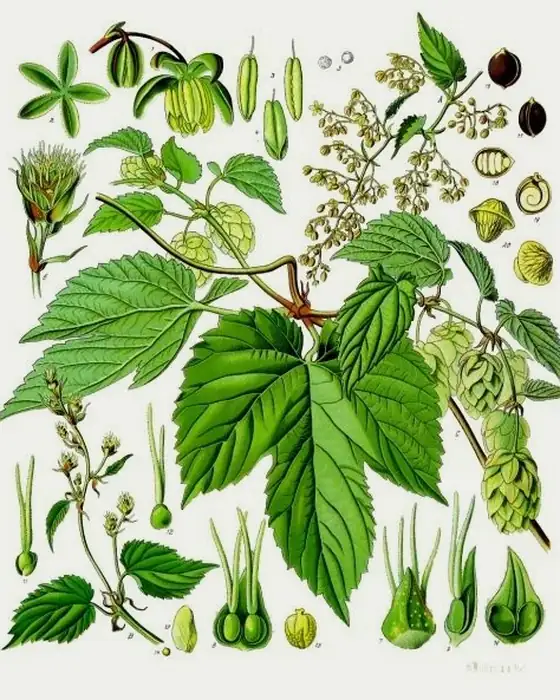
A vigorous climbing bine that twists clockwise up anything it can reach, with papery green cones dusted inside with sticky yellow lupulin. Hops brings on sleep, cools pain and spasm, and stirs a sluggish stomach with its bitterness.
- Energetics
- Cold, drying, relaxing
- Taste
- Bitter, resinous
- Family
- Cannabaceae (hemp family)
- Parts used
- Female cones (strobiles)
Medicinal uses 5
The tags sort the evidence behind each use by kind. Members are able to tap a condition to compare every herb for it.
TTraditional useLLab and mechanism studiesCClinical studies
One of the stronger sleep herbs, best for people who run hot and tense at night.
Settles restlessness and irritability, especially with heat and agitation.
Its bitterness gets digestive juices and bile flowing and eases cramping in the gut.
Dulls pain and spasm that keep a person awake.
Hop extracts eased hot flashes in small trials of women in menopause.
Preparations
Bedtime tincture, bitter tea, foot baths and hop pillows, and sleep blends with valerian.
Members are able to see the amounts, ratios, and methods for each preparation, search by condition, and match herbs to your constitution.
Cautions
- Can leave sensitive people groggy after a short night; pairing it with valerian helps.
- Hops is very cooling; people in a deep or heavy depression do better with other herbs.
- Its plant estrogens are strong; talk with your practitioner if you take hormone therapy or have a hormone-sensitive condition.
- Hops is toxic to dogs; keep spent brewing hops and pillows away from them.
Medication interactions
Practitioner Practitioners are able to see the 2 types of medicine flagged for hops, each with the mechanism and what to do. The plain-language cautions above stay open to everyone.
Pregnancy & breastfeeding
PregnancyAvoid
Hops carries one of the strongest plant estrogens known, and its sedative action keeps it out of pregnancy.
BreastfeedingAvoid
Its strong plant estrogen and sedative action could reach a nursing baby. Fennel and nettle are gentler milk-supply herbs.
Practitioner Practitioners are able to see the full entry from the Moss Herbalism Pregnancy Safety Database: trimester ratings, uterine and placental action, breastfeeding and nursing-baby effects, chemistry, traditional use, studies, and sources.
Folklore
Pliny called it lupus salictarius, the willow wolf, for the way its bines smother willows, and lupulus, little wolf, survives in the Latin name. In the twelfth century Hildegard of Bingen noted that its bitterness keeps drinks from spoiling, the reason hops took over brewing. Pickers in the hop gardens of Kent were said to tire quickly at their work, and pillows stuffed with hops became a remedy for sleeplessness.
How to grow
A hardy perennial that climbs 15 to 20 feet in a season. Plant a rhizome in rich soil and full sun, and give it a tall trellis or strings. Only female plants make cones; pick them in late summer when they feel papery and smell strongly.
In the wild
Riverbanks, thickets, and hedgerows across Europe, western Asia, and North America.
Every herb here fits some people better than others. Find out which ones fit you.