← All plants
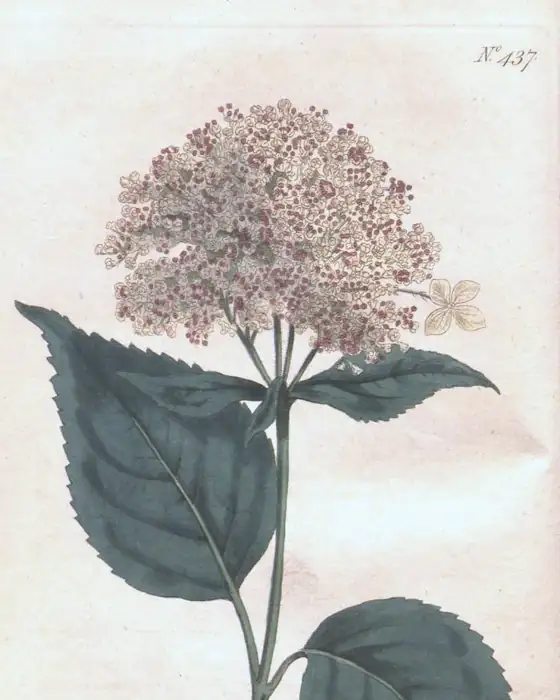
Archival plate of Hydrangea arborescens, from Curtis's Botanical Magazine, plate 437, 1799
The Moss Herbal Database
Hydrangea arborescens
Fam. Hydrangeaceae
Parts: Root
Plate: Curtis's Botanical Magazine, plate 437, 1799 ↗

Hydrangea root

Hydrangea arborescens
Also: Wild hydrangea, Smooth hydrangea, Sevenbark
CoolingMoisteningRelaxing

An old remedy for gravel and kidney stones.

A native shrub of shady slopes and stream banks with broad, toothed leaves and domes of creamy white flowers, the wild parent of the garden 'Annabelle'. Its root soothes the urinary tract and was the Eclectic physicians' classic remedy for gravel and small stones.

Energetics
Cooling, moistening, relaxing
Taste
Sweet, slightly pungent
Family
Hydrangeaceae (hydrangea family)
Parts used
Root

Medicinal uses 3

The tags sort the evidence behind each use by kind. Members are able to tap a condition to compare every herb for it.

Traditional useLab and mechanism studiesClinical studies

Preparations

Root decoction, tincture, and blends for gravel.

Members are able to see the amounts, ratios, and methods for each preparation, search by condition, and match herbs to your constitution.

Cautions

  • Large doses can cause dizziness, chest tightness, and stomach upset; keep to standard doses.
  • The leaves and flowers are toxic; use only the root.
  • Kidney stone pain, blood in the urine, or a fever needs medical care.

Medication interactions

Practitioner Practitioners are able to see the 2 types of medicine flagged for hydrangea root, each with the mechanism and what to do. The plain-language cautions above stay open to everyone.

Pregnancy & breastfeeding

PregnancyAsk your practitioner

Hydrangea has no known action on the uterus, but its coumarins thin the blood slightly, a concern near delivery, and pregnancy data are thin. Gentler urinary herbs are usually chosen.

BreastfeedingAsk your practitioner

Its mildly blood-thinning coumarins are the concern; check with your practitioner first.

Practitioner Practitioners are able to see the full entry from the Moss Herbalism Pregnancy Safety Database: trimester ratings, uterine and placental action, breastfeeding and nursing-baby effects, chemistry, traditional use, studies, and sources.

Folklore

The stem bark peels away in several thin layers of different colors, which gave the plant the name sevenbark. The Cherokee used the root for kidney troubles, and settlers and Eclectic doctors took it up for gravel and stones. Hydrangea means water vessel, for its cup-shaped seed capsules.

How to grow

A hardy native shrub for part shade and moist, rich soil. Cut it back hard in late winter; it flowers on new growth. Dig roots in autumn and chop them while fresh, since they dry very hard.

In the wild

Shaded slopes, stream banks, and rich woods of the eastern United States, from New York to Florida and west to Missouri and Oklahoma.

Every herb here fits some people better than others. Find out which ones fit you.