The Herbal Library
Reynoutria japonicaFam. Polygonaceae
Parts: Rhizome and root
Japanese knotweed
Reynoutria japonica
Also: Hu zhang, Itadori, Polygonum cuspidatum, Fallopia japonica
CoolingDryingTonifying
The tiger cane root that cools inflammation and moves the blood.
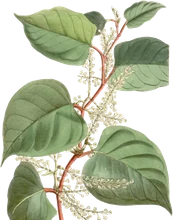
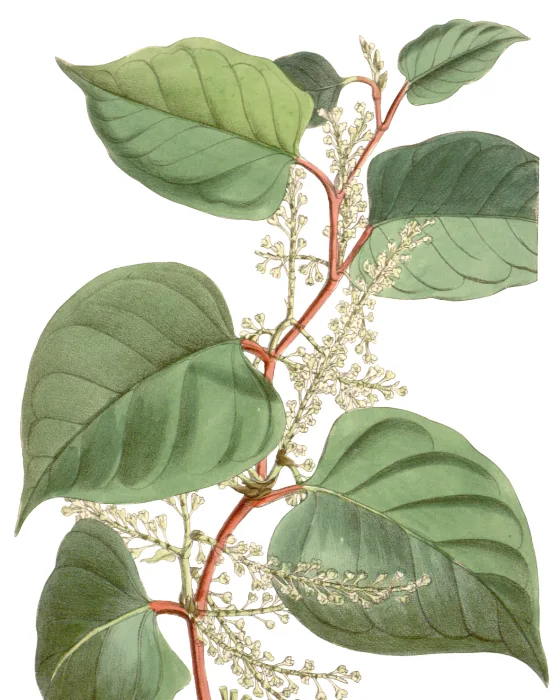
A towering perennial with hollow, bamboo-like canes freckled red, zigzag stems, and broad heart-shaped leaves, topped in late summer with frothy sprays of small cream flowers. It comes from Japan, China, Korea and Taiwan, reached European gardens as an ornamental in the 1840s, and now runs along rivers, rail lines and roadsides across North America, Europe and Australasia. The rhizome is hu zhang in Chinese medicine, a root for heat, damp and stuck blood, and the plant is the main commercial source of resveratrol. Western herbalists know it best from Stephen Buhner's Lyme protocols, where it is a central herb.
- Energetics
- Cooling, drying, toning
- Taste
- Bitter, slightly astringent
- Family
- Polygonaceae (buckwheat family)
- Parts used
- Rhizome and root