← All plants
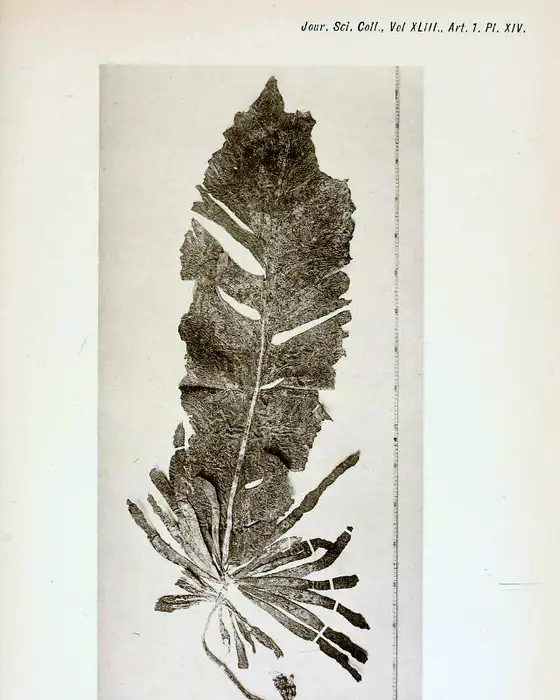
Archival plate of Alaria esculenta, from Yendo, A Monograph of the Genus Alaria, 1919, plate 14
The Moss Herbal Database
Alaria esculenta
Fam. Alariaceae
Parts: Blades
Plate: Yendo, A Monograph of the Genus Alaria, 1919, plate 14 ↗

Kelp

Alaria esculenta
Also: Winged kelp, Dabberlocks, Atlantic wakame
CoolingMoisteningRelaxing

A mineral-rich sea vegetable that moistens and nourishes.

A long, ribbon-like brown seaweed with a firm midrib, anchored to wave-swept rocks at the lowest tides. Kelp feeds the body iodine, magnesium, calcium, and trace minerals, and its slippery alginates soothe and moisten tissue inside and out.

Energetics
Cooling, moistening, relaxing
Taste
Salty, sweet
Family
Alariaceae (kelps, order Laminariales)
Parts used
Blades

Medicinal uses 4

The tags sort the evidence behind each use by kind. Members are able to tap a condition to compare every herb for it.

Traditional useLab and mechanism studiesClinical studies
  • A food-medicine for depleted, dried-out bodies, rich in iodine, magnesium, calcium, potassium, and trace minerals.

  • Its iodine nourishes a thyroid short of iodine.

  • Softened blades laid on a minor burn or sunburn cool and moisten the skin.

  • Wrapped around strains and sprains, it soothes the tissue and supports healing.

Preparations

Seaweed in food and broth, and softened blades as wraps and baths.

Members are able to see the amounts, ratios, and methods for each preparation, search by condition, and match herbs to your constitution.

Cautions

  • Iodine content varies widely: kelp is a loose name for many large brown seaweeds, and kombu (Laminaria) carries far more iodine than alaria. Too much iodine can upset the thyroid; check with your practitioner if you have a thyroid condition.
  • Seaweeds soak up heavy metals from polluted water. Buy tested seaweed from clean, cold water.

Medication interactions

Practitioner Practitioners are able to see the 2 types of medicine flagged for kelp, each with the mechanism and what to do. The plain-language cautions above stay open to everyone.

Pregnancy & breastfeeding

PregnancyAvoid concentrated amounts

Concentrated seaweed can deliver far too much iodine, which disturbs the baby's developing thyroid, and it can carry heavy metals. Iodized salt, dairy, and a prenatal vitamin with iodine cover pregnancy's needs.

BreastfeedingAvoid concentrated amounts

Excess iodine passes into breast milk and can upset a baby's thyroid.

Practitioner Practitioners are able to see the full entry from the Moss Herbalism Pregnancy Safety Database: trimester ratings, uterine and placental action, breastfeeding and nursing-baby effects, chemistry, traditional use, studies, and sources.

Folklore

Alaria means winged, for the thin, wavy blade that runs along either side of the midrib. In Ireland and Scotland it is dabberlocks, gathered at the spring low tides and eaten raw or boiled. The word kelp first meant not the plant but the ash of burned seaweed, an industry that employed thousands in the Scottish Highlands and islands around 1800, selling soda ash to glassmakers and soap boilers.

How to grow

Wild only. It grows on exposed rocks at and below the lowest tide line, so it is gathered at the year's lowest spring tides. Cut the blade above the stipe so it regrows, and check local harvest rules.

In the wild

Cold, wave-exposed shores of the North Atlantic, from Brittany and Britain to Iceland, Norway, Atlantic Canada, and New England, with close relatives such as Alaria marginata on Pacific Northwest shores.

Every herb here fits some people better than others. Find out which ones fit you.