← All plants
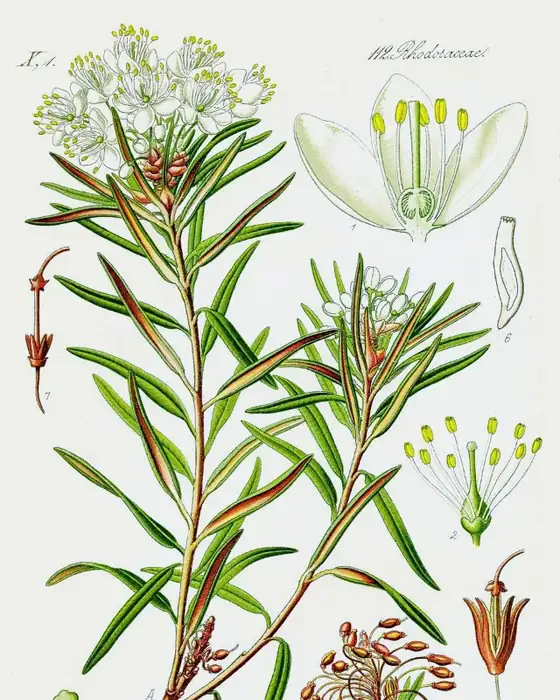
Archival plate of Rhododendron groenlandicum, from Thomé, Flora von Deutschland, Österreich und der Schweiz, 1885
The Moss Herbal Database
Rhododendron groenlandicum
Fam. Ericaceae
Parts: Leaves
Plate: Thomé, Flora von Deutschland, Österreich und der Schweiz, 1885 ↗

Labrador tea

Rhododendron groenlandicum
Also: Bog Labrador tea, Ledum groenlandicum, Hudson's Bay tea
WarmingDryingTonifying

A resinous bog-shrub tea for colds and congestion, taken weak and seldom.

A low evergreen bog shrub with narrow, leathery leaves whose edges curl under, rusty felt on their undersides, and rounded clusters of white flowers in early summer. Its spicy, resinous leaves loosen mucus in the chest and sinuses and settle the stomach when taken weak and in small amounts.

Energetics
Warming, drying, toning
Taste
Resinous, spicy, aromatic
Family
Ericaceae (heath family)
Parts used
Leaves

Medicinal uses 3

The tags sort the evidence behind each use by kind. Members are able to tap a condition to compare every herb for it.

Traditional useLab and mechanism studiesClinical studies

Preparations

Weak, occasional leaf tea, and diluted washes for the skin.

Members are able to see the amounts, ratios, and methods for each preparation, search by condition, and match herbs to your constitution.

Cautions

  • The leaves contain ledol and grayanotoxins, which in strong or frequent doses cause drowsiness, vomiting, and even delirium. Keep the tea weak and occasional, and never boil it.
  • Toxic bog laurel and bog rosemary grow in the same bogs. Labrador tea is the one with rusty fuzz under its leaves.

Medication interactions

Practitioner Practitioners are able to see the one type of medicine flagged for Labrador tea, each with the mechanism and what to do. The plain-language cautions above stay open to everyone.

Pregnancy & breastfeeding

PregnancyAvoid

Its ledol and grayanotoxins are not considered safe in pregnancy.

BreastfeedingAvoid

Its ledol and grayanotoxins could reach a nursing baby; it is avoided while nursing.

Folklore

Dene, Cree, Inuit, and many other northern peoples have brewed the leaves for generations, and fur traders took up the drink in place of imported tea, which gave it the name Hudson's Bay tea. American colonists are said to have drunk it instead of taxed British tea during the Revolution. Its old genus name, Ledum, comes from ledon, the Greek name for a resin-bearing rockrose.

How to grow

In practice it is gathered wild: a slow shrub of acid bogs, fens, and wet conifer forest. Take a few leaves from each plant in summer, and never strip one bare.

In the wild

Bogs, muskeg, and wet coniferous forest across Canada, Alaska, Greenland, and the northern United States, south along the mountains and coast to Oregon.

Every herb here fits some people better than others. Find out which ones fit you.