← All plants
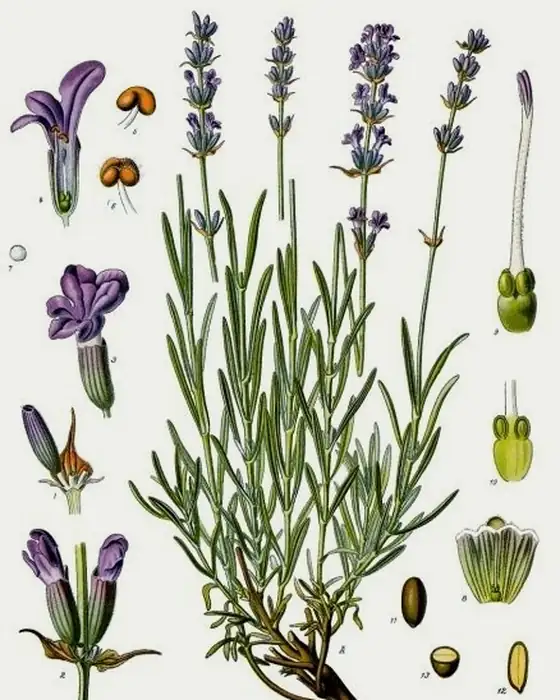
Archival plate of Lavandula angustifolia, from Köhler's Medizinal-Pflanzen, 1887 to 1898
The Moss Herbal Database
Lavandula angustifolia
Fam. Lamiaceae
Parts: Flower buds
Plate: Köhler's Medizinal-Pflanzen, 1887 to 1898 ↗

Lavender

Lavandula angustifolia
Also: English lavender, True lavender
WarmingDryingRelaxing

Releases tension and lifts a heavy, anxious mood.

A silver-leaved Mediterranean shrub with spikes of violet flower buds. Lavender relaxes spasm and tension in muscle and gut, calms agitation, and lifts the spirits when anxiety comes tangled with low mood.

Energetics
Warming, drying, relaxing
Taste
Aromatic, bitter, sweet
Family
Lamiaceae (mint family)
Parts used
Flower buds

Medicinal uses 10

The tags sort the evidence behind each use by kind. Members are able to tap a condition to compare every herb for it.

Traditional useLab and mechanism studiesClinical studies

Preparations

A gentle tea in blends, diluted oil, baths, and sachets.

Members are able to see the amounts, ratios, and methods for each preparation, search by condition, and match herbs to your constitution.

Cautions

  • Very drying with regular topical use.
  • About one person in ten tastes it as soapy and unpleasant.
  • Take the essential oil by mouth only as standardized capsules, and not in pregnancy.

Medication interactions

Practitioner Practitioners are able to see the one type of medicine flagged for lavender, each with the mechanism and what to do. The plain-language cautions above stay open to everyone.

Pregnancy & breastfeeding

PregnancyTea and aromatherapy

Aromatherapy and occasional tea have a good safety record, including in labor. Concentrated oral lavender oil capsules have no pregnancy data and are avoided.

BreastfeedingTea and aromatherapy

Aromatherapy and tea are generally considered compatible; avoid essential oil by mouth.

Practitioner Practitioners are able to see the full entry from the Moss Herbalism Pregnancy Safety Database: trimester ratings, uterine and placental action, breastfeeding and nursing-baby effects, chemistry, traditional use, studies, and sources.

Folklore

Romans scented their baths with lavender, and the name is often traced to the Latin lavare, to wash; washerwomen were once called lavenders. In 1910 the French chemist René-Maurice Gattefossé burned his hand in a laboratory explosion and treated it with lavender oil, a story he told in the 1937 book that coined the word aromathérapie. Street sellers cried lavender through London summers for centuries.

How to grow

A woody shrub for full sun and lean, gritty, alkaline soil with sharp drainage. Shear it after flowering, but never cut into bare old wood. English lavender is the hardiest and the medicinal standard. Harvest stems when the first flowers on each spike open.

In the wild

Native to the sunny mountain slopes of Spain, France, and Italy, growing among rocks and scrub.

Every herb here fits some people better than others. Find out which ones fit you.