← All plants
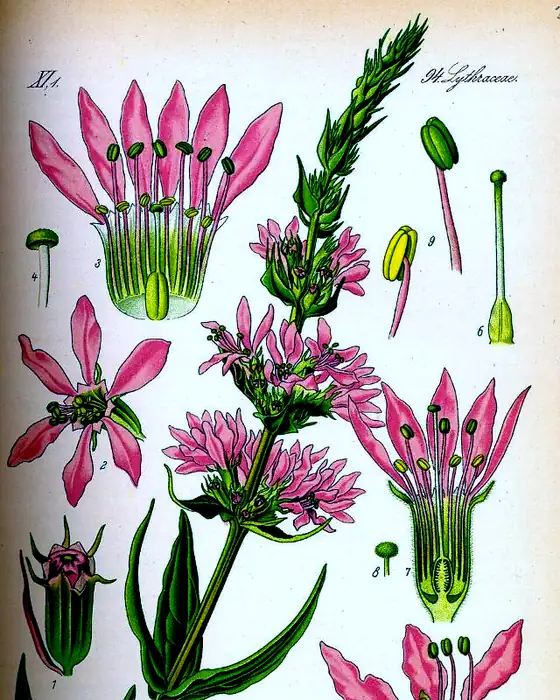
Archival plate of Lythrum salicaria, from Thomé, Flora von Deutschland, Österreich und der Schweiz, 1885
The Moss Herbal Database
Lythrum salicaria
Fam. Lythraceae
Parts: Flowering tops
Plate: Thomé, Flora von Deutschland, Österreich und der Schweiz, 1885 ↗

Purple loosestrife

Lythrum salicaria
Also: Spiked loosestrife, Lythrum
CoolingDryingTonifying

A wetland astringent for loose bowels, bleeding gums, and sore throats.

A tall wetland perennial with square stems and dense magenta flower spikes that color whole marshes in late summer. Purple loosestrife is a cooling astringent with a soothing, mucilaginous side; it firms and calms inflamed, leaking membranes from the throat to the gut and slows bleeding.

Energetics
Cooling, drying, toning
Taste
Astringent, faintly aromatic
Family
Lythraceae (loosestrife family)
Parts used
Flowering tops

Medicinal uses 7

The tags sort the evidence behind each use by kind. Members are able to tap a condition to compare every herb for it.

Traditional useLab and mechanism studiesClinical studies

Preparations

Flowering-top tea, gargles and rinses, and tincture.

Members are able to see the amounts, ratios, and methods for each preparation, search by condition, and match herbs to your constitution.

Cautions

  • Gentle and suitable for all ages.
  • Its tannins reduce iron absorption; take iron supplements a couple of hours apart.
  • Many states and provinces list it as a noxious weed that is illegal to plant or sell; gather it where it already grows.

Medication interactions

Practitioner Practitioners are able to see the 2 types of medicine flagged for purple loosestrife, each with the mechanism and what to do. The plain-language cautions above stay open to everyone.

Pregnancy & breastfeeding

PregnancyAsk your practitioner

Purple loosestrife has not been studied in pregnancy; check with your practitioner.

BreastfeedingAsk your practitioner

It has not been studied in nursing; check with your practitioner first.

Folklore

Loosestrife translates the Greek lysimachion, ending strife, and Pliny wrote that the plant laid on a yoke calmed quarreling oxen. Its seeds probably reached North America in ships' ballast and bales of wool in the early 1800s. A single plant can shed more than two million seeds a year, and since 1992 European leaf beetles have been released across the continent to keep it in check.

How to grow

Do not plant it; it is banned in many places. Gather flowering tops in late summer from wetlands where it already grows, ideally from clean water.

In the wild

Marshes, wet meadows, ditches, and lakeshores of Europe and Asia, and naturalized across temperate North America, where it is one of the best-known invasive wetland plants.

Every herb here fits some people better than others. Find out which ones fit you.