← All plants
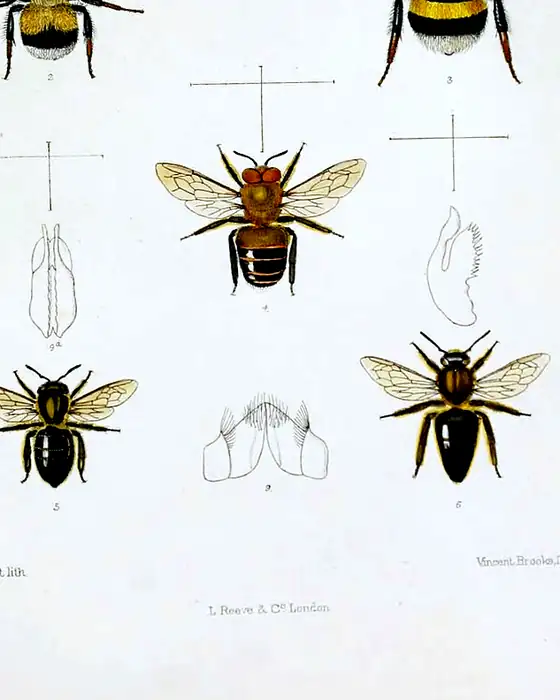
Archival plate of Propolis (bee glue), from Saunders, The Hymenoptera Aculeata of the British Islands, 1896, plate 52
The Moss Herbal Database
Propolis (bee glue)
Fam. Apidae
Parts: Tree resins gathered by bees
Plate: Saunders, The Hymenoptera Aculeata of the British Islands, 1896, plate 52 ↗

Propolis

Propolis (bee glue)
Also: Bee glue, Bee resin
WarmingDryingTonifying

The resin bees use to seal and disinfect the hive, for mouths, throats, and sores.

A sticky, brown-to-amber resin that honeybees gather from leaf buds and bark wounds, blend with wax, and use to seal cracks and disinfect the hive. Propolis is strongly antimicrobial and numbing, and it protects and heals sore throats, mouth ulcers, inflamed gums, cold sores, and small wounds.

Energetics
Warming, drying, toning
Taste
Resinous, bitter, numbing
Family
Apidae (made by honeybees)
Parts used
Tree resins gathered by bees

Medicinal uses 5

The tags sort the evidence behind each use by kind. Members are able to tap a condition to compare every herb for it.

Traditional useLab and mechanism studiesClinical studies
  • A throat spray numbs the pain and fights infection; propolis is active against many throat bacteria in lab studies.

  • Speeds healing of mouth ulcers; in trials, propolis mouthwashes reduced plaque and gum inflammation.

  • A propolis ointment healed cold sores and genital herpes sores faster than acyclovir cream in clinical trials.

  • Disinfects and protects small wounds and burns and speeds new skin.

  • Taken at the start of a cold, its antiviral and antibacterial compounds help the body throw it off.

Preparations

Alcohol tincture, throat spray, salve and lip balm, and raw resin.

Members are able to see the amounts, ratios, and methods for each preparation, search by condition, and match herbs to your constitution.

Cautions

  • People allergic to bee stings, honey, poplar buds, or balsam of Peru may react to propolis, a common cause of contact rashes among natural products. Patch-test first.
  • People with asthma sometimes react to bee products; start with a small amount.

Medication interactions

Practitioner Practitioners are able to see the one type of medicine flagged for propolis, each with the mechanism and what to do. The plain-language cautions above stay open to everyone.

Pregnancy & breastfeeding

PregnancyAsk your practitioner

Propolis has not been studied in pregnancy, and most preparations are made in alcohol. A salve on a cold sore or small wound is the simpler choice.

BreastfeedingAsk your practitioner

Little is known about propolis in breast milk; keep it off the nipple and check with your practitioner before taking it by mouth.

Folklore

Propolis is Greek for before the city, from pro, before, and polis, city, for the walls bees build with it across the hive entrance. Some of the violin makers of seventeenth-century Cremona are said to have used it in their varnish. Bees coat the inside of the hive with a thin varnish of it and embalm intruders too large to carry out, such as mice, sealing them in resin so they cannot rot.

How to grow

Honeybees make it from the sticky bud resins of poplar, birch, willow, and conifers, and in Brazil from the shrub Baccharis, the source of green propolis, so its chemistry follows the local trees. Beekeepers lay a plastic screen over the frames; the bees fill its gaps with propolis, and the screen is frozen and flexed to crack the resin free.

In the wild

Wherever honeybees live. Poplar-type propolis is the standard across Europe, North America, and temperate Asia.

Every herb here fits some people better than others. Find out which ones fit you.