← All plants
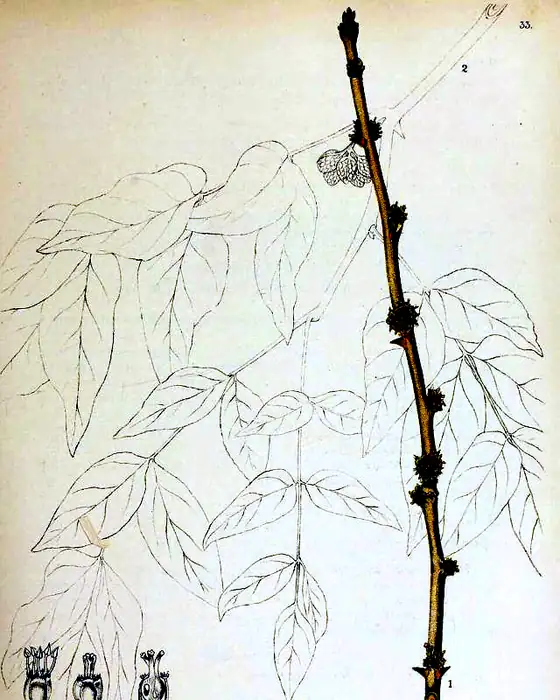
Archival plate of Zanthoxylum americanum, Z. clava-herculis, from Millspaugh, American Medicinal Plants, 1887, plate 33
The Moss Herbal Database
Zanthoxylum americanum, Z. clava-herculis
Fam. Rutaceae
Parts: Bark and berries
Plate: Millspaugh, American Medicinal Plants, 1887, plate 33 ↗

Prickly ash

Zanthoxylum americanum, Z. clava-herculis
Also: Toothache tree, Northern prickly ash, Hercules' club
WarmingDryingTonifying

A tingling bark that sends blood to cold hands, feet, and nerves.

A thorny shrub or small tree of the citrus family, kin to Sichuan pepper, whose bark and berries make the mouth tingle and water. Prickly ash pushes warmth and blood out into the smallest vessels, feeding cold, numb, aching tissue and the nerves that run through it.

Energetics
Warming, drying, toning
Taste
Pungent, tingling, bitter
Family
Rutaceae (citrus family)
Parts used
Bark and berries

Medicinal uses 6

The tags sort the evidence behind each use by kind. Members are able to tap a condition to compare every herb for it.

Traditional useLab and mechanism studiesClinical studies
  • Moves warmth and blood out to cold hands and feet; often paired with ginger.

  • Feeds blood to starved nerves, easing numbness, tingling, and nerve pain over long, steady use.

  • A warming tea and liniment for stiff, cold, rheumatic joints.

  • Chewed, the bark numbs the mouth, which earned it the name toothache tree.

  • Brings on saliva for a dry mouth and wakes up sluggish gums.

  • Rubbed on as a liniment, brings blood to bruises, sprains, and strains.

Preparations

Bark decoction, tincture, and warming liniments.

Members are able to see the amounts, ratios, and methods for each preparation, search by condition, and match herbs to your constitution.

Cautions

  • It makes the mouth tingle and water strongly; that is expected.
  • Its heat can aggravate stomach ulcers and reflux.

Medication interactions

Practitioner Practitioners are able to see the one type of medicine flagged for prickly ash, each with the mechanism and what to do. The plain-language cautions above stay open to everyone.

Pregnancy & breastfeeding

PregnancyAvoid

Prickly ash is a strong circulatory stimulant and has not been studied in pregnancy, so it waits until after birth.

BreastfeedingAsk your practitioner

Little is known about prickly ash in breast milk; check with your practitioner first.

Folklore

Haudenosaunee, Meskwaki, and other Native nations chewed the bark for toothache and sore throats and gave it for rheumatism, and the southern species became known as the toothache tree, or Hercules' club for its thorny, knobbed trunk. Zanthoxylum means yellow wood, for its heartwood. The giant swallowtail lays its eggs on prickly ash, and its caterpillars pass for bird droppings.

How to grow

A hardy, suckering shrub for sun or part shade and most soils, forming thorny thickets; the southern species grows into a small tree. Gather bark in spring and berries in late summer, and wear gloves against the thorns.

In the wild

Northern prickly ash grows in woods, thickets, and river bluffs from Quebec and the Great Lakes south to Georgia and west to the Plains. Hercules' club grows on the southern coastal plain from Virginia to Texas, often on sandy ground near the sea.

Every herb here fits some people better than others. Find out which ones fit you.