← All plants
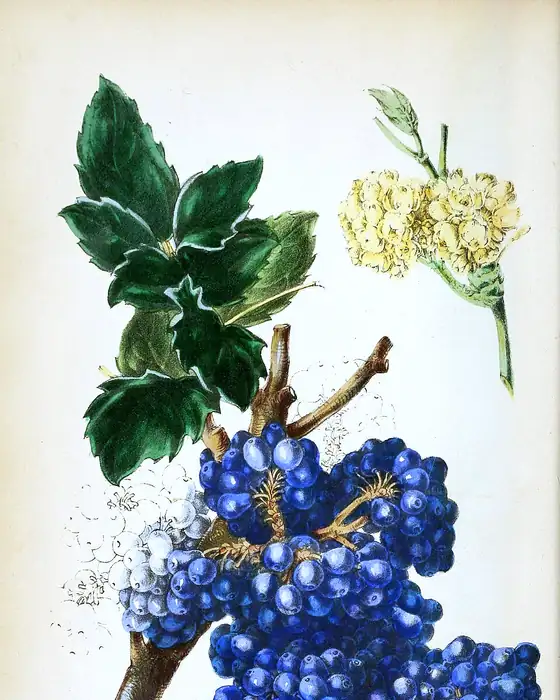
Archival plate of Mahonia aquifolium, from Paxton's Magazine of Botany, 1842
The Moss Herbal Database
Mahonia aquifolium
Fam. Berberidaceae
Parts: Root and stem bark
Plate: Paxton's Magazine of Botany, 1842 ↗

Oregon grape

Mahonia aquifolium
Also: Berberis aquifolium, Mountain grape, Holly-leaved barberry
CoolingDryingTonifyingTo-watch list

A bright yellow bitter for the liver, gut, and skin.

An evergreen shrub with glossy, holly-like leaves edged in spines, sprays of yellow spring flowers, and dusty blue, sour berries; scrape the root and the wood beneath is vivid yellow with berberine. Oregon grape root stirs a sluggish liver and gut, clears inflamed skin, and fights infection.

Energetics
Cooling, drying, toning
Taste
Very bitter
Family
Berberidaceae (barberry family)
Parts used
Root and stem bark

Medicinal uses 5

The tags sort the evidence behind each use by kind. Members are able to tap a condition to compare every herb for it.

Traditional useLab and mechanism studiesClinical studies
  • A strong bitter that gets bile flowing and digestion moving.

  • Used inside and as a cream for psoriasis; trials of a topical extract showed improvement.

  • Clears inflamed, breakout-prone skin, in part through its antimicrobial berberine.

  • Berberine acts against many gut microbes behind infectious diarrhea.

  • Its berberine lowers blood sugar; trials of the purified compound found effects close to metformin.

Preparations

Tincture and decoction in short courses, and washes or creams for skin.

Members are able to see the amounts, ratios, and methods for each preparation, search by condition, and match herbs to your constitution.

Cautions

  • Berberine changes how the body handles many medicines; check with your prescriber.
  • Long continuous use can unsettle the gut flora; take breaks between courses.
  • Dig roots sparingly and from abundant stands; the berries are a food for wildlife and people.

Sourcing

Oregon grape is on United Plant Savers' to-watch list. It is still common in Northwest woods, so harvest lightly: take a few sections of creeping rhizome from large stands and leave the main plant, or buy cultivated root.

Medication interactions

Practitioner Practitioners are able to see the 3 types of medicine flagged for Oregon grape, each with the mechanism and what to do. The plain-language cautions above stay open to everyone.

Pregnancy & breastfeeding

PregnancyAvoid

Berberine stimulates the uterus and can worsen jaundice in newborns, so it is contraindicated in pregnancy.

BreastfeedingAvoid

Berberine can pass to a nursing baby and raise the risk of jaundice in the newborn weeks.

Practitioner Practitioners are able to see the full entry from the Moss Herbalism Pregnancy Safety Database: trimester ratings, uterine and placental action, breastfeeding and nursing-baby effects, chemistry, traditional use, studies, and sources.

Folklore

Meriwether Lewis collected it at the rapids of the Columbia River in 1806. Its sour berries were a food of many Northwest nations, who also made a yellow dye from the bark. Oregon made it the state flower in 1899.

How to grow

A tough, shade-tolerant evergreen for woodland gardens, hardy and drought-tolerant once settled. Take roots from the spreading runners of established plants in autumn.

In the wild

Forests, clearings, and dry slopes from British Columbia to northern California, east into the Rockies.

Every herb here fits some people better than others. Find out which ones fit you.