← All plantsPeppermint
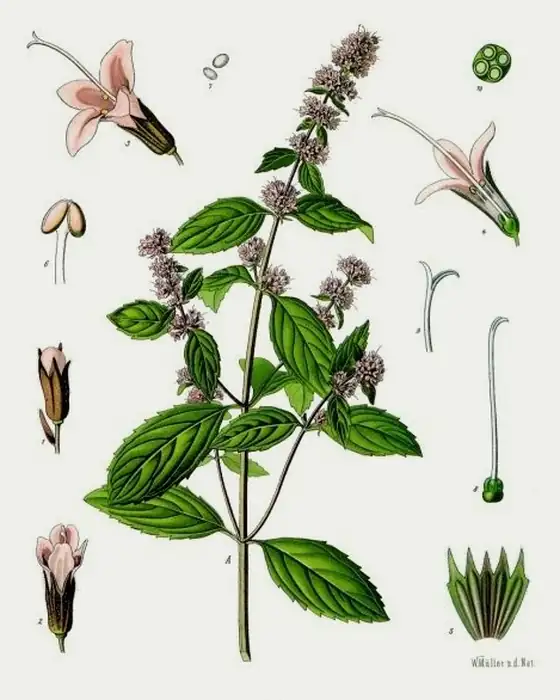
Mentha × piperita
Also: Mint
WarmingDryingRelaxing
Cool on the tongue, warm in the belly, loosening everywhere.
A sterile hybrid of water mint and spearmint that spreads by runners instead of seed. Peppermint relaxes the smooth muscle of the gut, moves gas, and opens the airways, and its first cool impression turns to warmth.
- Energetics
- Warming, drying, relaxing
- Taste
- Pungent, aromatic, cool then warm
- Family
- Lamiaceae (mint family)
- Parts used
- Leaves
Medicinal uses 8
The tags sort the evidence behind each use by kind. Members are able to tap a condition to compare every herb for it.
TTraditional useLLab and mechanism studiesCClinical studies
Releases gas, bloating, and griping, and gets sluggish digestion moving.
Enteric-coated oil relaxes the spasm of irritable bowel.
Settles nausea, and steps in when ginger runs too hot.
Diluted oil on the temples eases tension headaches.
Opens stuffy airways and thins mucus.
Drunk hot, helps a fever break.
A peppermint steam clears blocked sinuses.
A menthol solution brushed on the forehead and temples relieved migraine pain in a trial.
Preparations
A covered tea, enteric-coated capsules, diluted oil for headaches, and steams.
Members are able to see the amounts, ratios, and methods for each preparation, search by condition, and match herbs to your constitution.
Cautions
- Peppermint relaxes the valve at the top of the stomach and can worsen heartburn and reflux.
- Keep the essential oil away from the faces of babies and young children; menthol can trigger breathing trouble in infants. Spearmint is the gentler choice for little ones.
- Never confuse it with pennyroyal (Mentha pulegium), a toxic mint.
Medication interactions
Practitioner Practitioners are able to see the 2 types of medicine flagged for peppermint, each with the mechanism and what to do. The plain-language cautions above stay open to everyone.
Pregnancy & breastfeeding
PregnancyTea amounts
Tea is a common, low-risk help for pregnancy nausea, though it may aggravate heartburn later on. The essential oil is avoided internally.
BreastfeedingModerate, after the newborn weeks
Avoid large amounts; at high maternal doses menthol can affect a newborn's breathing. Moderate tea is considered compatible once the newborn period has passed.
Practitioner Practitioners are able to see the full entry from the Moss Herbalism Pregnancy Safety Database: trimester ratings, uterine and placental action, breastfeeding and nursing-baby effects, chemistry, traditional use, studies, and sources.
Folklore
Greek myth tells of the nymph Minthe, whom Persephone turned into a low plant to be trodden underfoot. In Ovid's Metamorphoses the old couple Baucis and Philemon scrub their table with green mint before setting food in front of two disguised gods. Peppermint itself was first described by the naturalist John Ray in 1696, from a plant found in a Hertfordshire field. By the 1750s the farmers of Mitcham in Surrey were distilling it, and Mitcham oil became the standard of the trade.
How to grow
A vigorous perennial that spreads by runners, so plant it in a pot or a bordered bed. It likes moist soil and sun to part shade. Grow it from cuttings or root divisions, since seed rarely comes true, and harvest just before flowering when the oil is strongest.
In the wild
A hybrid of garden origin, naturalized along streambanks, ditches, and wet meadows wherever its parent mints grow, across Europe and much of the temperate world.
Every herb here fits some people better than others. Find out which ones fit you.