Moss Herbalism

The Herbal Library

A clinical herbalist's materia medica, searchable by plant and by condition.

Access
Log in

Photo: Janna, Mellow Nectar Co.

← All plants
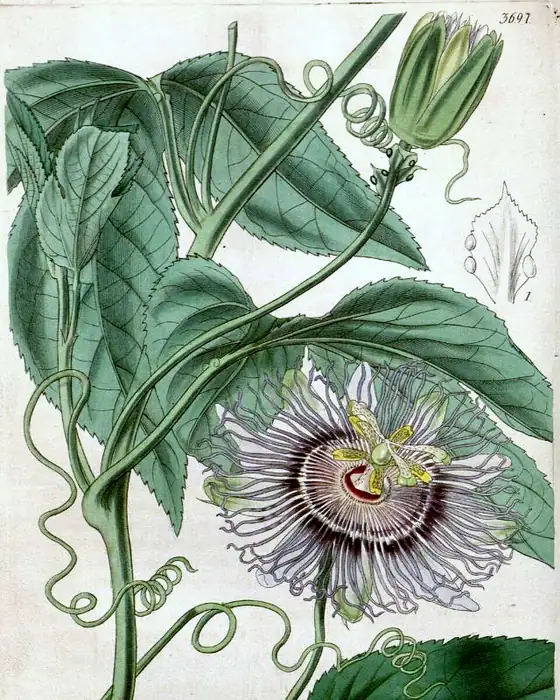
Archival plate of Passiflora incarnata, from Curtis's Botanical Magazine, plate 3697, 1839
The Herbal Library
Passiflora incarnata
Fam. Passifloraceae
Parts: Leaves, vines, and flowers
Plate: Curtis's Botanical Magazine, plate 3697, 1839 ↗

Passionflower

Passiflora incarnata
Also: Maypop, Purple passionflower, Apricot vine
CoolingDryingRelaxing

Quiets the thoughts that keep circling at bedtime.

A climbing vine with three-lobed leaves and extraordinary lavender flowers ringed with a fringe of wavy filaments, followed by egg-shaped fruit. Passionflower stills a mind stuck on the same worries and relaxes the body that tenses along with it, which makes it a herb for the busy mind at bedtime.

Energetics
Cooling, drying, relaxing
Taste
Sour, sweet, mildly acrid
Family
Passifloraceae (passionflower family)
Parts used
Leaves, vines, and flowers

Medicinal uses 4

The tags sort the evidence behind each use by kind. Members are able to tap a condition to compare every herb for it.

Traditional useLab and mechanism studiesClinical studies
  • For the mind that won't stop at night; tea drinkers in a small trial reported better sleep quality.

  • Calms anxious, looping thoughts; clinical trials found it comparable to some anti-anxiety medicines for generalized anxiety.

  • Loosens the tight shoulders and clenched jaw that come with a stressed mind.

  • Taken in a bigger dose, it dulls back pain and other aches that tighten with spasm.

Preparations

Evening tea, tincture spaced through the hour before bed, and sleep blends with skullcap.

Members

The doses and blends for passionflower

Members see the amounts, ratios and methods for every preparation of every plant, and match herbs to their constitution.

Membership is coming soon.

Cautions

  • Can deepen the effect of sedatives, sleep medicines, and alcohol.
  • Leave it out if you take beta blockers.
  • Young children do better with catnip or chamomile.

Medication interactions

Practitioner

3 types of medicine flagged for passionflower

Each one with what can happen, why, what to do, and the sources.

Practitioner membership is coming soon.

Pregnancy & breastfeeding

PregnancyAvoid

Its harmala alkaloids stimulated the uterus in animal studies, and it has a history of use for bringing on periods.

BreastfeedingTea amounts

Its flavone glycosides pass into milk poorly, and its harmala alkaloids are present only in traces.

Practitioner

The full Pregnancy Safety Database entry

Trimester ratings, uterine and placental action, nursing-baby effects, chemistry, studies and sources.

Practitioner membership is coming soon.

Folklore

Spanish missionaries in sixteenth-century South America read the Passion of Christ in the flower: the fringed corona as the crown of thorns, the five anthers as the wounds, the three styles as the nails, and the ten petals and sepals as the apostles who stayed faithful. In the American South the hollow fruits pop underfoot, which gave the vine its name maypop, and the Cherokee and other nations of the Southeast ate the fruit. Tennessee named it the state wildflower in 1973.

How to grow

A perennial vine hardy to about zone 6 with a thick mulch. It dies back in winter and comes up late in spring, so mark its place. Give it full sun and a fence or trellis; it spreads by roots. Cut leafy vines and flowers in summer.

In the wild

Thickets, roadsides, fence rows, and old fields across the southeastern United States, from eastern Texas to the Atlantic and north into the Ohio Valley.