← All plants
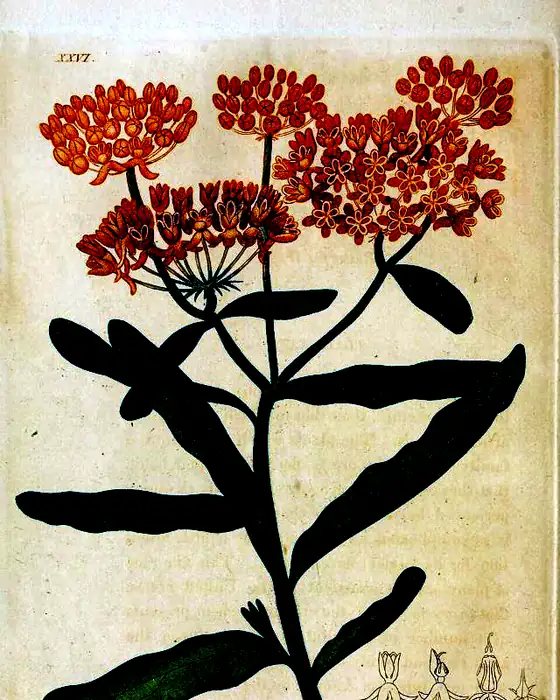
Archival plate of Asclepias tuberosa, from Bigelow, American Medical Botany, 1817 to 1820
The Moss Herbal Database
Asclepias tuberosa
Fam. Apocynaceae
Parts: Root
Plate: Bigelow, American Medical Botany, 1817 to 1820 ↗

Pleurisy root

Asclepias tuberosa
Also: Butterfly weed, Orange milkweed
CoolingMoisteningRelaxingTo-watch list

Moistens and relaxes a dry, painful chest so a cough can do its work.

A milkweed with flat-topped clusters of blazing orange flowers that draw monarchs and other butterflies all summer, rising from a deep, knobby root. Pleurisy root moistens dry, irritated membranes in the lungs and eases the tight, painful breathing that comes with them.

Energetics
Cooling, moistening, relaxing
Taste
Bitter, earthy, faintly sweet
Family
Apocynaceae (dogbane and milkweed family)
Parts used
Root

Medicinal uses 2

The tags sort the evidence behind each use by kind. Members are able to tap a condition to compare every herb for it.

Traditional useLab and mechanism studiesClinical studies
  • Eases a dry, painful cough with tightness or stabbing pain on breathing, moistening the membranes so mucus can move.

  • Relaxes tight, dry skin so a fever can break in a sweat.

Preparations

Root decoction, tincture, and moistening chest blends.

Members are able to see the amounts, ratios, and methods for each preparation, search by condition, and match herbs to your constitution.

Cautions

  • It contains cardiac glycosides; leave it out alongside digoxin and other heart medicines.
  • Large doses cause nausea and vomiting.
  • Chest pain on breathing or shortness of breath needs a medical diagnosis first.
  • Grow it or buy cultivated root; digging kills the plant, and monarch caterpillars depend on milkweeds.

Sourcing

Butterfly weed is on United Plant Savers' to-watch list, and its flowers and leaves feed monarchs and other pollinators. Grow it or buy cultivated root rather than digging wild plants.

Medication interactions

Practitioner Practitioners are able to see the one type of medicine flagged for pleurisy root, each with the mechanism and what to do. The plain-language cautions above stay open to everyone.

Pregnancy & breastfeeding

PregnancyAvoid

Its cardiac glycosides and the lack of pregnancy research keep pleurisy root out of pregnancy.

BreastfeedingAvoid

Its cardiac glycosides could reach a nursing baby, so it waits until after weaning.

Folklore

Linnaeus named the milkweeds Asclepias for Asclepius, the Greek god of medicine. Unlike its cousins, butterfly weed bleeds clear sap rather than milky latex. Several Native nations chewed or brewed the root for chest complaints, and nineteenth-century Eclectic physicians made it their chief remedy for pleurisy, the painful inflammation of the lining around the lungs.

How to grow

A long-lived native perennial for full sun and dry, sandy, well-drained soil that shrugs off drought once established. The long taproot hates being moved, so sow seed in fall or start it in deep pots. Dig roots from plants three years or older in autumn, and leave plenty in the ground.

In the wild

Prairies, dry meadows, roadsides, and open woods across most of the United States and into southern Ontario.

Every herb here fits some people better than others. Find out which ones fit you.