← All plants
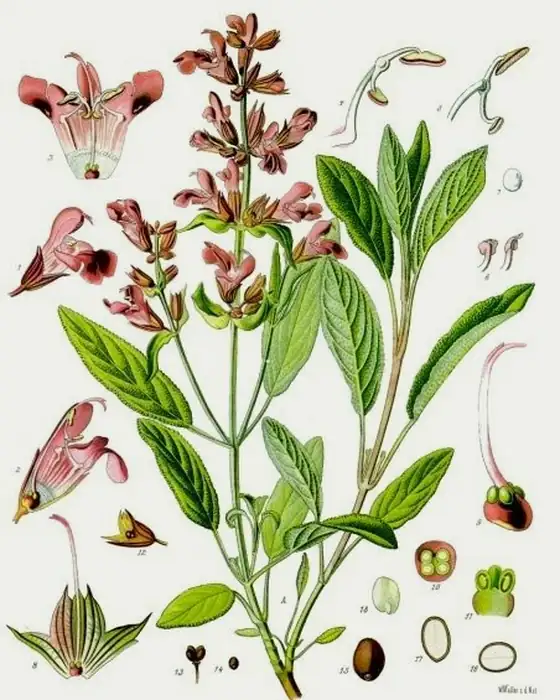
Archival plate of Salvia officinalis, from Köhler's Medizinal-Pflanzen, 1887 to 1898
The Moss Herbal Database
Salvia officinalis
Fam. Lamiaceae
Parts: Leaves
Plate: Köhler's Medizinal-Pflanzen, 1887 to 1898 ↗

Sage

Salvia officinalis
Also: Garden sage, Common sage
WarmingDryingTonifying

Warms, dries, and tightens: throats, sweats, and wandering minds.

A gray-green shrub with pebbled leaves from rocky Mediterranean slopes. Sage warms and dries, tones lax tissue, dries up excess sweat and milk, and clears a cold, foggy mind.

Energetics
Warming, drying, tonifying
Taste
Aromatic, bitter, astringent
Family
Lamiaceae (mint family)
Parts used
Leaves

Medicinal uses 8

The tags sort the evidence behind each use by kind. Members are able to tap a condition to compare every herb for it.

Traditional useLab and mechanism studiesClinical studies

Preparations

Gargles, short courses of tea, and steams.

Members are able to see the amounts, ratios, and methods for each preparation, search by condition, and match herbs to your constitution.

Cautions

  • Sage contains thujone; large amounts over long periods, and the essential oil, can affect the nervous system. Avoid it with epilepsy.
  • Very drying; take care if you run dry.
  • It lowers milk supply.

Medication interactions

Practitioner Practitioners are able to see the 2 types of medicine flagged for sage, each with the mechanism and what to do. The plain-language cautions above stay open to everyone.

Pregnancy & breastfeeding

PregnancyCulinary only

A classic herb for bringing on menstruation, with uterine-stimulating action at medicinal doses. Culinary amounts are considered compatible; medicinal tea, tincture, and oil are avoided.

BreastfeedingAvoid; lowers supply

Used for centuries to dry up milk. Avoid medicinal amounts unless you are weaning on purpose.

Practitioner Practitioners are able to see the full entry from the Moss Herbalism Pregnancy Safety Database: trimester ratings, uterine and placental action, breastfeeding and nursing-baby effects, chemistry, traditional use, studies, and sources.

Folklore

Salvia comes from the Latin salvere, to be well, and the medieval medical school at Salerno asked why anyone should die who has sage growing in the garden. An English proverb held that he who would live for aye must eat sage in May. John Gerard wrote in 1597 that sage quickened the senses and the memory, a claim modern memory studies have taken up.

How to grow

A woody perennial for full sun and well-drained soil; it thrives on neglect and drought. Prune in spring, and replace plants every four or five years as they get leggy. Propagate from cuttings.

In the wild

Native to the dry, rocky hillsides of the northern Mediterranean and the Balkan coast, where Dalmatian sage is still gathered.

Every herb here fits some people better than others. Find out which ones fit you.