The Moss Herbal Database
Serenoa repensFam. Arecaceae
Parts: Berries
Saw palmetto
Serenoa repens
Also: Sabal, Serenoa serrulata, American dwarf palm
WarmingMoisteningTonifying
Tones the prostate and bladder and nourishes depleted pelvic tissue.
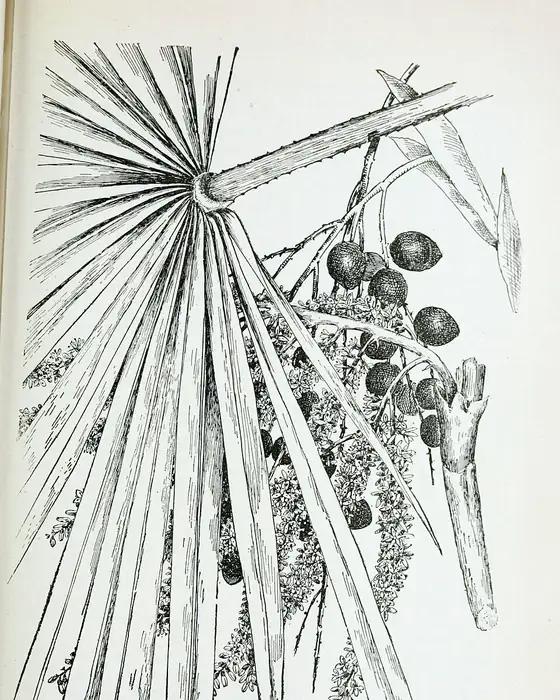
A low, clumping fan palm of the southeastern coastal plain, with saw-toothed leaf stalks and dark, oily berries that smell strongly of soap and cheese. Saw palmetto tones and nourishes the prostate, bladder, and reproductive tissue, eases urinary urgency, and blocks 5-alpha-reductase, the enzyme that turns testosterone into DHT.
- Energetics
- Warming, moistening, toning
- Taste
- Oily, pungent, sweet, soapy
- Family
- Arecaceae (palm family)
- Parts used
- Berries