← All plants
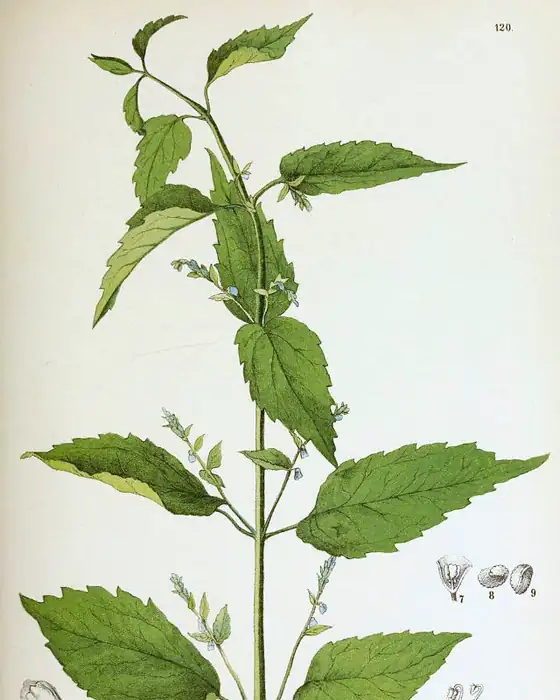
Archival plate of Scutellaria lateriflora, from Millspaugh, American Medicinal Plants, 1887, plate 120
The Moss Herbal Database
Scutellaria lateriflora
Fam. Lamiaceae
Parts: Flowering tops
Plate: Millspaugh, American Medicinal Plants, 1887, plate 120 ↗

Skullcap

Scutellaria lateriflora
Also: Blue skullcap, Mad-dog skullcap, American skullcap
CoolingDryingRelaxing

Unknots the neck, the jaw, and the thoughts that won't stop.

A slender, square-stemmed mint of wet ground, with toothed leaves and small blue hooded flowers lined up along one side of each stem. Skullcap releases the physical grip of stress, the tight neck, shoulders, and jaw, and settles the overworked mind that comes with it.

Energetics
Cooling, drying, relaxing
Taste
Bitter, aromatic
Family
Lamiaceae (mint family)
Parts used
Flowering tops

Medicinal uses 5

The tags sort the evidence behind each use by kind. Members are able to tap a condition to compare every herb for it.

Traditional useLab and mechanism studiesClinical studies
  • Calms stress that shows up as tension, worry, and a mind that keeps replaying the day.

  • Releases tight shoulders, neck, and jaw, the posture of long hours at a desk or behind the wheel.

  • Eases headaches that start at the base of the skull and creep up from tight neck muscles.

  • Helps a tired, overwrought person fall asleep, especially paired with passionflower.

  • A long-standing nerve tonic for twitching, tremor, and frayed nerves.

Preparations

Tea made below the boil, fresh-plant tincture, and tension blends.

Members are able to see the amounts, ratios, and methods for each preparation, search by condition, and match herbs to your constitution.

Cautions

  • Very gentle, though it can make some people drowsy; see how it takes you before driving.
  • Skullcap sold in the past was sometimes swapped for germander, which harms the liver. Buy from a supplier who tests identity.

Medication interactions

Practitioner Practitioners are able to see the 2 types of medicine flagged for skullcap, each with the mechanism and what to do. The plain-language cautions above stay open to everyone.

Pregnancy & breastfeeding

PregnancyAvoid

Pregnancy research is thin, and its sedative action and past problems with adulterated product keep it out of pregnancy. Linden and lemon balm suit pregnant nerves better.

BreastfeedingAvoid

Its sedative action could reach a nursing baby. Choose a gentler nervine while breastfeeding.

Practitioner Practitioners are able to see the full entry from the Moss Herbalism Pregnancy Safety Database: trimester ratings, uterine and placental action, breastfeeding and nursing-baby effects, chemistry, traditional use, studies, and sources.

Folklore

Scutellaria comes from the Latin scutella, a little dish, for the lidded cap that sits on each ripening seed pod. In the 1770s a New Jersey physician, Lawrence Van Derveer, began promoting skullcap as a cure for rabies, and though it cured no one, the name mad-dog skullcap stuck. Lateriflora means side-flowering, for the blooms that run in a single row along one side of the stem.

How to grow

A perennial for moist soil in sun or part shade, at home at a pond or ditch edge. Start from seed, cold-stratified for a few weeks, or divide established clumps. Cut the flowering tops in summer and tincture them fresh.

In the wild

Wet meadows, stream banks, swamps, and damp woods across most of North America.

Every herb here fits some people better than others. Find out which ones fit you.