← All plants
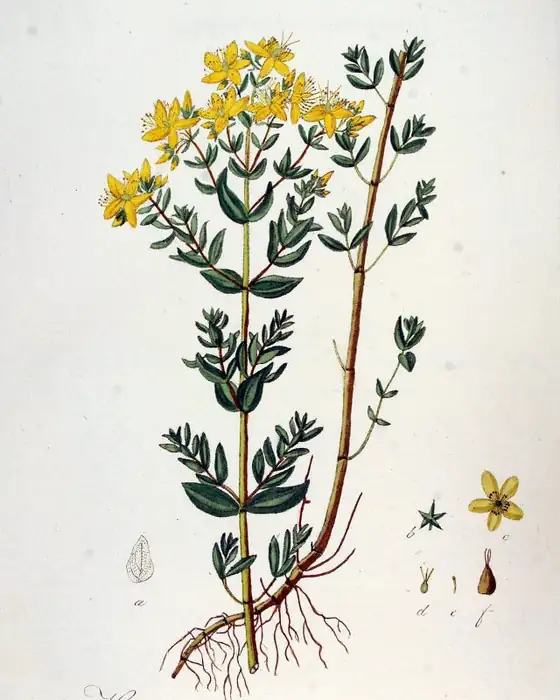
Archival plate of Hypericum perforatum, from Flora Batava, vol. 7
The Moss Herbal Database
Hypericum perforatum
Fam. Hypericaceae
Parts: Flowering tops
Plate: Flora Batava, vol. 7 ↗

St John's wort

Hypericum perforatum
Also: Hypericum, Solsticewort, Klamath weed
WarmingDryingRelaxing

Midsummer sunshine for nerves, gut, and grey moods.

Bright yellow, star-shaped flowers whose buds bleed red when pinched, and leaves pricked with tiny translucent dots. St John's wort restores damaged nerves, heals wounds, and lifts depression that travels with a sluggish gut and liver.

Energetics
Warming, drying, relaxing
Taste
Bitter, aromatic, astringent
Family
Hypericaceae (St John's wort family)
Parts used
Flowering tops

Medicinal uses 6

The tags sort the evidence behind each use by kind. Members are able to tap a condition to compare every herb for it.

Traditional useLab and mechanism studiesClinical studies
  • Lifts mild to moderate depression, particularly alongside poor digestion and seasonal greyness.

  • The red oil, rubbed in over weeks, restores injured nerves and eases sciatica and neuralgia.

  • Speeds wound healing and softens scarring.

  • The infused oil soothes bruises and sore, overworked muscles.

  • Active against herpes-family viruses.

  • The red infused oil, rubbed along the spine and shoulders, eases sore, tight muscles.

Preparations

Sun-infused red oil, a bitter tea, and fresh-plant tincture.

Members are able to see the amounts, ratios, and methods for each preparation, search by condition, and match herbs to your constitution.

Cautions

  • Taken internally, it speeds the liver's clearance of many medications, including birth control pills, antidepressants, blood thinners, thyroid hormone, HIV medications, and transplant drugs. Avoid it alongside any medication unless your prescriber confirms it is safe.
  • Concentrated supplements can cause sun sensitivity.
  • The topical oil is safe regardless of medications.

Medication interactions

Practitioner Practitioners are able to see the 8 types of medicine flagged for St John's wort, each with the mechanism and what to do. The plain-language cautions above stay open to everyone.

Pregnancy & breastfeeding

PregnancyAvoid

Drug interactions, newborn withdrawal-like symptoms, and a higher preterm birth rate in one study put it off the list in pregnancy.

BreastfeedingAvoid

Drowsiness, colic, and poor feeding have been reported in nursing babies, along with reduced milk supply.

Practitioner Practitioners are able to see the full entry from the Moss Herbalism Pregnancy Safety Database: trimester ratings, uterine and placental action, breastfeeding and nursing-baby effects, chemistry, traditional use, studies, and sources.

Folklore

It blooms around the summer solstice and the feast of St John the Baptist on June 24, and people gathered it on Midsummer Eve to hang over doors and windows against evil spirits, which earned it the name fuga daemonum, devil's flight. The red pigment that bleeds from its buds was read as the saint's blood, and the pinpricks in its leaves as the devil's stabs. In the American West it became Klamath weed, poisoning sheep and cattle, until California released leaf beetles in the 1940s in one of the first successful biological controls of a weed.

How to grow

A hardy perennial for full sun and dry, poor soil, easy from surface-sown seed. Harvest the top few inches at peak bloom, buds and open flowers together. Check local weed lists first; it is restricted in parts of the US and Australia.

In the wild

Native to Europe and western Asia, now naturalized and often invasive along roadsides, rangeland, and clearings across North America, Australia, and beyond.

Every herb here fits some people better than others. Find out which ones fit you.