← All plants
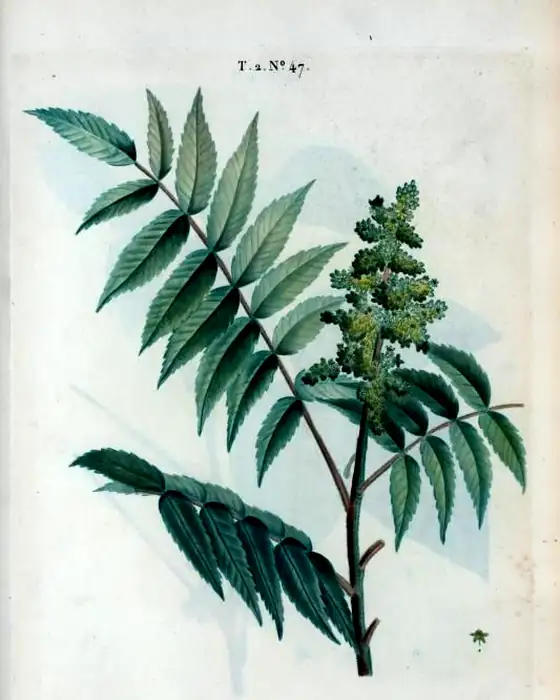
Archival plate of Rhus typhina, from Redouté, in Duhamel's Traité des arbres et arbustes, 1804
The Moss Herbal Database
Rhus typhina
Fam. Anacardiaceae
Parts: Berries, leaves, and bark
Plate: Redouté, in Duhamel's Traité des arbres et arbustes, 1804 ↗

Staghorn sumac

Rhus typhina
Also: Velvet sumac, Vinegar tree
CoolingDryingTonifying

Sour red berries that cool, tighten, and fortify.

A spreading native shrub with fuzzy branches like a stag's antlers in velvet, long feathery leaves that blaze scarlet in autumn, and upright cones of crimson berries. The berries are sour, cooling, and rich in vitamin C; the leaves and bark are astringent.

Energetics
Cooling, drying, toning
Taste
Sour, astringent
Family
Anacardiaceae (cashew family)
Parts used
Berries, leaves, and bark

Medicinal uses 4

The tags sort the evidence behind each use by kind. Members are able to tap a condition to compare every herb for it.

Traditional useLab and mechanism studiesClinical studies

Preparations

Cold berry drinks, leaf tincture, and ground berries as a spice.

Members are able to see the amounts, ratios, and methods for each preparation, search by condition, and match herbs to your constitution.

Cautions

  • Know your sumac. Poison sumac grows in swamps and has smooth bark and drooping clusters of white berries; staghorn sumac has fuzzy branches and upright red berry cones.
  • People allergic to cashews or mangoes, in the same family, may react.
  • The bark is very drying; use it only for short periods.

Medication interactions

Practitioner Practitioners are able to see the one type of medicine flagged for staghorn sumac, each with the mechanism and what to do. The plain-language cautions above stay open to everyone.

Pregnancy & breastfeeding

PregnancyBerries as food

Sumac berry drinks are a traditional wild food. The leaf and bark, more strongly medicinal, have not been studied in pregnancy, so keep to the berries.

BreastfeedingBerries as food

Berry drinks are a traditional food; leaf and bark have not been studied in nursing.

Folklore

Native nations and later settlers soaked the berries into a sour pink drink; the tang comes from malic acid on the berries' hairs, which rain washes away, so the best clusters are picked before a heavy storm. The tannin-rich leaves were long used to tan leather and dye wool. Sumac comes through Arabic from the Aramaic summaq, red.

How to grow

A fast, suckering shrub for sun and poor, dry soil that spreads into colonies. Plants are male or female, and only females bear berries. Gather the cones in late summer, before heavy rain, when a licked finger touched to them tastes sour.

In the wild

Old fields, roadsides, forest edges, and railway banks of eastern North America, from Nova Scotia and Quebec to Georgia and west to Minnesota.

Every herb here fits some people better than others. Find out which ones fit you.