← All plants
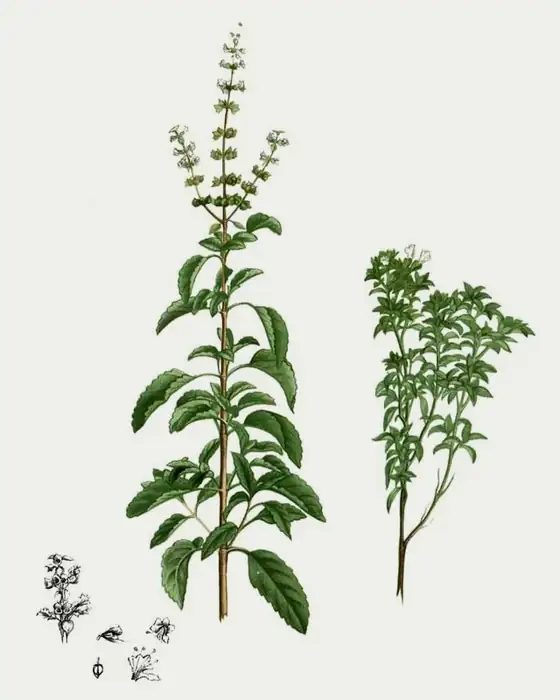
Archival plate of Ocimum tenuiflorum, from Blanco, Flora de Filipinas, 1880
The Moss Herbal Database
Ocimum tenuiflorum
Fam. Lamiaceae
Parts: Leaves and flowers
Plate: Blanco, Flora de Filipinas, 1880 ↗

Tulsi

Ocimum tenuiflorum
Also: Holy basil, Ocimum sanctum, Tulasi
WarmingDryingRelaxing

A sacred basil that lifts the mood and steadies stress.

A shrubby basil smelling of clove, pepper, and mint, kept in courtyard shrines across India. Tulsi is one of the gentlest adaptogens, helping the body meet stress while it lifts the spirits and clears a foggy head.

Energetics
Warming, drying, relaxing
Taste
Aromatic, sweet, pungent, clove-like
Family
Lamiaceae (mint family)
Parts used
Leaves and flowers

Medicinal uses 7

The tags sort the evidence behind each use by kind. Members are able to tap a condition to compare every herb for it.

Traditional useLab and mechanism studiesClinical studies

Preparations

A daily tea, tincture, and fresh leaves.

Members are able to see the amounts, ratios, and methods for each preparation, search by condition, and match herbs to your constitution.

Cautions

  • Tulsi can amplify blood-sugar-lowering medications; monitor closely.
  • Animal studies show reduced fertility during use; avoid while trying to conceive.
  • It has a mild blood-thinning effect.

Medication interactions

Practitioner Practitioners are able to see the 3 types of medicine flagged for tulsi, each with the mechanism and what to do. The plain-language cautions above stay open to everyone.

Pregnancy & breastfeeding

PregnancyCulinary only

Animal studies show anti-fertility effects, and its eugenol thins the blood near delivery. An occasional culinary leaf differs from medicinal doses, which wait until after pregnancy.

BreastfeedingCulinary only

Occasional culinary use is generally considered compatible; avoid medicinal doses.

Practitioner Practitioners are able to see the full entry from the Moss Herbalism Pregnancy Safety Database: trimester ratings, uterine and placental action, breastfeeding and nursing-baby effects, chemistry, traditional use, studies, and sources.

Folklore

In Hindu tradition tulsi is a form of the goddess Lakshmi and beloved of Vishnu, and many homes keep a plant in a raised courtyard shrine, the tulsi vrindavan, circled with prayers each day. Every autumn the festival of Tulsi Vivah celebrates the plant's ceremonial wedding to Vishnu, and prayer beads are turned from its wood. Households tell apart green Rama tulsi, purple Krishna tulsi, and wild Vana tulsi.

How to grow

A tender perennial grown as a summer annual outside the tropics. Sow seed indoors and plant out once nights stay above 50°F (10°C), in full sun. Pinch the flower spikes for more leaves, or let some bloom for the bees.

In the wild

Native to the Indian subcontinent and Southeast Asia, now grown and naturalized throughout the tropics in gardens, temple grounds, and disturbed ground.

Every herb here fits some people better than others. Find out which ones fit you.