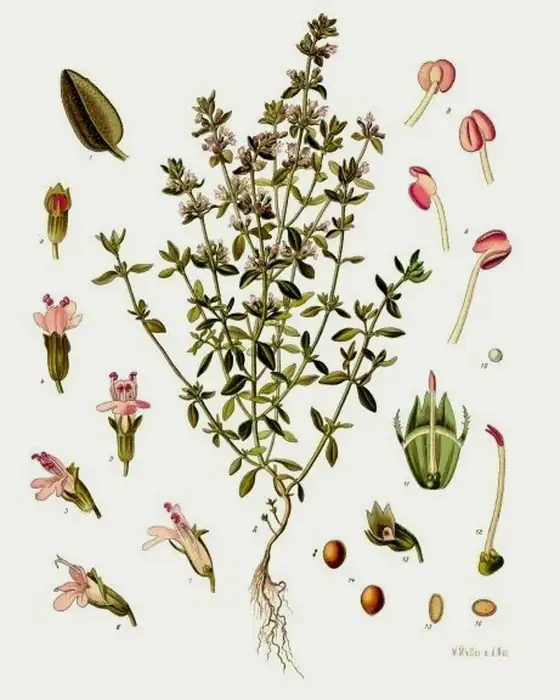
← All plantsThyme
Thymus vulgaris
Also: Garden thyme, Common thyme
WarmingDryingTonifying
A hot, antiseptic kitchen herb for wet coughs and cold guts.
A small woody shrub from dry Mediterranean hillsides, packed with aromatic oil. Thyme heats and dries cold, wet respiratory and digestive states, and it kills microbes wherever its oils touch.
- Energetics
- Hot, drying, tonifying
- Taste
- Pungent, aromatic
- Family
- Lamiaceae (mint family)
- Parts used
- Leafy tops
Medicinal uses 5
The tags sort the evidence behind each use by kind. Members are able to tap a condition to compare every herb for it.
TTraditional useLLab and mechanism studiesCClinical studies
Loosens and clears wet, rattling coughs and calms the spasm.
A thyme steam carries antimicrobial oils straight to the sinuses and lungs.
A gargle for sore throats.
Warms a cold, slow gut and moves gas.
Steams clear congested sinuses.
Preparations
Steams, a covered tea, thyme honey, and gargles.
Members are able to see the amounts, ratios, and methods for each preparation, search by condition, and match herbs to your constitution.
Cautions
- Never take the essential oil internally, and dilute it on skin; undiluted, it burns.
- Medicinal amounts are drying.
Pregnancy & breastfeeding
PregnancyCulinary amounts
Cooking amounts are safe throughout pregnancy. Medicinal doses carry an old reputation for bringing on menstruation, and the essential oil is avoided.
BreastfeedingCulinary amounts
Culinary amounts are considered compatible; avoid the essential oil.
Practitioner Practitioners are able to see the full entry from the Moss Herbalism Pregnancy Safety Database: trimester ratings, uterine and placental action, breastfeeding and nursing-baby effects, chemistry, traditional use, studies, and sources.
Folklore
Greeks burned thyme on their altars, and the name may come from thyein, to make a burnt offering, or thymos, spirit and courage. Roman soldiers bathed in thyme water before battle, and medieval women embroidered a bee above a sprig of thyme on the scarves they gave to knights. Shakespeare's fairy queen Titania sleeps on a bank where the wild thyme blows. In 1719 the apothecary Caspar Neumann isolated thymol from the oil, and thymol still goes into antiseptic mouthwash.
How to grow
A woody perennial for full sun and lean, gritty, very well-drained soil; wet roots kill it. Trim after flowering to keep it bushy, and replace plants every few years as they turn woody. Propagate from cuttings or by layering.
In the wild
Native to the dry, rocky slopes of the western Mediterranean, where it grows with rosemary and lavender in the scrub called garrigue. Wild thyme (Thymus serpyllum) carpets heaths and downs across Europe.
Every herb here fits some people better than others. Find out which ones fit you.