← All plants
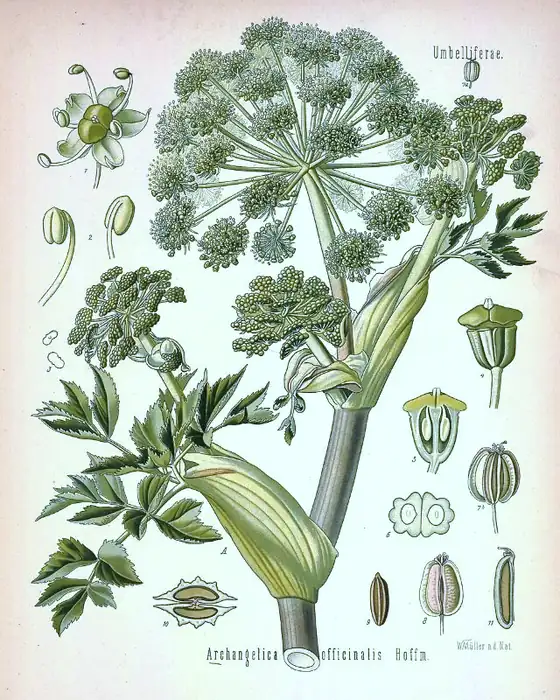
Archival plate of Angelica archangelica, from Köhler's Medizinal-Pflanzen, 1887 to 1898
The Moss Herbal Database
Angelica archangelica
Fam. Apiaceae
Parts: Root and seed (stems candied)
Plate: Köhler's Medizinal-Pflanzen, 1887 to 1898 ↗

Angelica

Angelica archangelica
Also: Garden angelica, Archangel, Holy ghost root
WarmingDryingTonifying

Warms a cold, stuck body from the gut outward.

A statuesque, hollow-stemmed biennial with great globes of greenish-white flowers and a musky, sweet scent through every part. Angelica warms cold digestion, sends circulation to cold hands and feet, brings up phlegm, and moves a scant, clotted, crampy period.

Energetics
Warming, drying, toning
Taste
Bitter, pungent, aromatic
Family
Apiaceae (carrot family)
Parts used
Root and seed (stems candied)

Medicinal uses 5

The tags sort the evidence behind each use by kind. Members are able to tap a condition to compare every herb for it.

Traditional useLab and mechanism studiesClinical studies

Preparations

Root decoction, seed tea, tincture, and honey-candied stems.

Members are able to see the amounts, ratios, and methods for each preparation, search by condition, and match herbs to your constitution.

Cautions

  • Angelica makes skin more sensitive to sun; go easy on strong sun while taking it.
  • It brings on a period; leave it out in the week before your period if you bleed heavily.
  • Chinese angelica, dong quai, is a related but stronger herb for the pelvis; the two are not interchangeable.

Medication interactions

Practitioner Practitioners are able to see the one type of medicine flagged for angelica, each with the mechanism and what to do. The plain-language cautions above stay open to everyone.

Pregnancy & breastfeeding

PregnancyAvoid

Angelica brings on menstruation and stimulates the uterus, so it is contraindicated in pregnancy.

BreastfeedingAvoid

Its action on the uterus and its coumarins keep it out of nursing.

Practitioner Practitioners are able to see the full entry from the Moss Herbalism Pregnancy Safety Database: trimester ratings, uterine and placental action, breastfeeding and nursing-baby effects, chemistry, traditional use, studies, and sources.

Folklore

A European legend says an archangel revealed angelica as a remedy in a year of plague, and the plant was said to bloom on the feast of Michael the Archangel. Its root and seed flavor gin and vermouth, and are said to be among the secret herbs in Chartreuse and Bénédictine. Bakers still decorate cakes with its candied green stems.

How to grow

A biennial or short-lived perennial for cool summers, rich moist soil, and part shade. Sow fresh seed in autumn, since it loses viability fast. Dig roots in the autumn of the first year; the plant flowers and dies in its second or third.

In the wild

Damp meadows, riverbanks, and coastal grounds of northern Europe, from Scandinavia and Iceland to Greenland and northern Russia.

Every herb here fits some people better than others. Find out which ones fit you.