← All plants
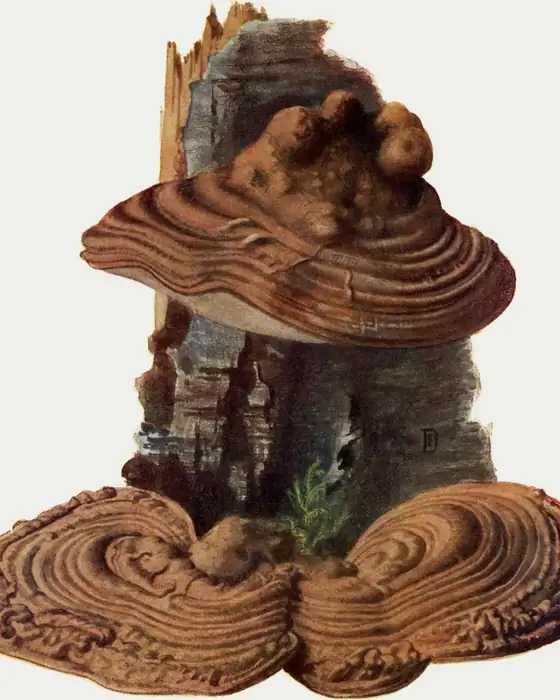
Archival plate of Ganoderma applanatum, from Doerstling, in Gramberg, Pilze der Heimat, 1913, plate 26, as Polyporus applanatus
The Moss Herbal Database
Ganoderma applanatum
Fam. Ganodermataceae
Parts: Fruiting body (conk)
Plate: Doerstling, in Gramberg, Pilze der Heimat, 1913, plate 26, as Polyporus applanatus ↗

Artist's conk

Ganoderma applanatum
Also: Artist's bracket, Bear bread
Neutral temperatureDryingTonifying

Reishi's wild cousin on old logs and stumps, for immunity and frayed nerves.

A big, woody shelf fungus with a brown, ridged top and a white underside that browns for good wherever it is scratched, which is how it got its name. Artist's conk shares many of reishi's compounds; long-simmered, it supports immune defenses, calms frayed nerves, and settles the stomach.

Energetics
Neutral, drying, toning
Taste
Bitter, woody
Family
Ganodermataceae (reishi family)
Parts used
Fruiting body (conk)

Medicinal uses 4

The tags sort the evidence behind each use by kind. Members are able to tap a condition to compare every herb for it.

Traditional useLab and mechanism studiesClinical studies

Preparations

Long-simmered decoction or soup stock, and double extracts.

Members are able to see the amounts, ratios, and methods for each preparation, search by condition, and match herbs to your constitution.

Cautions

  • Like reishi, it may lower blood pressure and blood sugar and slow clotting; check with your prescriber if you take medicine for any of these.

Medication interactions

Practitioner Practitioners are able to see the 4 types of medicine flagged for artist's conk, each with the mechanism and what to do. The plain-language cautions above stay open to everyone.

Pregnancy & breastfeeding

PregnancyAsk your practitioner

Artist's conk has not been studied in pregnancy; check with your practitioner.

BreastfeedingAsk your practitioner

It has not been studied in nursing; check with your practitioner first.

Folklore

Scratch the fresh white underside and the line turns brown and stays, so people have etched landscapes, names, and notes onto conks for generations. Ötzi, the iceman who died in the Alps about 5,300 years ago, carried birch polypore and tinder fungus, woody relatives of this conk. A single artist's conk can release trillions of spores in a season, dusting the log beneath it cocoa brown.

How to grow

Not cultivated; it grows wild on dead and dying trees. Gather fresh, actively growing conks in the autumn rains, pressing down to free them from the wood. Two to four conks make a year's medicine for a household, so leave the rest to keep spreading spores.

In the wild

Throughout North America, Europe, and Asia; in the Pacific Northwest it is common on old Douglas fir logs and stumps.

Every herb here fits some people better than others. Find out which ones fit you.