The Moss Herbal Database
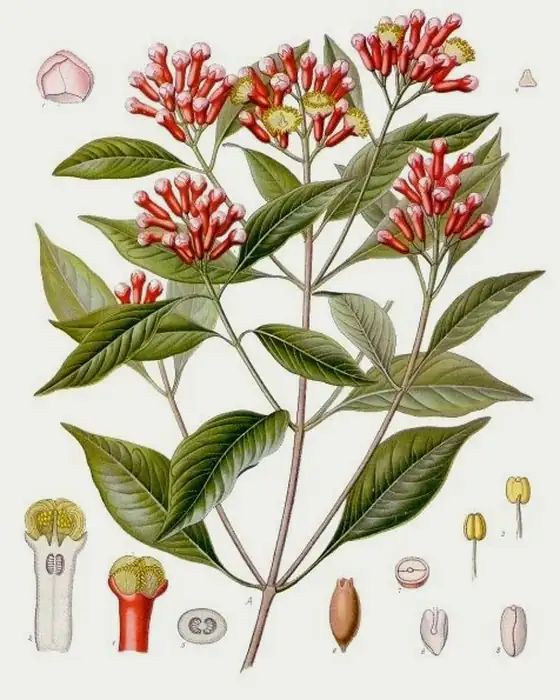
Syzygium aromaticumFam. Myrtaceae
Parts: Dried flower buds
Clove
Syzygium aromaticum
Also: Cloves, Eugenia caryophyllata
WarmingDryingTonifying
Numbs a sore tooth and warms a crampy, gassy gut.
The dried flower buds of a tall tropical evergreen, picked pink and sun-dried into small brown nails. Clove is hot, numbing, and strongly antimicrobial; it relaxes a cramping gut and eases pain wherever it touches, and its main compound, eugenol, is still used in dental dressings.
- Energetics
- Hot, drying, toning
- Taste
- Pungent, aromatic, numbing, bitter
- Family
- Myrtaceae (myrtle family)
- Parts used
- Dried flower buds