← All plants
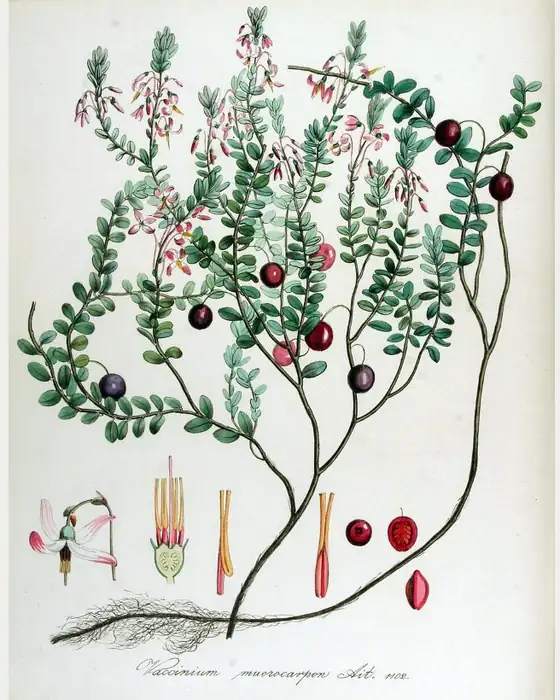
Archival plate of Vaccinium macrocarpon, from Flora Batava, vol. 14
The Moss Herbal Database
Vaccinium macrocarpon
Fam. Ericaceae
Parts: Fruit
Plate: Flora Batava, vol. 14 ↗

Cranberry

Vaccinium macrocarpon
Also: American cranberry, Large cranberry, Bounceberry
CoolingDryingTonifying

Keeps bacteria from taking hold in the bladder.

A low, trailing evergreen of acid bogs, with pink nodding flowers whose curled-back petals and long beak looked to settlers like a crane's head. Cranberry makes the lining of the bladder slippery ground for bacteria and gently flushes the urinary tract.

Energetics
Cooling, drying, toning
Taste
Sour, astringent
Family
Ericaceae (heath family)
Parts used
Fruit

Medicinal uses 1

The tags sort the evidence behind each use by kind. Members are able to tap a condition to compare every herb for it.

Traditional useLab and mechanism studiesClinical studies
  • Keeps E. coli from clinging to the bladder wall; reviews of trials find cranberry products lower the risk of repeat infections.

Preparations

Unsweetened juice, concentrated capsules, and the whole berries as food.

Members are able to see the amounts, ratios, and methods for each preparation, search by condition, and match herbs to your constitution.

Cautions

  • Sweetened cranberry cocktails work against you; choose pure juice or capsules.
  • Keep cranberry and slippery herbs like marshmallow two hours apart.
  • Cranberry may strengthen warfarin; tell your prescriber. A bladder infection with fever, back pain, or blood in the urine needs medical care.

Medication interactions

Practitioner Practitioners are able to see the one type of medicine flagged for cranberry, each with the mechanism and what to do. The plain-language cautions above stay open to everyone.

Pregnancy & breastfeeding

PregnancyGenerally regarded as safe

Cranberry has no known action on the uterus and is widely used in pregnancy to help prevent bladder infections. A burning bladder in pregnancy still needs a urine test, since untreated infections can reach the kidneys.

BreastfeedingGenerally compatible

Safe while nursing.

Practitioner Practitioners are able to see the full entry from the Moss Herbalism Pregnancy Safety Database: trimester ratings, uterine and placental action, breastfeeding and nursing-baby effects, chemistry, traditional use, studies, and sources.

Folklore

Dutch and German settlers called it the crane berry because the bud and petals look like the head and bill of a crane. Wampanoag, Narragansett, and other Native nations of New England ate the berries fresh and in pemmican, and used them as a red dye. A ripe cranberry bounces, and nineteenth-century growers sorted their crop by dropping berries down a set of steps; the firm ones bounced over the boards and the soft ones stayed behind.

How to grow

A low vine for acid soil that never dries out. Home growers build a small bog bed of peat and sand with steady water and full sun. Berries color up in early autumn and keep for weeks in the cold.

In the wild

Bogs, fens, and wet acid shores of northeastern North America and the Great Lakes. Its small cousin Vaccinium oxycoccos grows in sphagnum bogs around the northern world, including the Pacific Northwest.

Every herb here fits some people better than others. Find out which ones fit you.