← All plants
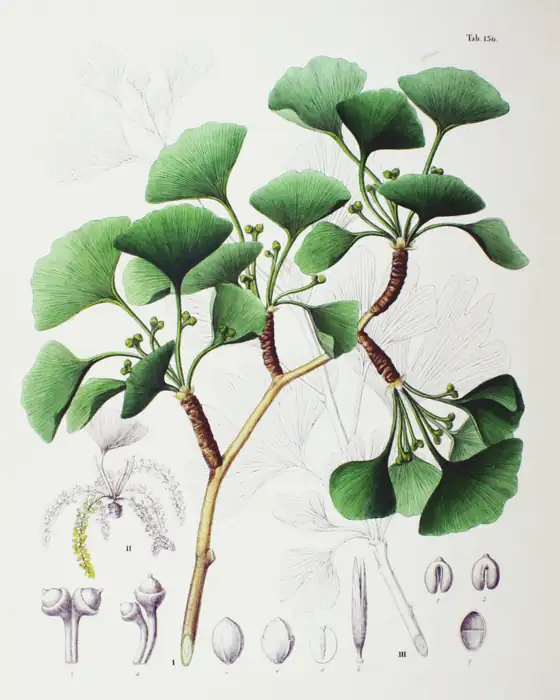
Archival plate of Ginkgo biloba, from Siebold and Zuccarini, Flora Japonica, 1870, plate 136
The Moss Herbal Database
Ginkgo biloba
Fam. Ginkgoaceae
Parts: Leaf, as standardized extract
Plate: Siebold and Zuccarini, Flora Japonica, 1870, plate 136 ↗

Ginkgo

Ginkgo biloba
Also: Maidenhair tree, Gingko
CoolingNeutral moistureRelaxing

Sends blood to the brain and out to the far edges of the body.

An ancient tree with fan-shaped, two-lobed leaves that turn butter-yellow in autumn and fall almost all at once. Ginkgo leaf extract widens small blood vessels, keeps blood flowing freely, and shields nerve cells from oxidative damage, improving circulation to the brain, eyes, ears, hands, and feet; herbalists also give it for ringing ears and dizziness that come from poor circulation.

Energetics
Slightly cooling, neutral, relaxing
Taste
Bitter, faintly astringent
Family
Ginkgoaceae (ginkgo family)
Parts used
Leaf, as standardized extract

Medicinal uses 2

The tags sort the evidence behind each use by kind. Members are able to tap a condition to compare every herb for it.

Traditional useLab and mechanism studiesClinical studies
  • Improves circulation in the brain and protects nerve cells; in trials, standardized extract steadied memory, thinking, and daily function in mild dementia.

  • Widens small vessels and improves circulation to cold hands and feet.

Preparations

Standardized leaf extract, taken daily for several months.

Members are able to see the amounts, ratios, and methods for each preparation, search by condition, and match herbs to your constitution.

Cautions

  • Slows blood clotting. Leave it out alongside blood thinners, and stop two weeks before surgery or birth.
  • Use the leaf extract only. The seeds contain a toxin that can cause seizures, especially in children, and the fruit pulp can raise a rash like poison ivy.
  • Quality extracts remove most of the ginkgolic acids, which can cause allergic reactions.
  • Seizures have been reported in people with epilepsy; check with your neurologist first.

Medication interactions

Practitioner Practitioners are able to see the 5 types of medicine flagged for ginkgo, each with the mechanism and what to do. The plain-language cautions above stay open to everyone.

Pregnancy & breastfeeding

PregnancyAvoid

Ginkgo slows clotting, a real risk at delivery, and its pregnancy safety has not been established. The seeds stimulate the uterus and are toxic.

BreastfeedingAvoid

Its effect on clotting and the lack of nursing data keep it out of breastfeeding.

Practitioner Practitioners are able to see the full entry from the Moss Herbalism Pregnancy Safety Database: trimester ratings, uterine and placental action, breastfeeding and nursing-baby effects, chemistry, traditional use, studies, and sources.

Folklore

Ginkgo is the last living species of a lineage that reaches back more than 200 million years, and fossil leaves from the age of dinosaurs look almost exactly like the ones on city streets today. It survived only in a few mountain valleys of China and in the gardens of Buddhist temples, where monks kept it for centuries. In 1815 Goethe sent a love poem with two ginkgo leaves attached, asking whether the split leaf was one being or two. Several ginkgos within a mile or two of the Hiroshima blast in 1945 survived and still grow.

How to grow

An extremely hardy, long-lived tree that shrugs off city smog, poor soil, and pests. Trees are male or female, and females drop fleshy seeds that smell of rancid butter, so plant a named male variety. Gather leaves green in summer for extracts; in autumn they turn gold and fall within days.

In the wild

Effectively extinct in the wild. Possible wild stands survive in the Tianmu Mountains of Zhejiang and in the mountains of southwest China, and nearly every other ginkgo descends from planted trees.

Every herb here fits some people better than others. Find out which ones fit you.