← All plants
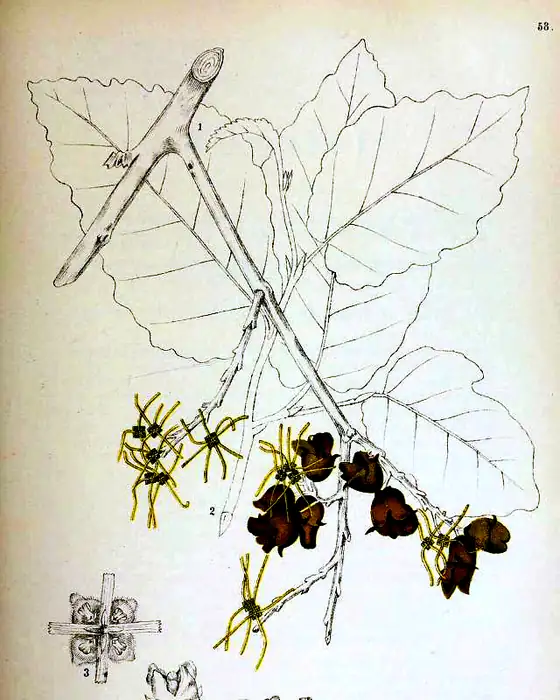
Archival plate of Hamamelis virginiana, from Millspaugh, American Medicinal Plants, 1887, plate 58
The Moss Herbal Database
Hamamelis virginiana
Fam. Hamamelidaceae
Parts: Bark, twigs, and leaves
Plate: Millspaugh, American Medicinal Plants, 1887, plate 58 ↗

Witch hazel

Hamamelis virginiana
Also: American witch hazel, Winterbloom, Snapping hazel
CoolingDryingTonifying

Tightens swollen veins and cools weeping, inflamed skin.

A small understory tree that blooms in late autumn, after its leaves have fallen, with spidery ribbons of yellow petals. Witch hazel is a cooling astringent that tightens slack veins and leaking, inflamed tissue, cleans small wounds, and calms swelling and redness.

Energetics
Cooling, drying, toning
Taste
Astringent, sour, faintly sweet
Family
Hamamelidaceae (witch hazel family)
Parts used
Bark, twigs, and leaves

Medicinal uses 8

The tags sort the evidence behind each use by kind. Members are able to tap a condition to compare every herb for it.

Traditional useLab and mechanism studiesClinical studies

Preparations

Distilled witch hazel, a stronger bark decoction, chilled pads, and wound washes.

Members are able to see the amounts, ratios, and methods for each preparation, search by condition, and match herbs to your constitution.

Cautions

  • It is used on the skin; by mouth it is given only in drops, under a practitioner's guidance.
  • Distilled witch hazel contains alcohol and stings broken skin.
  • Heavy bleeding needs firm pressure and medical care; witch hazel is for small wounds.
  • Rectal bleeding, even with known hemorrhoids, deserves a medical look.

Pregnancy & breastfeeding

PregnancyOn the skin

Witch hazel pads and creams are among the most recommended pregnancy remedies for hemorrhoids, varicose veins, and perineal swelling. Taken by mouth it is a different matter; leave the tea and tincture out.

BreastfeedingOn the skin

Pads and creams are widely used after birth and while nursing; keep them off the nipple.

Practitioner Practitioners are able to see the full entry from the Moss Herbalism Pregnancy Safety Database: trimester ratings, uterine and placental action, breastfeeding and nursing-baby effects, chemistry, traditional use, studies, and sources.

Folklore

The witch in its name has nothing to do with witches; it comes from the Old English wice, pliant, for the bendy branches, and forked twigs of it are still a dowser's favorite for finding water. In 1846 Theron Pond of Utica, New York, began bottling a witch hazel extract he had learned of from the Oneida, the product that became Pond's Extract. The seed capsules ripen a full year after flowering and split with a snap, firing their black seeds up to thirty feet.

How to grow

A large shrub or small tree for part shade and moist, acid, humus-rich soil, hardy to about -30°F. Its leaves turn gold in autumn, and its spidery flowers open from October into December, often the last bloom of the year. Cut twigs and bark in late autumn or early spring.

In the wild

Woodland understories, stream banks, and forest edges of eastern North America, from Nova Scotia to Florida and west to Minnesota and Texas. Most commercial witch hazel is still cut from wild stands in New England.

Every herb here fits some people better than others. Find out which ones fit you.