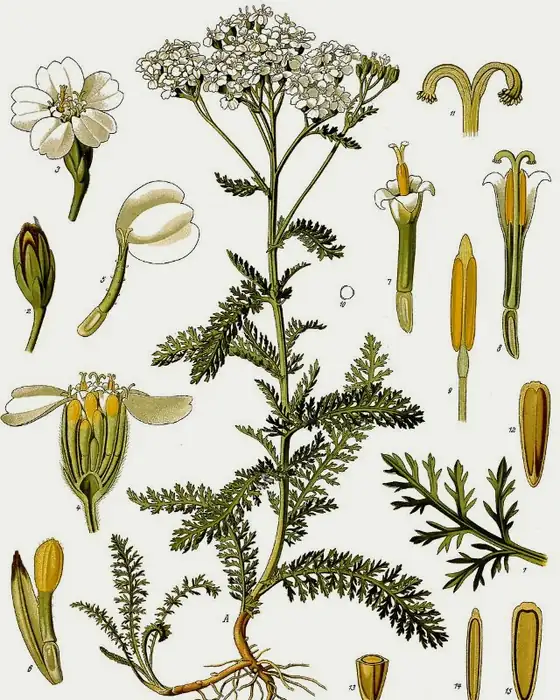
The Moss Herbal Database
Achillea millefoliumFam. Asteraceae
Parts: Flowering tops and leaves
Yarrow
Achillea millefolium
Also: Milfoil, Soldier's woundwort, Nosebleed plant
Warming and coolingDryingTonifying
Master of the blood: stops it outside, moves it inside.
Feathery, finely cut leaves and flat white flower heads on tough stems. Yarrow works on blood in two directions, stanching bleeding where it is applied and moving stagnant circulation when taken inside, and it opens the skin to break a fever.
- Energetics
- Warming and cooling, drying, tonifying
- Taste
- Bitter, pungent, aromatic
- Family
- Asteraceae (daisy family)
- Parts used
- Flowering tops and leaves