Published
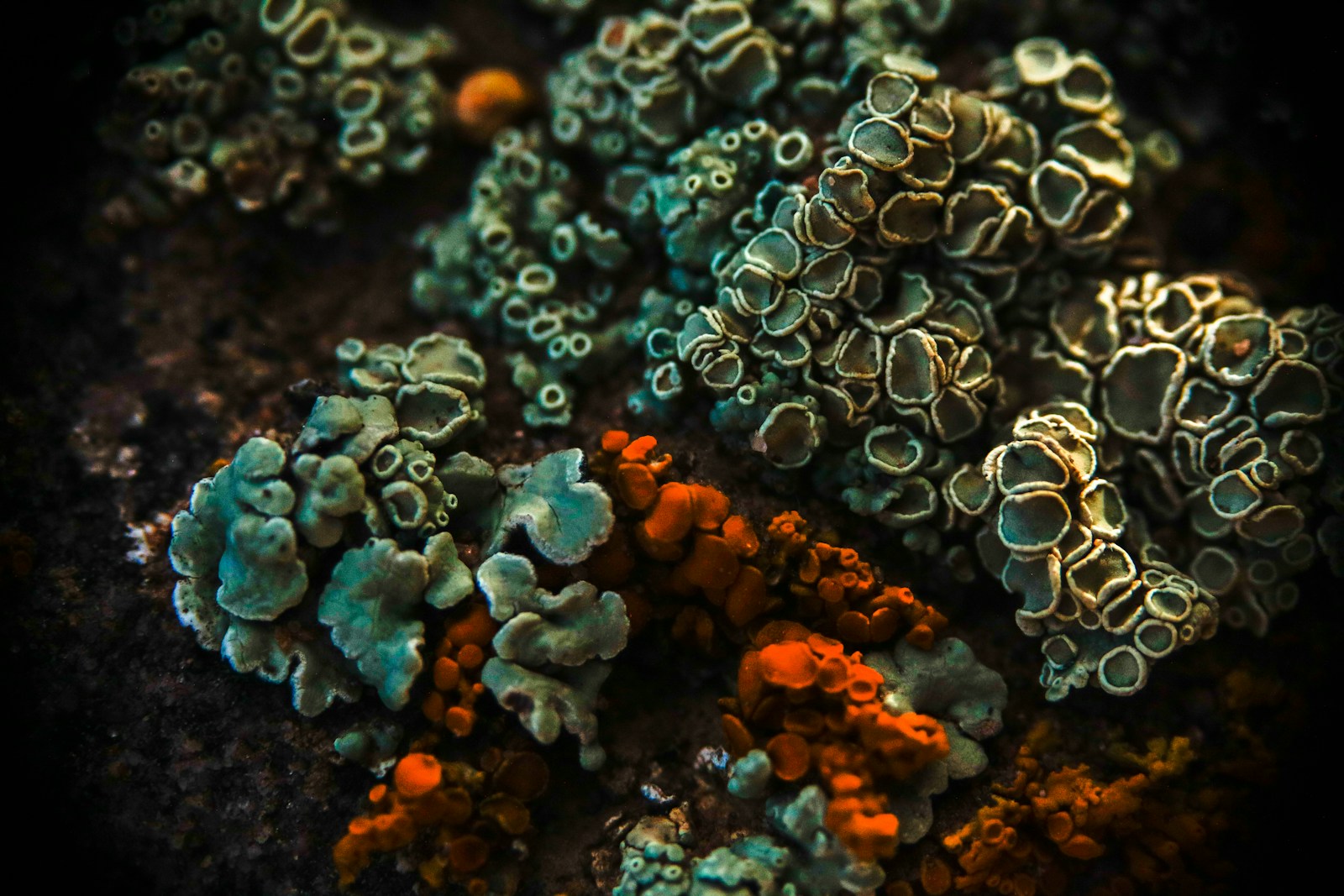
Lichens are some of the most unique living systems we interact with on a daily basis.
They are not plants. They are not fungi. They are composite organisms built from layered relationships – traditionally we said they were a symbiotic relationship between a fungi and an algae, but now we know that there are often other bacteria as well in the mix. They blur the boundaries of what we think of as an individual life form.
Xanthoria parietina is a vivid orange lichen that shows up on seaside rocks, barn walls, and city stonework. Its color comes from protective pigments that shield it from intense sunlight, but its real oddity is where it chooses to live. This species thrives in nitrogen-rich environments and follows birds because their poop provides the nitrogen they are looking for. The brighter and more abundant it is, the more likely it is that there is a long history of bird’s perching there. In ecological surveys, its presence can map nutrient pollution and avian behavior.
Lecanora conizaeoides is another lichen that is dependent on another species. It spread rapidly across Europe during the height of coal burning and sulfur pollution. The acidic air was perfect for it while other lichens (that are typically very sensitive to pollution) could not handle the air conditions. I wonder how well humans were fairing with this polluted air… When clean air laws reduced sulfur emissions, Lecanora conizaeoides populations dwindled back down.
Some lichens grow so slowly that they have become tools for measuring time. Rhizocarpon geographicum forms cracked, chart-like patterns on alpine rock which is why it’s called the “Map lichen” Its growth rate is steady enough that geologists use it to estimate how long a surface has been exposed. We use this often on archeological stone sites to know when they were built. In glacial landscapes, this lichen records retreat and change even hundreds of years after ice has vanished.
Letharia vulpina is an almost unnaturally bright yellow species that contains vulpinic acid, a compound historically used to poison wolves in parts of Scandinavia. The toxin does not come from the fungus alone but from bacteria living within the lichen structure. I think about this often when cultivating medicinal plants as I wonder how symbiotic relationships can be key factors to achieving medicinal compounds.
The Herbarium
The Herbarium is a monthly print zine mailed to you – it covers plant history, botany, folklore, and herbalism