Published
Safety & Historical Context
The botanicals below contain active constituents that require clinical education and precise measurement. This article is published for educational and natural history purposes. Do not forage, prepare, or self-administer these species.
Drop dose plants are plants that were historically used in very small doses… “drop doses” but in large quantities contain toxic constituents that can cause distressing symptoms or even be fatal. Unfortunately many people think that most herbs have this strong action and it has created a great fear around botanical medicine in general. I do trust that people can be given a full scope of information and be informed about things while holding nuance for exceptions. While we can consume cups and cups of nettle and oat straw tea typically without ill effect. These plants below are ones that truly should be deeply respected.
In many European and Eclectic American practices, trained workers reserved these plants for acute work – doses were carefully prepared and even more carefully administered.
1. Belladonna (Atropa belladonna)

Belladonna belongs to the nightshade family and carries tropane alkaloids: atropine, hyoscyamine, and scopolamine. Renaissance Italian women used dilute berry extracts in the eyes to dilate pupils. The species name means “beautiful lady.”
Nineteenth-century medical herbalists used minute doses to dry secretions and ease smooth-muscle spasm by blocking muscarinic acetylcholine receptors. The same chemicals that dilate the pupil, also work on other smooth muscles – stopping digestion, raising heart rate, and causing distress and confusion.
Exposure & Toxicity Note: Ingestion triggers anticholinergic toxicity, severe dryness, and rapid heart rate. Sap or berry contact absorbs through mucous membranes or cut skin.
2. Foxglove (Digitalis purpurea)
In 1785 William Withering published An Account of the Foxglove, and some of its Medical Uses after watching traditional treatment of dropsy. Dropsy is an old word that described the swelling sensation that some patients experienced as a symptom of heart failure events. This remedy was discovered after he got a recipe from a local medicine woman and found success with it. Foxglove was eventually isolated as the effective ingredient.
The leaves hold cardiac glycosides, chiefly digitoxin and digoxin. They increase cardiac contraction force and slow conduction by inhibiting the sodium-potassium ATPase pump. They accumulate in tissue, and therapeutic and toxic thresholds sit close together.
Exposure & Toxicity Note: Ingestion causes cardiac arrhythmias, severe nausea, and halo vision. Extended handling of leaves without gloves can cause contact dermatitis and transdermal uptake.

3. Henbane (Hyoscyamus niger)
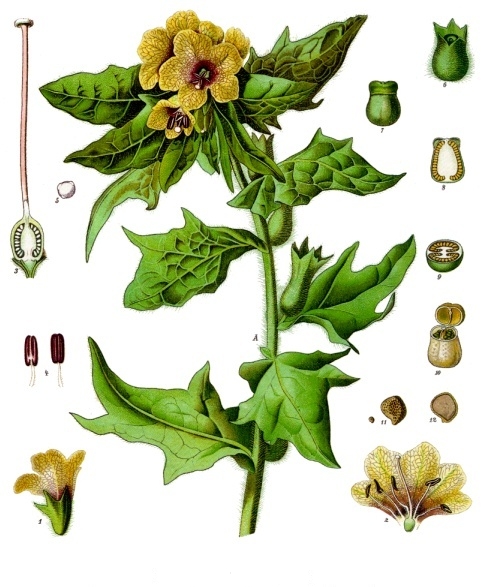
Henbane is another tropane nightshade. Archaeologists have found its seeds in Neolithic settlements and medieval monastic gardens across northern Europe. Eclectic physicians in the late 1800s used tincture in micro-doses as a sedative and antispasmodic when opium was a poor fit. Relative to belladonna, henbane leans toward hyoscyamine and scopolamine, which the older literature treated as more sedating.
Every part of the plant is toxic, seeds and roots especially.
Exposure & Toxicity Note: Highly toxic across all plant tissue. Ingestion leads to delirium and respiratory depression; sticky sap residue transfers to mouth or eyes upon handling.
4. Monkshood (Aconitum napellus)
Monkshood carries diterpenoid alkaloids. Historical European use included liniments for neuralgia, and Chinese medical traditions processed aconite under strict protocols that Western kitchen herbalism never copied. Unprocessed root can stop the heart. The hooded flower that looks like a monk’s cowl is a warning in color.
Exposure & Toxicity Note: Aconitine passes directly through skin. Bare-handed picking causes fingertip tingling and numbness; ingestion rapidly triggers severe cardiotoxicity.

5. Lobelia (Lobelia inflata)
Thomsonian and Eclectic practitioners used lobelia as an emetic and antispasmodic. Lobeline acts on nicotinic receptors. Historical dose was drop-wise, and vomiting was treated as a sign, not an accident. Overdose produces respiratory depression. The folk name Indian tobacco does not make it a smoke for the untrained.
Exposure & Toxicity Note: Ingestion causes violent emesis, autonomic dysfunction, and tremors. Milky sap can irritate sensitive skin and eyes.
6. Pokeweed (Phytolacca americana)
Poke root is a traditional alterative in American folk practice, used in very small doses for lymphatic stagnation. The berries stain purple and the root is toxic. Lectins and phytolaccatoxin inflame the gut and, at higher exposure, the nervous system. Spring poke sallet of young leaves, boiled through waters, is a food tradition with its own rules. The mature root is not food.
Exposure & Toxicity Note: Raw root, berries, or mature leaves cause severe gastrointestinal distress. Mitogenic lectins in sap absorb through minor skin abrasions.
Frequently Asked Questions
What are drop-dose plants in herbalism?
Botanicals with a narrow gap between a therapeutic dose and toxicity. Historical practitioners used them in drops of tincture, not as teas or food herbs.
Are poisonous plants used in medicine?
Yes. Foxglove yielded cardiac glycosides related to modern digitalis drugs, and belladonna alkaloids appear in the history of ophthalmology and antispasmodic care. Use needs to be reserved to trained clinicians.
Can I forage belladonna, foxglove, or monkshood?
Please don’t my friend. Identification errors and dosing errors are both dangerous.
The Herbarium is a monthly print zine mailed to you – it covers plant history, botany, folklore, and herbalism.