Published
How metals end up in plants:
Plants pull minerals from the soil. That’s the whole reason we use mineral-rich herbs like nettle and oat straw in the first place. They’re good at gathering what’s around them. The issue is that plants don’t distinguish between what we consider a nutrient and contaminants. If there’s lead, cadmium, or arsenic in the soil or water, plants can take that up too.
Where contamination comes from varies. Old agricultural land can carry residues from arsenic-based pesticides, and urban soil often has elevated lead from decades of paint and gasoline. Industrial areas, mining sites, and irrigation water from contaminated sources are all documented routes.
Some plants take this a step further. Certain species are known as hyperaccumulators, meaning they pull metals out of the soil at much higher rates than other plants growing right next to them. This is actually useful for environmental cleanup – we can plant these species in contaminated areas, let them draw metals up into their tissues, then remove and dispose of that plant matter safely. The problem is that plants don’t consult us about whether we want them doing this, and it’s not something you want happening in your medicine garden or your daily tea.
The High Risk Herbs
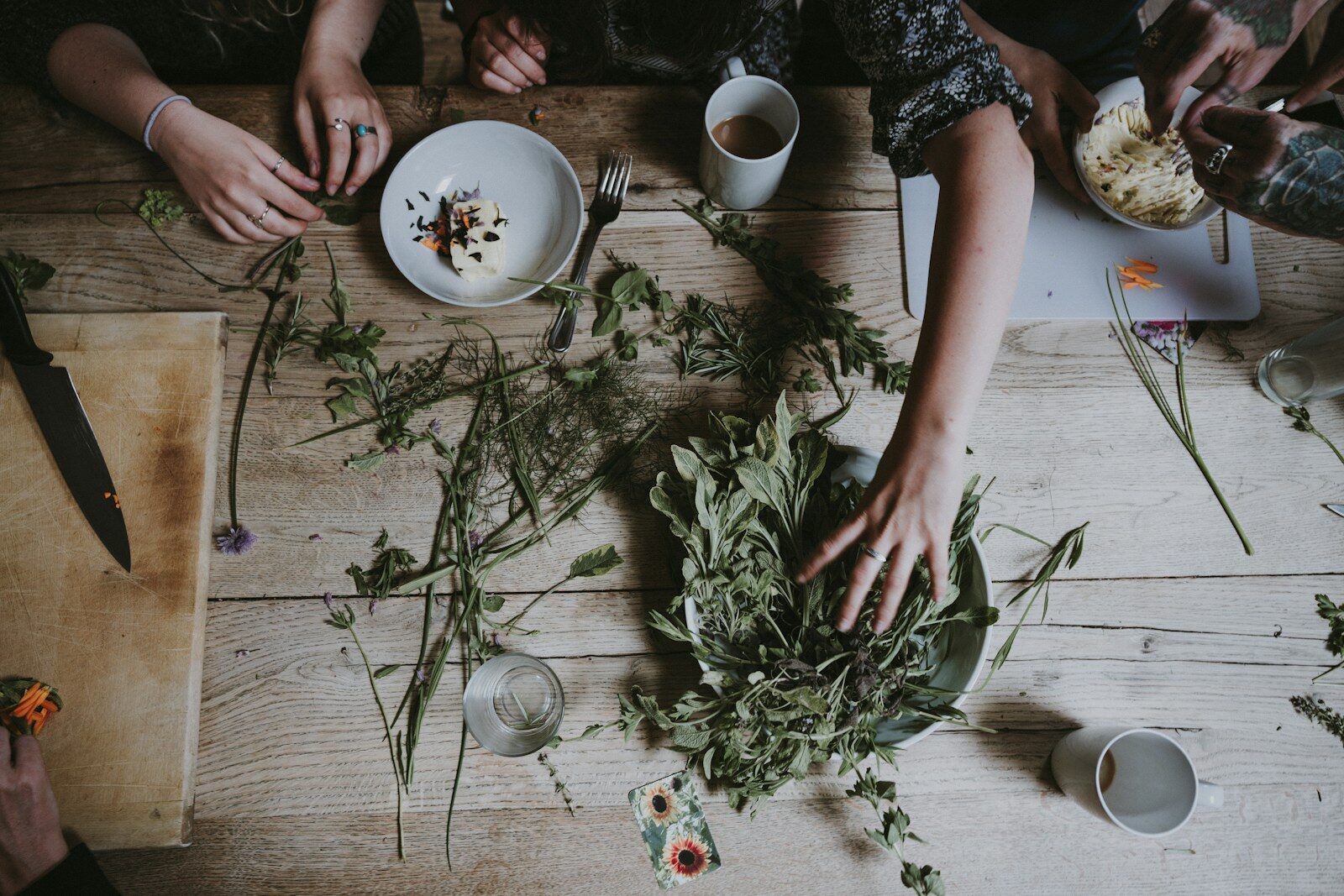
A few herbs are higher risks for containing heavy metals. Many of these are because they are hyperaccumulators, have long taproots, or becuase of where they tend to grow. The table below sorts them by concern level, notes which part of the plant accumulates most, and explains why. In almost every case the concern is not about the plant itself but about where and how it was grown.
Common herbs sorted by relative heavy metal accumulation concern.
| Herb | Concern Level | Highest Risk Part | Notes |
|---|---|---|---|
| Hijiki seaweed | High | Whole plant | Consistently the highest inorganic arsenic of any commonly used seaweed. Several countries have issued consumption advisories. Avoid regular use. |
| Indian Mustard (Brassica juncea) | High (In contaminated soil) | Whole plant | Among the most documented hyperaccumulators for cadmium and lead. Less commonly used medicinally but notable given how widely it’s studied. |
| Ayurvedic rasa shastra formulas | Variable / High | Whole formula | These are formulas that may intentionally include processed metals – lead, mercury, arsenic. While they state they go through processes to make these safe, multiple peer-reviewed studies found elevated levels in finished products. Source carefully. |
| Dandelion (Taraxacum officinale) | Moderate | Root | Confirmed lead hyperaccumulator. One of the most commonly foraged herbs – location matters enormously. Clean meadow vs. roadside or urban lot are very different. Roots accumulate most. |
| Comfrey (Symphytum officinale) | Moderate | Root | Roots bind lead. Commonly grown as a garden compost plant in disturbed soils with variable contamination history. Consider soil history before using root preparations. |
| Sunflower (Helianthus annuus) | Moderate | Root | Extensively studied lead accumulator, used in formal phytoremediation. Know your soil if growing as companion plant or using any part medicinally. |
| Burdock (Arctium lappa) | Moderate | Root | Deep taproot in direct soil contact. Widely foraged and used as food and medicine. Urban or roadside harvest warrants caution. |
| Chicory / Dock species (Cichorium / Rumex) | Moderate | Root | Both pull minerals efficiently from soil. Dock in particular grows readily in disturbed or contaminated ground. Location-dependent, similar caution to dandelion. |
| Ashwagandha (Withania somnifera) | Moderate | Root | Primarily imported from India. Inconsistent third-party testing across brands. Root powder in capsules is the highest-exposure form. Look for brands with published COAs. |
| Kelp / Dulse | Low-Moderate | Whole plant | Lower inorganic arsenic than hijiki. Generally safe as occasional tea or food. Daily concentrated supplement use warrants more scrutiny as total arsenic can add up. |
| Stinging Nettle (Urtica dioica) | Low-Moderate | Whole plant | Widely consumed in large amounts as nourishing infusion. Accumulates metals in proportion to soil contamination. Grown or foraged from clean areas is very low risk. |
| Oat Straw (Avena sativa) | Low | Aerial parts | Aerial parts accumulate less than roots. Commonly cultivated in controlled conditions. Risk is low unless sourced from heavily contaminated agricultural land. |
Where Risk Tends to be Highest
Beyond individual species, a few categories of herbal products consistently show up as higher concern in the research.
Seaweeds are extremely efficient at pulling minerals from the ocean. Hijiki is the one that consistently comes up as high in inorganic arsenic. Kelp, dulse, and others are generally lower, but if someone is taking concentrated seaweed supplements daily it’s something to consider.
Some traditional Ayurvedic preparations, sometimes called rasa shastra formulas, intentionally include metals like mercury, lead, or arsenic as part of their formulation. These are processed in specific ways said to render them safe, but multiple studies have found that finished products can still contain measurable and sometimes elevated levels. That’s a sourcing and manufacturing concern, not a blanket statement about the entire tradition.
Roots generally have higher levels than aerial parts since they’re in direct soil contact and tend to accumulate at higher rates – this is true across many species.
What actually gets into your tea or tincture
This is the part that almost never gets explained clearly. Just because a plant contains a certain level of a heavy metal *does not mean you’re ingesting all of it*. Extraction method matters a lot in what your end exposure amount it.
LOW RISK
Cold infusion: Very Low exposure Cold water extracts the least of any method. Best for mucilaginous herbs like marshmallow root. Lowest metal exposure of all preparations.
Hot infusion (tea): Low exposure Water extracts a relatively small percentage of heavy metals from plant material. The longer you steep the more you will extract but in comparison can be a low-risk daily practice.
MODERATE RISK
Decoction (simmered): Low to Moderate exposure Longer heat exposure may extract slightly more than a standard infusion. Still significantly lower exposure than capsules. As this is often the extraction method for roots the source material is key here.
Tincture (alcohol extract): Moderate exposure Alcohol extracts more than water, though still not the full amount present in the plant. Dose is also typically small, which keeps actual exposure low relative to other concentrated forms.
Oxymel / Vinegar extract: Moderate to High exposure Acetic acid is a reasonably effective chelator and pulls metals more readily than water and often more than alcohol at typical tincture doses. Oxymels are also often made with root-heavy herbs. The research here is quite thin but what we know of chemistry we would expect most oxymels to pull more of these heavy metals than other extraction methods. Again – source material is key.
HIGH RISK
Powder / Capsule: High exposure You consume the entire plant material – 100% of whatever metal content is present. This is the highest-exposure scenario, especially with daily long-term use. This is a big reason I rarely use capsules in my practice.
Standardized extract tablets: High exposure Concentrated forms carry concentrated metal levels. Compounded daily over months, this is where the documented problems in the literature tend to occur.
How much is actually too much?
There are established safety thresholds for lead, arsenic, cadmium, and mercury based on total daily intake over time. The key thing is that herbs are a small piece of our much larger exposure pool. Most people are already getting low-level exposure from food and environment. Rice is one of the leading dietary sources of inorganic arsenic. Leafy vegetables grown in urban gardens can carry lead. Seafood contributes mercury and arsenic for many people.
We can really perceverate over whether herbs contain any detectable metal but it’s important to step back and really look at if it’s the herbal practice that really is the biggest contributor to your overall exposure. For most people using herbs as teas or tinctures from reputable sources, the answer is usually no.
Practical ways to reduce exposure
Teas and tinctures will typically carry lower risk than capsules and powders. Being more discerning with roots, and with plants known to pull heavily from soil, makes sense regardless of how they’re prepared. Paying attention to sourcing matters, especially for imported herbs and anything wildcrafted from unknown locations.
Growing your own is one of the best ways to control quality, as long as you know your soil history. If you’re near an old road, industrial area, or older home, a basic soil test before you grow food or medicine is worth doing.
And if you forage, knowing the history of the land you’re harvesting from matters just as much as knowing the plant itself. A few tools that are actually useful for this:
The EPA’s ECHO tool lets you search by location for known contaminated sites, Superfund areas, and nearby industrial facilities: [https://echo.epa.gov].
The EPA’s Superfund site locator is more specific to historically contaminated land and shows cleanup status: https://www.epa.gov/superfund/search-superfund-sites-where-you-live.
For land use history, Google Earth’s historical imagery feature (the clock icon in the toolbar) is one of the easiest ways to see what was on a piece of land before you got there.
The USGS Earth Explorer has imagery going back further if you need it: [https://earthexplorer.usgs.gov].
If you’re in Washington State, the Department of Ecology’s Hazardous Sites List is a straightforward lookup for confirmed contaminated sites: https://apps.ecology.wa.gov/cleanupsearch.
A few specific risk factors to keep in mind before you harvest:
- Proximity to roads: Lead from decades of leaded gasoline accumulates in roadside soil and persists for a long time. Harvest at least 50 feet from any road and avoid high-traffic areas entirely for food or medicine plants.
- Urban and suburban lots: Urban soils often carry elevated lead from old paint, vehicle exhaust, and industrial history. Vacant lots and older neighborhoods are higher risk.
- Near industrial sites or former factories: Smelters, mines, manufacturing facilities, and old gas stations can leave lasting metal contamination in surrounding soil. Search the EPA Superfund locator and your state’s contaminated sites database before foraging in these areas.
- Agricultural land with long conventional history: Older pesticides contained arsenic and lead, and these residues can persist in soil for decades after use has stopped. A basic soil test is inexpensive and worth doing when in doubt.
- Flood plains and drainage areas: Heavy metals accumulate in sediment and can concentrate in low-lying areas where water deposits material over time. Be cautious harvesting downstream of industrial or urban zones.
- Disturbed or filled land: Construction fill, demolished building rubble, and landfill edges can introduce metals that wouldn’t naturally be present. Avoid foraging on obviously disturbed ground or sites with a history of construction or fill.
References
1. Giacomino A, et al. Metal content in dandelion (Taraxacum officinale) leaves. *Journal of Chemistry. 2016.* https://onlinelibrary.wiley.com/doi/10.1155/2016/9842987
2. Vural A, et al. Trace element accumulation in Taraxacum officinale. *Environmental Science and Pollution Research. 2024.* https://link.springer.com/article/10.1007/s11356-024-32293-2
3. Abhilash PC, et al. Native phytoremediation potential of Urtica dioica. *PMC. 2016.* https://pmc.ncbi.nlm.nih.gov/articles/PMC5145202/
4. Rana R, Kumar R. Phytoremediation using Brassica juncea and Urtica dioica. *International Journal of Phytoremediation. 2025.* https://www.tandfonline.com/doi/full/10.1080/15226514.2025.2570781
5. Taylor HH. Lead chelation to Symphytum officinale root tannins. *PubMed. 2009.* https://pubmed.ncbi.nlm.nih.gov/19477483/
6. Saper RB, et al. Heavy metal content of Ayurvedic herbal medicine products. *JAMA. 2004.* https://jamanetwork.com/journals/jama/fullarticle/1108395
7. Saper RB, et al. Lead, mercury, and arsenic in Ayurvedic medicines sold via the Internet. *JAMA. 2008.* https://jamanetwork.com/journals/jama/fullarticle/182460
8. US Food and Drug Administration. Arsenic in food and dietary supplements.
**https://www.fda.gov/food/environmental-contaminants-food/arsenic-food
The Herbarium
The Herbarium is a monthly print zine mailed to you – it covers plant history, botany, folklore, and herbalism