Published
Steeping Loose Leaf Herbal Tea
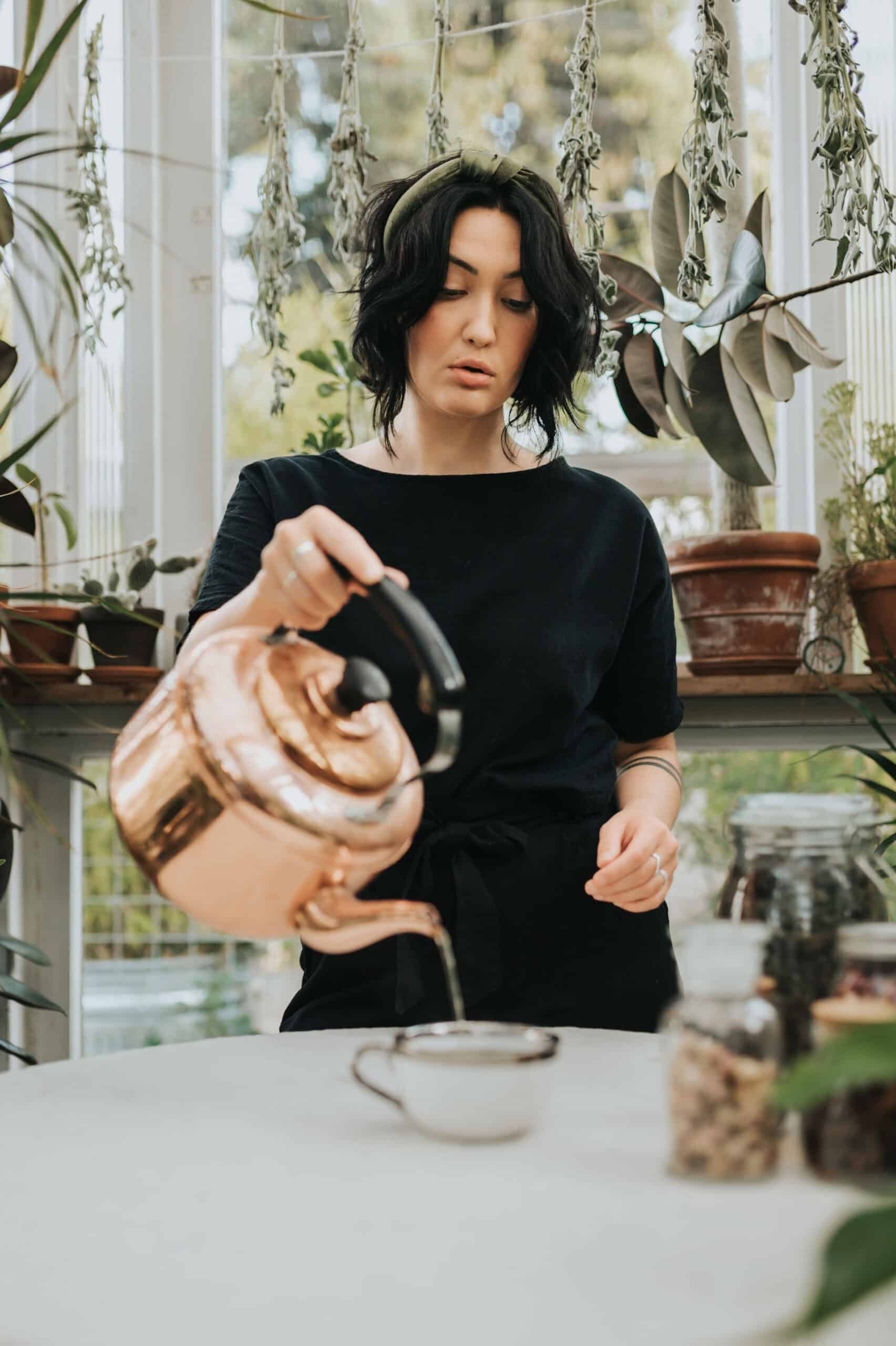
I have had enough clients ask questions over the years about the specifics of how to steep their loose leaf herbal tea blends that I thought I’d do a breakdown guide on some of the simple methods. The majority of tea blends that I send out into the world are a simple hot infusion. Below it breaks down different types of infusions but a simple hot infusion is just hot water poured over herbs. A long infusion is just leaving it to steep longer, and a cold infusion is cold water over herbs. A decoction is boiling herbs and is usually reserved for woody bark, roots, or mushrooms.
| Method | Best For | Temperature | Time |
|---|---|---|---|
| Short infusion | Leaves, flowers, aromatic herbs, tannin-rich herbs | Just off boil (~200°F) | 10-30 min |
| Long infusion | Nutritive herbs, mineral extraction, fuller spectrum | Just off boil (~200°F) | 4 hrs-overnight |
| Cold infusion | Mucilaginous herbs only (marshmallow root, slippery elm, licorice root) | Room temp or cold | 4 hrs–overnight |
| Decoction | Roots, bark, seeds, dried berries, dense plant material | Low simmer (~180–200°F) | 20-40 min |
Ratio
3 tablespoons dried herb per 1 liter of water is my general starting point
Equipment Options
Glass Tea Pot
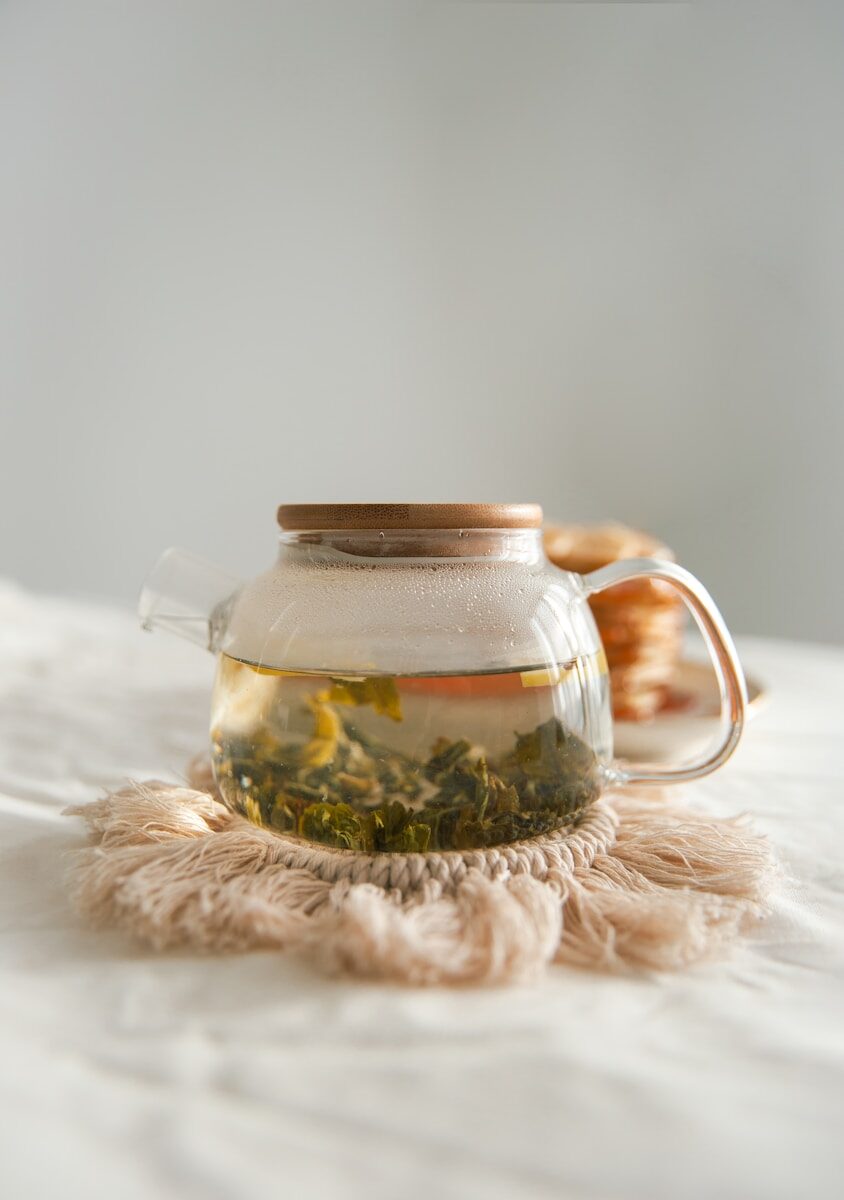
Get one with a metal strainer basket and pour hot water over herbs in basket. Cover while steeping. Best for short and long infusions – easy to make a large batch.
French Press
Add herb, pour hot water over, steep covered, press and pour. Easy cleanup, good for larger batches.
Tea Basket
Best for single cup short infusions. Fill basket, pour hot water over into mug, cover mug while steeping.
Ball, stick, or sachet infuser
Convenient but limits herb expansion – use loosely packed and size up if possible. Fine for short infusions, not ideal for long ones.
Mason Jar or Pitcher
Add herb directly to jar, pour hot water over, cover tightly, steep, then strain through a fine mesh strainer or cheesecloth. Best method for long infusions and cold infusions.
Stovetop
Required for decoctions of hard woody bark and mushrooms but can damage delicate leaves and flowers. Add herb and cold water together, bring slowly to a low simmer, cover and keep there for 20-40 minutes. Never boil hard.
Key Tips for Any Steep:
- Cover your vessel while steeping. Aromatic and volatile compounds leave with the steam – a lid or small plate over your mug makes a real difference in the medicine retired.
- Use water just off the boil, not actively boiling. Rolling boils can damage delicate constituents in aromatic herbs.
- For cold infusions, do not use heat. Add herb to room temperature or cool water, cover, and leave overnight. Strain in the morning. The result should be noticeably thick and slightly slippery – that’s the mucilage
- For decoctions, start with cold water and bring up slowly. Keep it at a low simmer, not a boil. Cover the pot to retain volatile compounds even in denser plant material.
The Herbarium
The Herbarium is a monthly print zine mailed to you – it covers plant history, botany, folklore, and herbalism