Published
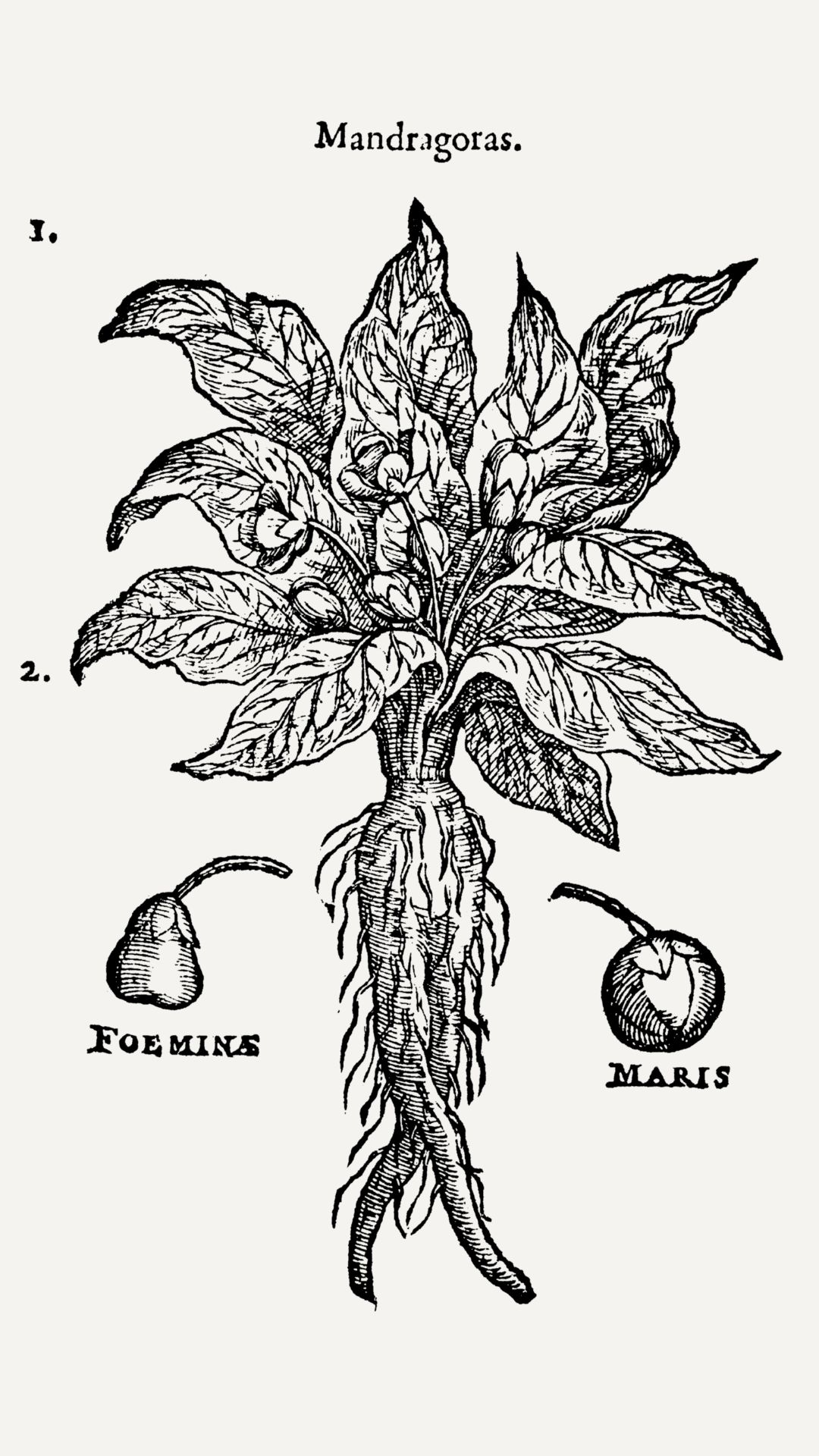
Few medicinal plants carry as much folklore as mandrake. The roots carry a wealth of history – while we no longer use it as medicine, it’s path has impacted the course of herbalism and plant trade.
Understanding plant folklore gives us insight about how people historically related to plants when medicine, survival, and the unknown were deeply intertwined. Mandrake offers one of the clearest examples of how a plant’s appearance and effects allowed this plant to transcend into an almost mythical being.
Mandrake roots often grow thick and forked, sometimes resembling a human body. This alone was enough to give it a powerful symbolic presence. In premodern Europe, resemblance mattered. The more human like the root the higher prices these could fetch for use in spiritual and medical practices (the two were one and the same for much of the history of medicine).
One of the most enduring legends claims that mandrake screamed when pulled from the ground, killing or driving mad anyone who heard it. To avoid this, elaborate harvesting rituals developed. Some accounts describe tying the plant to a dog so the animal would pull it free instead. Others recommend harvesting at night, using specific tools, or performing protective rituals beforehand. One of my favorite theories is the one I find to be the most plausible – that commercial root harvesters put forth or promoted this story becuase they simply wanted to deter others from digging up their profits.
Mandrake contains potent tropane alkaloids that can cause sedation, delirium, hallucinations, and toxicity. People did not have chemical language for this, but they did have experiences. A plant that could numb pain or alter consciousness so dramatically was not something taken lightly. Folklore often developed as a way to encode caution into human lineage.
Mandrake was historically used in small, controlled amounts for pain, sleep, and surgical anesthesia. It was also associated with fertility magic, protection charms, and wealth rituals. Roots were sometimes carved, dressed, and kept in homes as talismans. Due to the rituals the plant was dangerous to have during the time of witchcraft prosecution.
Mandrake root is one of the best preserved stories of how connected we used to be with plants spiritually and culturally. Its folklore reflects a time when plants were known as much more than objects and were respected by cultures for not only their medicinal but also supernatural attributes.
The Herbarium
The Herbarium is a monthly print zine mailed to you – it covers plant history, botany, folklore, and herbalism