Published
Cacao shows up in the early historical record – much before it was our modern chocolate candy, it was a ritual, stimulant, currency, medicine, and status marker. Residue testing has traced cacao use back to at least 1500 BCE in Mesoamerica, through the detection of theobromine in ceramic vessels associated with the Mokaya and later the Olmec. By the Classic Maya period, cacao was an important part of life for the wealthy and powerful.
Painted vessels depict frothy cacao being poured from ledges above. The drink was ground cacao with water, often mixed with chili, maize, magnolia flower, or other aromatics. It was bitter and stimulating – more like our modern coffee than a treat. Among the Mexica, cacao beans functioned as currency. Inventory lists record large shipments moving into Tenochtitlan. Beans could be used to purchase food, textiles, even labor. Colonial accounts even mention counterfeit beans filled with dirt. At the same time, consumption was limited to the upper class. In many contexts cacao was reserved for nobility, warriors, merchants, and ritual use. It really was put in the class of a luxury good.
In western medicinal use, cacao appears in the 1552 Badianus Manuscript, one of the earliest Nahua herbal texts translated into Latin. It was used in formulas for fatigue, digestive complaints, and wasting illness, and as a sort of base to deliver other botanicals. When Spanish physicians encountered cacao, they tried to categorize it within humoral theory. Some argued it was cold and dry and others determined it to be warming depending on what it was combined with. Chili, vanilla, achiote, or maize were typically added so this shifted its classification.
When cacao entered Europe in the 16th century, it first was introduced to monastic and court networks where they added sugar. Cinnamon was a more common spice and replaced the chili. By the 17th century, chocolate houses were operating in Spain, Italy, France, and England. Physicians prescribed chocolate for weakness, low mood, and poor appetite. They did not yet know about theobromine or flavanols, but they were observing the effects of Cacao and how it gives a sharpness and alertness with increased circulation without the jitters that coffee brings.
The chemistry was isolated much later. Theobromine was identified in the 19th century. Cacao was found to contain methylxanthines, flavanols like epicatechin, and small amounts of caffeine. These compounds influence vascular tone, endothelial function, and central nervous system stimulation. Historically described as strengthening and fortifying, cacao’s phytochemistry really does support this. It brings improved blood flow, mild stimulation, and subtle mood elevation.
Cacao also developed a reputation as an aphrodisiac in both Mesoamerican and European contexts. As with many plants in that category, the effect is indirect. It addresses fatigue, mood, and circulation. When those barriers to intimacy are lifted, libido often follows.
Colonial expansion moved cacao into the global trade routes – often built on plantation labor and enslavement. Its ritual and medicinal contexts were overwritten as industrial processing expanded. By the 19th century the Dutch chocolate makers used alkalization processes to reduce bitterness and added milk and sugar to turn it into an entirely new substance.
The traditional use can still be found In parts of Mexico and Central America, where cacao is still frothed, spiced, and consumed as a drink with cultural continuity. Modern ceremonial cacao circles are starting to pop up in attempt to reconnect with the plants origins.
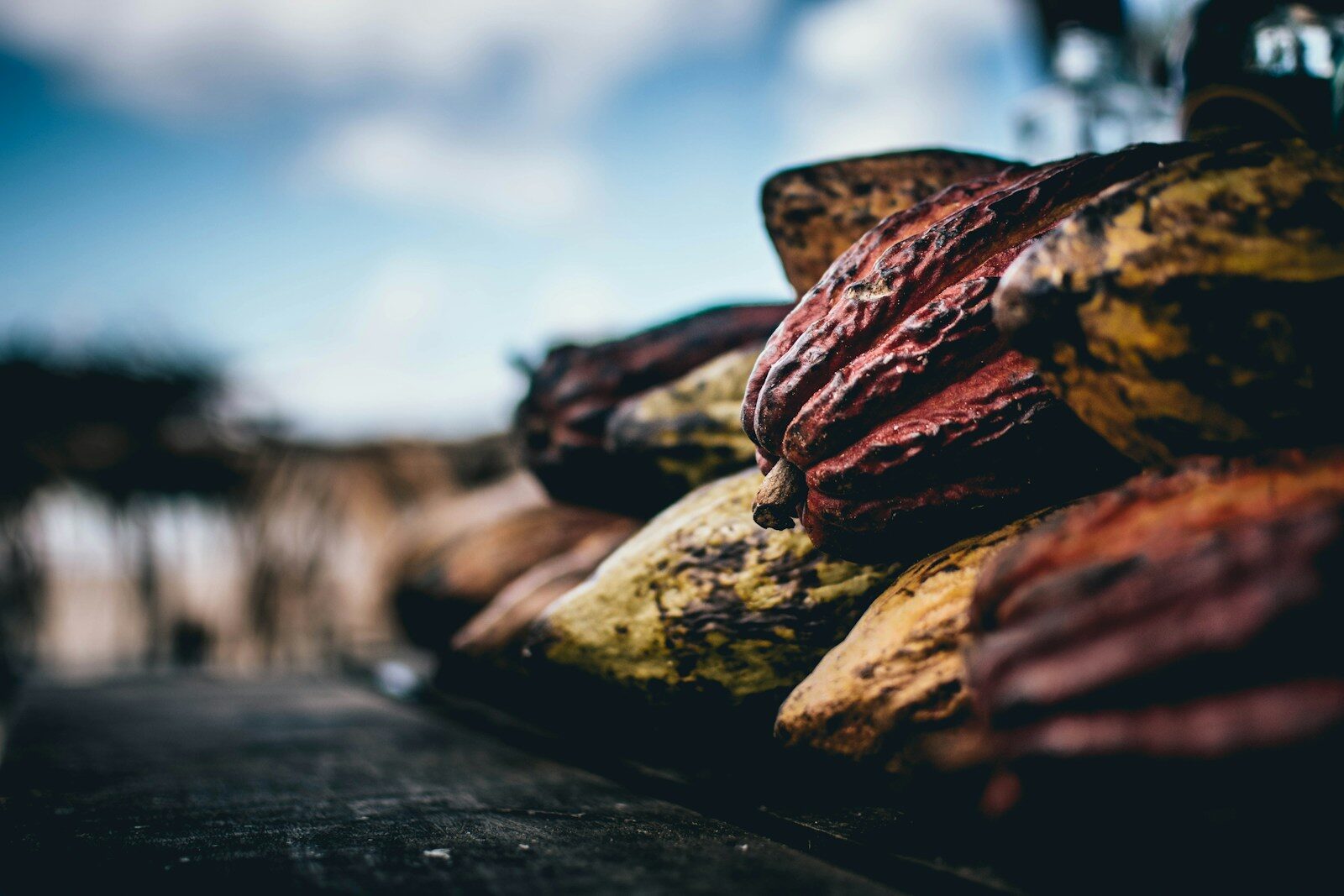
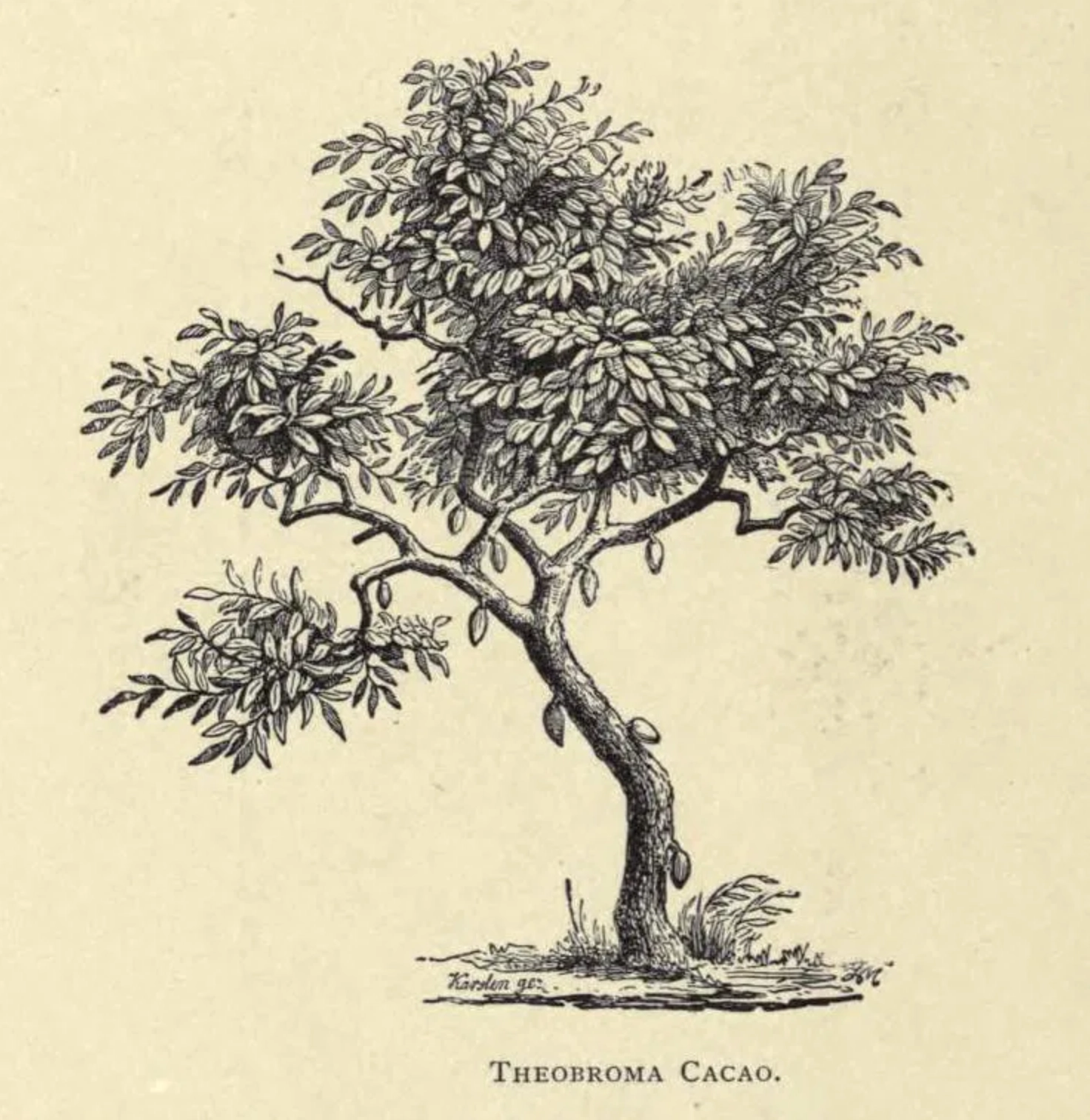
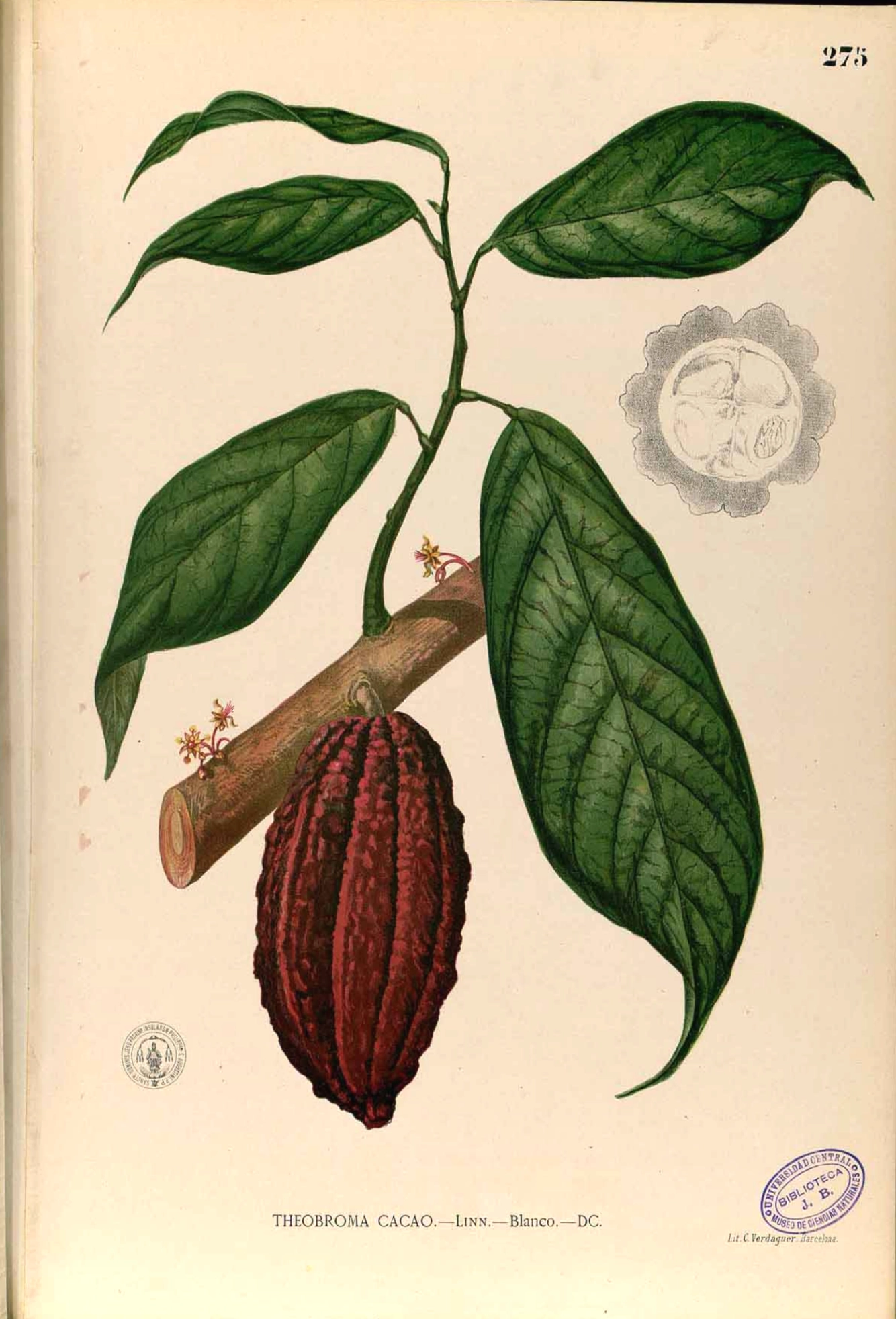
Botanically, cacao is a tropical understory tree. It grows in filtered light. The pods form directly on the trunk. The seeds are fermented, dried, roasted, and ground. Every step of this process alters the chemistry that comes out and consequently the medicinal effects.
Note that: Raw cacao, roasted cacao, alkalized cocoa powder, and milk chocolate are not interchangeable from a phytochemical standpoint. For medicinal use, minimally processed cacao such as whole fermented beans, cacao paste, or natural cocoa powder retains more flavanols than heavily alkalized cocoa. If you are sourcing cacao today, look for fair trade and transparently sourced products, as the global cacao industry still has deep labor and exploitation concerns.
The Herbarium
The Herbarium is a monthly print zine mailed to you – it covers plant history, botany, folklore, and herbalism